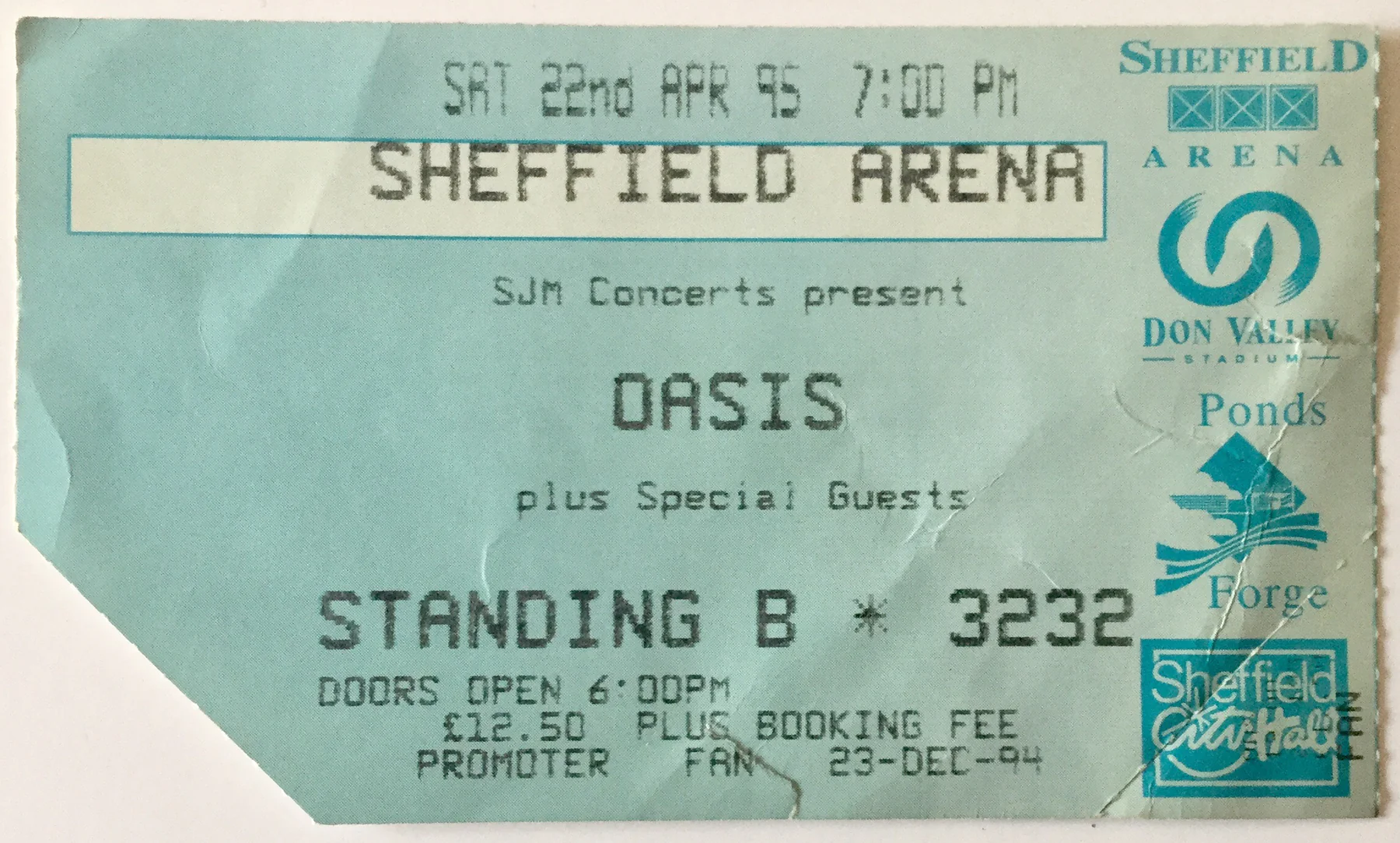
Sheffield Arena. The north of England. Saturday night, April 22, 1995.
Oasis had been together for four years. By this time they were the most volatile band in the country. Definitely Maybe had become the fastest-selling debut album in British history. The Gallagher brothers, Noel and Liam, had grown up in Burnage, Manchester, in a household defined by a violent father, and somehow survived every fight, every on-stage blow-up, and every interview in which they publicly threatened each other. Noel wrote the songs. Liam sang them. This tension ran through everything Oasis ever did.
That night, twelve thousand people are packed in. The Definitely Maybe Tour is ending here, the biggest show Oasis has ever played.
It is around 10:00pm, fifteen songs into their set. “We developed over the previous couple of years is this a little acoustic part in the set because the singer would decide he had a sore throat you know and uh he needed a rest,” said Noel. A single spotlight finds Noel at the microphone. The rest of the arena is dark. The crowd goes quiet. Behind him, his brother Liam, the band’s lead singer, steps back.
“12,000 people there, and I was about to play them a song that no one had heard. No one in the band had heard it. I’m not sure what possessed me to do that,” recalled Noel.
“Going to play a brand new one,” Noel says. “I only wrote it on Tuesday, so no one’s heard this before. I haven’t got a title for it either.”
He plays the opening chords to a song the crowd has never heard. Four minutes later, as the song comes to a close, the arena fills with whistles and applause. Noel says “thank you.” The first ever live performance of “Don’t Look Back in Anger” has just happened.
Four days earlier, Noel was drunk in a Paris hotel room writing the song.
“It was after a show that we did, and we’d been to a strip club. I remember being drunk, and I remember writing it. I remember getting up the next morning and my guitar was lying on the floor, and the lyrics were on a kind of table in the hotel room. And I played it, played it back to myself, thought could be good, could be pretty good,” said Noel.
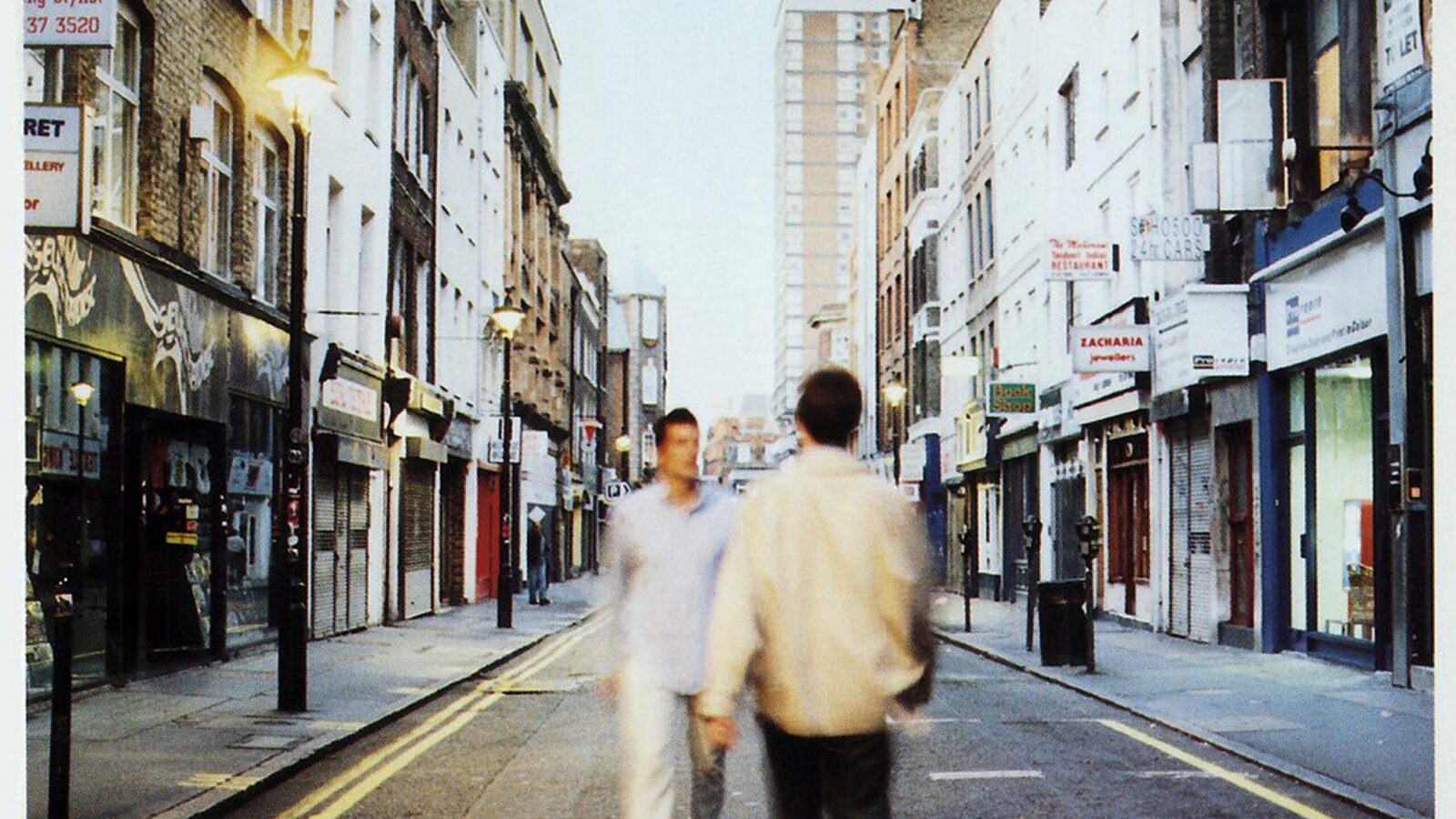
Shortly after Sheffield, Oasis headed to Rockfield Studios in South Wales to record their second studio album, (What’s the Story) Morning Glory? The studio has also housed Led Zeppelin, Queen, Black Sabbath, Iggy Pop, and The Stone Roses.
The sessions moved fast. Owen Morris, the producer, recalled that the band completed a track a day in the first week. Monday was “Roll With It.” Tuesday was “Hello.” Wednesday was “Wonderwall.” Thursday was “Don’t Look Back in Anger.”
“The atmosphere was fantastic,” Morris said. “Everyone wanted to be there and was doing it for the right reasons.” Alan McGee, who ran Creation Records, the label that signed Oasis, was more direct. “Don’t Look Back in Anger,” he said, “is the best-ever Oasis song.”
“That was a good moment when we recorded that in the studio. I remember thinking, ‘Fucking hell, this is going to be brilliant,'” said Noel. “That was written in a hotel room in Paris, right? We were just on the way to Sheffield Arena to play our first-ever arena gig.”
(What’s the Story) Morning Glory? was recorded over approximately three weeks in May and June 1995 and was released on Monday, October 2, 1995. Its singles, “Some Might Say,” “Roll With It,” and “Wonderwall” arrived during the height of Britpop, a chart battle with Blur that the BBC said “the music industry hasn’t seen anything like since The Beatles fought it out with The Rolling Stones in the 60s.” Oasis won the war. The album spent ten weeks at number one on the UK album chart, reached number four on the US Billboard 200, and went on to sell tens of millions of copies worldwide.
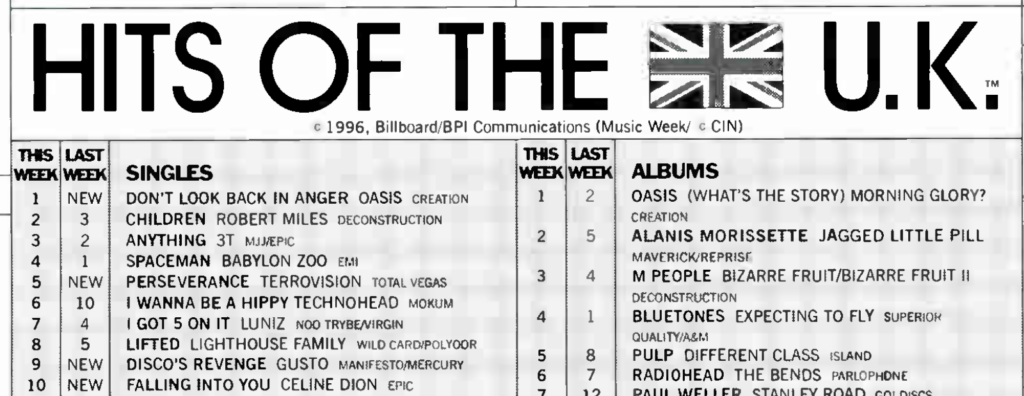
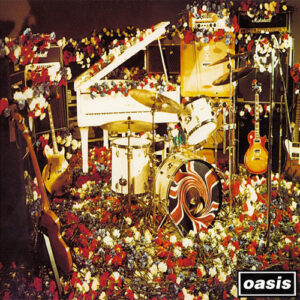
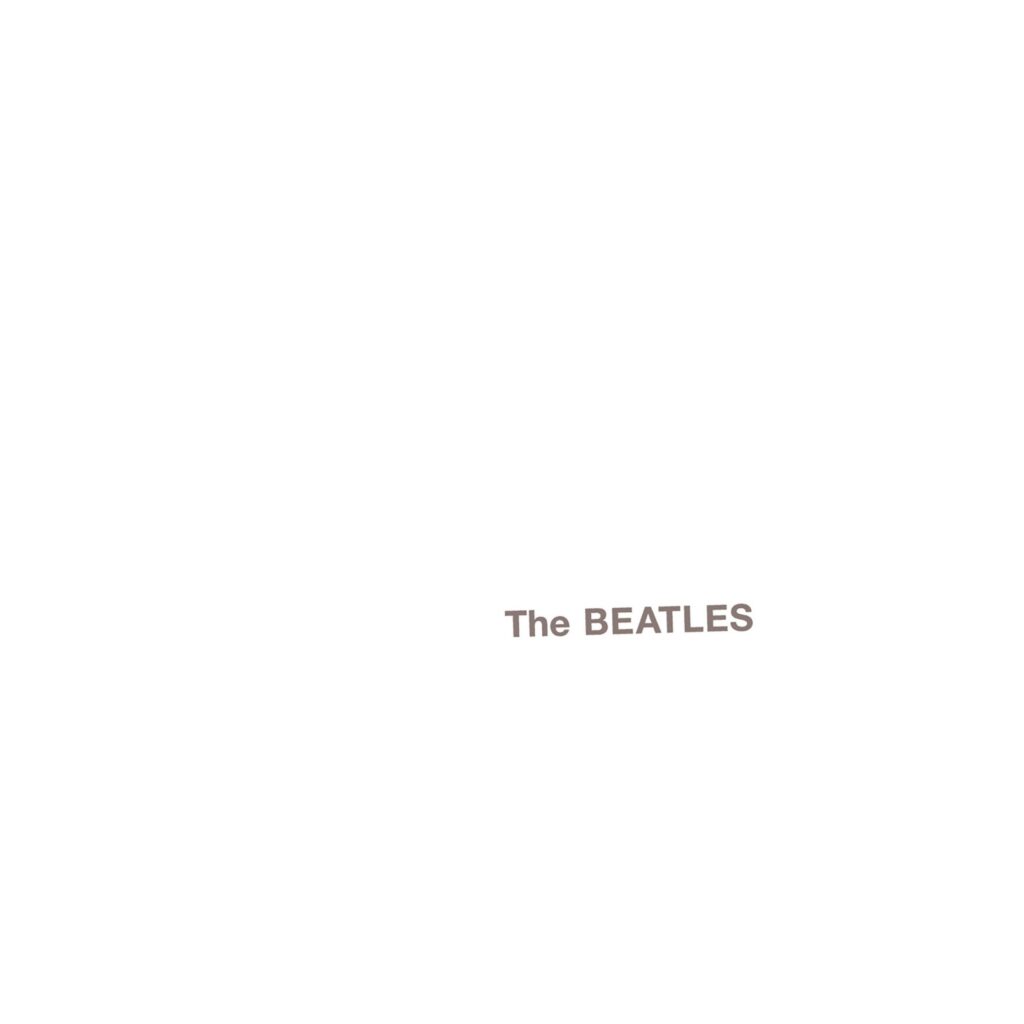
“Don’t Look Back in Anger,” its fourth single, was released on Monday, February 19, 1996. It debuted at number one in the United Kingdom. The single cover was a tribute to the moment Ringo Starr briefly left the Beatles during the recording of the White Album. When he returned, George Harrison covered his drum kit in flowers. Oasis recreated the image for the sleeve. Noel knew something about leaving and coming back.
Liam sang lead on almost every Oasis song. “Don’t Look Back in Anger” was an exception. At Rockfield, Noel played both “Wonderwall” and “Don’t Look Back in Anger” for Liam and offered him the choice of which to sing. Liam chose “Wonderwall.” It was exactly what Noel had planned. He had used “Wonderwall” as a bargaining tool, knowing Liam would want it, so he could claim “Don’t Look Back in Anger” for himself. For a band fuelled on friction, this particular tactic said everything. It was Noel staking a claim over the song he had written alone in a Paris hotel room.
Billboard reviewed the single in June 1996, calling it “the lesser of the three tracks” on the album, while stating the song “is timed properly. The single may experience an unnaturally long shelf life due to the band’s entrenchment on radio.”
“If I’d have known that night what I know now about people playing it at fucking funerals and weddings, I’d never have finished the song. Too much pressure,” said Noel. “I’m never going to write a song that connects with people as much as ‘Don’t Look Back in Anger’ has.”
The review was correct about the long shelf life. Decades later, on the night of May 22, 2017, a suicide bomber detonated a device in the foyer of the Manchester Arena at the end of an Ariana Grande concert. Twenty-two people were killed. Hundreds more were injured. In the days that followed, crowds gathered in St Ann’s Square in Manchester to mourn. Someone began to sing. Others joined. The song was “Don’t Look Back in Anger.”
The image of a city holding itself together through a Noel Gallagher lyric written drunk in a Paris hotel room went around the world. The song had always been an anthem of living with no regrets. After Manchester, it became a way of life.
A chance meeting and kindness saved Oasis
To understand how “Don’t Look Back in Anger” came to exist at all, you have to go back to a worse night, even before Paris, seven months earlier, in Los Angeles.
In September 1994, as Oasis arrived in America for the first time, Billboard wrote: “Drown out the abundant hype and tune in the music, which offers humorous lyrics, euro-grunge guitarwork, and Blur-like vocals. Massive? Maybe. Distinctive? Definitely.”
By November, “Supersonic,” the lead single from Definitely Maybe, had climbed to number 15 on the Billboard Modern Rock Tracks chart. One song. Mid-chart. Noel told the magazine the meaning of “Supersonic” was “jackshit to me,” that it had been written in eight hours with 48 hours left in the studio, no songs prepared, and a gin and tonic in hand.
He was not yet a star. He was a 27-year-old on his first North American tour with a band he was about to walk away from. When a San Francisco fan named Melissa Lim told him he was on the verge of something big, that was not an obvious call. It was a leap.
Lim was at Oasis’ US debut show for their album Definitely Maybe at the Bottom of the Hill in San Francisco on September 26, 1994.
“He [Noel] came over and sat down next to me,” Lim recalled. “I had never been backstage before, so I asked him, ‘Where’s the after-party?’ And he goes, ‘What after-party? Can I hang out with you tonight?'”
Noel and Lim made a connection.
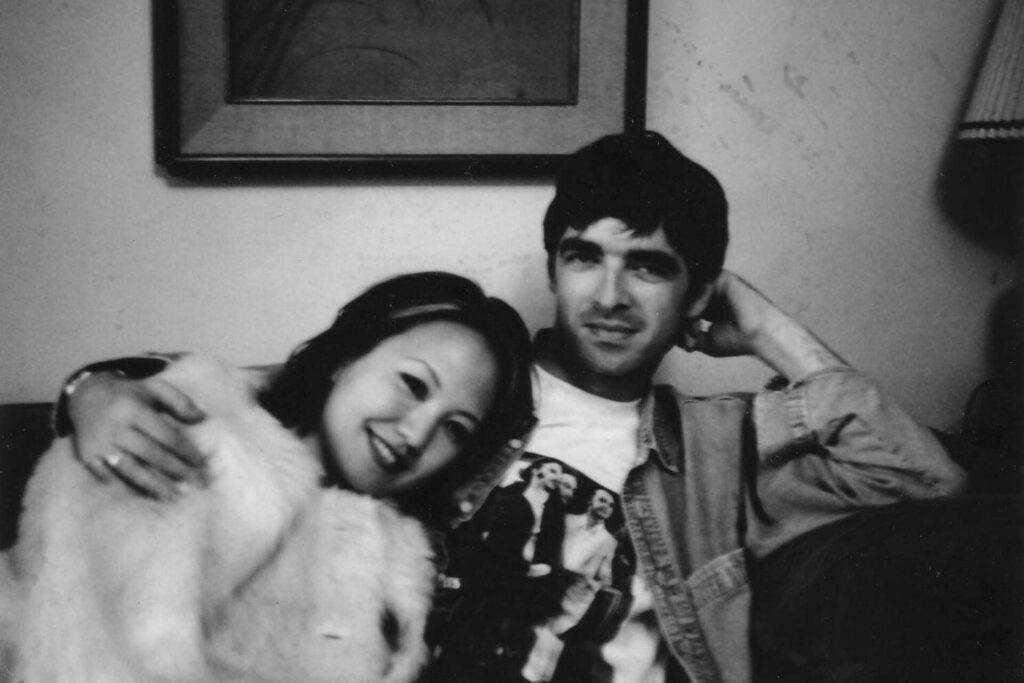
A couple of days later, on Thursday, September 29, 1994, Lim attended the Whisky a Go Go show in Los Angeles. This show is widely considered to be one of the band’s worst performances due to the consumption of crystal meth. During the show, Liam struck Noel in the face with a tambourine, after which Noel had enough of the band and its antics. He grabbed his passport, boarded a plane to San Francisco, and went into hiding at Lim’s apartment in Lower Nob Hill.
As Oasis’ manager and record label staff frantically searched for him, Noel settled in with the San Francisco native.
Noel stated, “I was in a fury. I left a little bit of me on that stage that night. I met this girl at an Oasis gig I must have phoned her. I got on a plane and flew off to San Francisco it was quite a traumatic time but talk tonight was written about those few days.”
“He was very upset,” Lim said. “I took him in, fed him and tried to calm him down. He wanted to break up the band. San Francisco has a reputation of being a place where bands come to die, like the Band and the Sex Pistols. I wasn’t going to let it happen on my watch. I told him, ‘You can’t leave the band — you’re on the verge of something big.'”
They went to Huntington Park to clear his head. They listened to music and went record shopping. One day, while out on her usual run for Snapple Strawberry Lemonade, Lim brought back a stack of British music magazines, all of them featuring coverage of Oasis.
“She was saying what you’re gonna leave and what you’re gonna do, and I guess at that point I’m thinking, ‘Oh my gosh, that’s a fucking good point. What am I gonna do? I can’t sing. I wasn’t a singer then. I’m not a front man. I just needed a bit of time out, I guess,'” recalled Noel.
The band’s producer Mark Coyle found Noel by looking through his phone records and encouraged him to come back to the band. Coyle called Lim a “spiritual animal” who put him back on the path.
Lim saved Noel. Lim saved Oasis.
Noel headed to Austin, Texas, where he reconnected with the band and recorded at The Congress House Studio. On October 8, 1994, Oasis recorded “Half the World Away” and “Talk Tonight.” The Snapple Lemonade and the walks and the record shopping all made it into “Talk Tonight.” So did the line “I want to talk tonight / Until the mornin’ light / ‘Bout how you saved my life.”
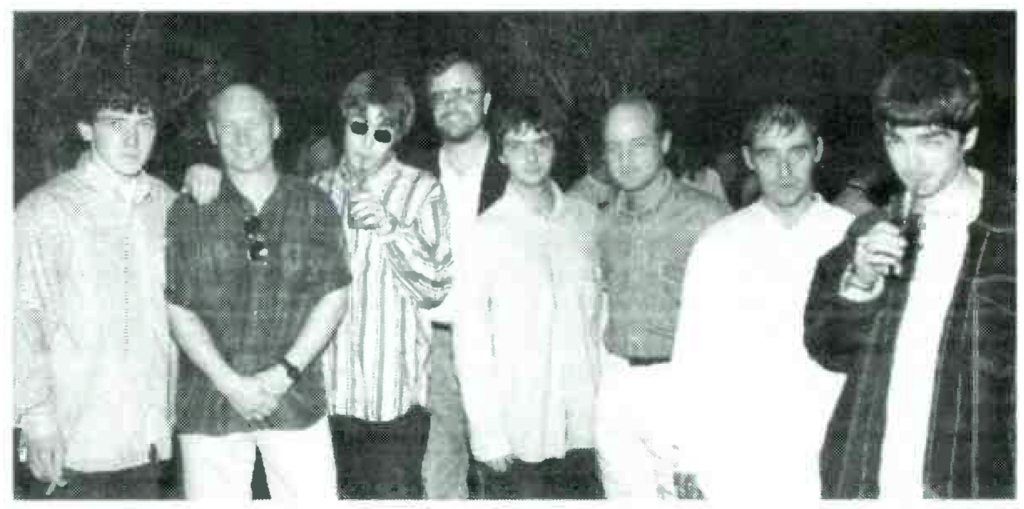
They stayed in touch as the tour continued. They met up when Oasis shot the video for “Supersonic” at the Cabazon Dinosaurs in Southern California. They talked on the phone regularly, with Lim answering using a line from the film Bye Bye Birdie: “What’s the story, morning glory?”
“Our ‘relationship’ fizzled out after a couple of months, as he met Meg Mathews. During one of our transatlantic phone conversations I greeted him with, ‘Hey, what’s the story mornin’ glory?’ I’m also responsible for being the gal with the Snapple Strawberry Lemonade obsession in Talk Tonight. Unfortunately, after a disappointing reunion with Noel backstage at the Fillmore in San Francisco, in my naively wishful state I also told him that I wouldn’t look back in anger with everything that’s happened between us and that I hoped to remain friends. I heard that song while grocery shopping in Safeway,” said Lim.
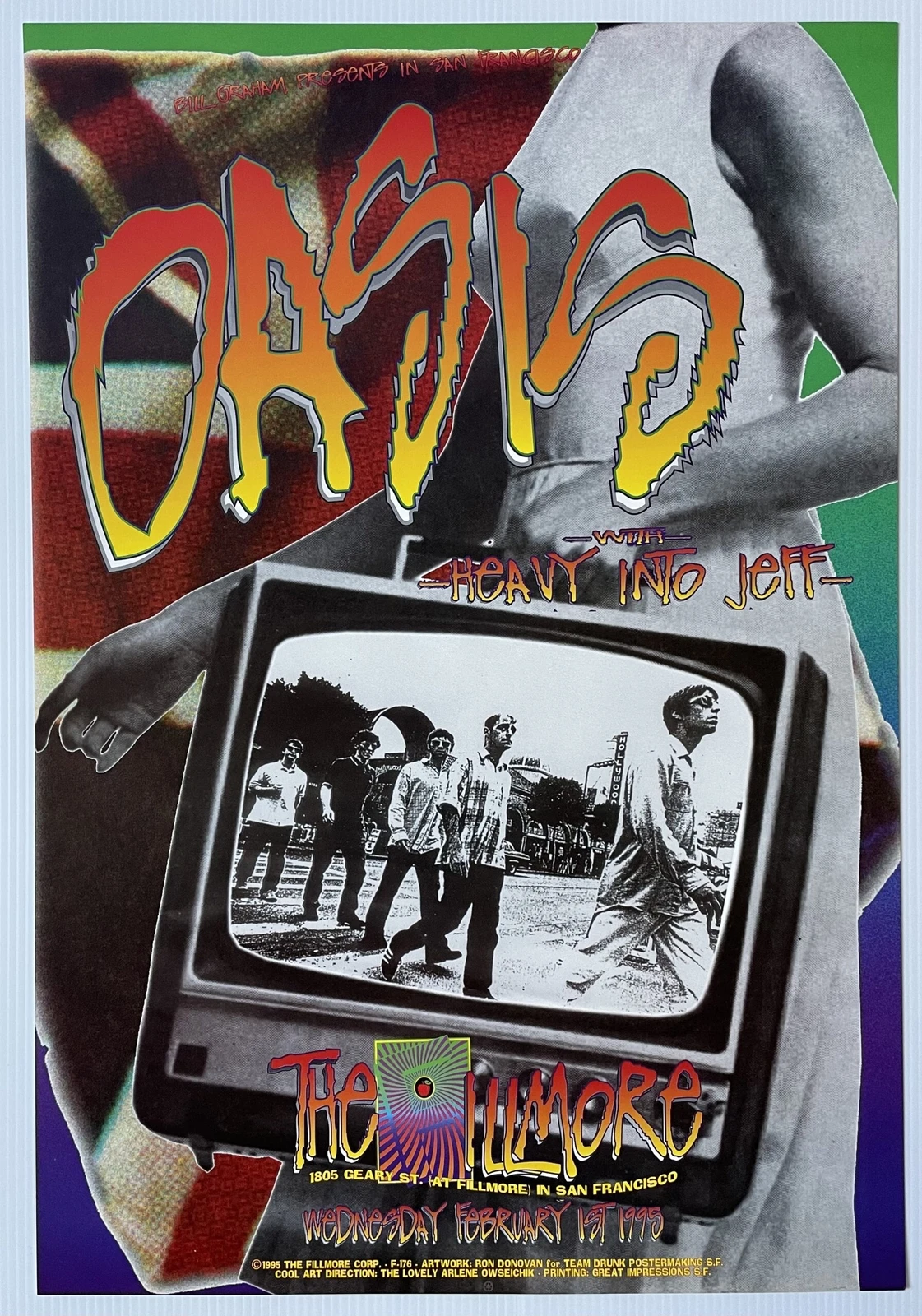
Oasis played at The Fillmore in San Francisco on February 1, 1995. “Don’t Look Back in Anger” was written on April 18, 1995.
“On the Definitely Maybe Tour I’ve met this girl in America. When we would meet she would say, ‘Hey, what’s the story morning glory?’ Right now I don’t, I don’t know what the fuck ever ever meant, and I was talking to some American journalists yesterday and I said, ‘What does it mean?’ They’re like, ‘Well I’ve never heard it before.’ I was like, ‘I thought it was like an American like top of the morning to you,’ you know I mean, something like that. Again I thought ‘what’s the story morning’ and uh I shoe owned it into that tune. Why, why it’s ended up as the title of the album I don’t know,” recalled Noel.
Noel says he can’t remember the name of the woman who kept the band together. “If I close my eyes now I can’t even picture the girl. I can’t remember her name. It’s a bit of a blur.”
Lim is fine with that.
“Keith Richards can remember the name of his milkman from when he was 8 years old,” said Lim. “I don’t know what’s going on with Noel, and that’s fine. I was a part of something that touched so many people. That’s good enough.”
Lyrically: Don’t Look Back In Anger by Oasis
The song Melissa Lim heard in a Safeway had started as something Noel described simply as “a song of defiance.” It grew into something larger.
“The way that I used to write and the way that I write sometimes is that I don’t write stories. I just write lines, and if the previous line is very good then the line that comes after it has to rhyme with it, right? And the lyrics, quite simple and generally about nothing really, but I suppose people just make up their own interpretations,” said Noel.
Noel said, “It started off as a song of defiance, about this woman: She’s metaphorically seeing the diary of her life pass by, and she’s thinking, ‘You know what? I have no regrets.’ She’s raising a glass to it.”
Slip inside the eye of your mind
Don’t you know you might find
A better place to play?
The opening is an invitation. “Slip inside the eye of your mind” asks the listener to step inward, into imagination rather than reality. The mind’s eye, as Merriam-Webster defines it, is “the mental faculty of conceiving imaginary or recollected scenes.” Noel is suggesting that the way out of wherever you are is through your own mind. There is a better place to play. You just have to find it.
You said that you’d never been
But all the things that you’ve seen
Will slowly fade away
The person being spoken to has never experienced this better place, this new mindset or perspective. “But all the things that you’ve seen” connects directly to what Noel said the song is about: a woman who looks back at her life and chooses no regrets. The past loses its grip. That is the offer.
So I’ll start a revolution from my bed
‘Cos you said the brains I had went to my head
Oasis frequently referenced and were captivated by The Beatles, and these lyrics were inspired by John Lennon and Yoko Ono’s famous Bed-In protest for peace in 1969. During the bed-ins, Lennon recorded messages of peace in their hotel room while in bed, and the idea of starting a “revolution from bed” honours this movement.
Lennon once mentioned that he liked a remark someone made about George Bernard Shaw, stating, “I liked that remark some woman made about Bernard Shaw, that his brains had gone to his head.”
“Some of the lines come from John Lennon. I got this tape in America that had apparently been burgled from the Dakota Hotel and someone had found these cassettes. Lennon was starting to record his memoirs on tape. He’s going on about ‘trying to start a revolution from me bed, because they said the brains I had went to my head.’ Thank you, I’ll take that. It’s about not being upset about the things you might have said or done yesterday, which is quite appropriate at the moment. It’s about looking forward rather than looking back. I hate people who look back on the past or talk about what might have been,” recalled Noel.
Step outside ’cause summertime’s in bloom
After pulling the listener inward, the song pivots outward. Step outside. The world is in bloom. Summertime, and all its life, is what is waiting while you are stuck inside your anger.
Stand up beside the fireplace
Take that look from off your face
You ain’t never gonna burn my heart out
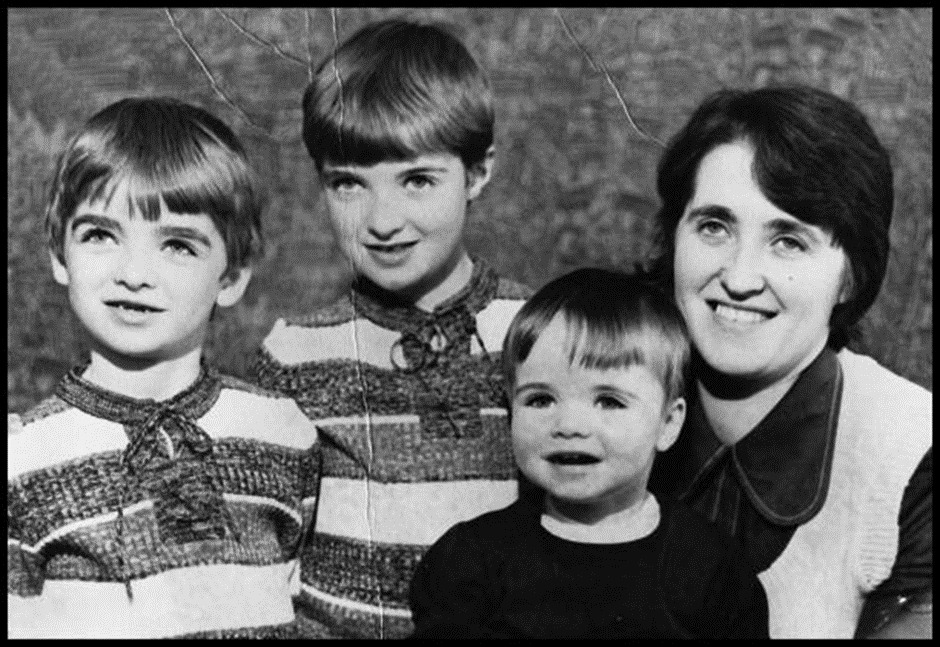
“Stand up beside the fireplace / Take that look from off your face” is a memory Noel has from when he was growing up in Manchester and his mum Peggy used to make him stand next to the fireplace and have photos taken.
“All my songs will have one or two lines in that mean something specific to me growing up or my life at the point. ‘Stand up beside the fireplace’ was, I remember as a child my mom would always take photographs of us on our birthdays or and send them to my gran, and it would always be stand in front of the fireplace. I vividly remember saying, ‘You take that stupid look off your face,'” stated Noel.
The third line lands as a declaration. Whatever happened in that childhood, whatever look was on that face, it did not burn his heart out. The song carries that defiance forward.
And so Sally can wait, she knows it’s too late as we’re walking on by
Her soul slides away, “But don’t look back in anger,” I heard you say
These are the most recognizable lyrics in “Don’t Look Back in Anger.” Noel stated, “Nobody knows who Sally is. I don’t know who Sally is, you know, and it’s a song of no regrets, you know what I mean? It’s a woman toasting her life thinking, you know what, I fucked it up somewhere along the line, but you know, I’ve got no regrets.”
This character Sally seems to be waiting in indecision. The “we’re walking on by” now reveals there is at least one additional person in the scene, perhaps now including Meg Mathews, Noel Gallagher’s future wife. Melissa Lim saw them at The Fillmore and said to Noel that she “wouldn’t look back in anger with everything that’s happened between us.” Noel wrote the song two months later. Whether Lim’s words were conscious inspiration or not, the title arrived with them.
Take me to the place where you go
Where nobody knows if it’s night or day
This is the song asking to be taken somewhere outside of time.
Please don’t put your life in the hands
Of a Rock ‘n’ Roll band
Who’ll throw it all away
There is an irony here that Noel does not explain. He is warning Sally not to put her life in the hands of a rock and roll band, while being the songwriter of one. The line carries a self-awareness that lifts the whole song. He knows what he is. He is telling you anyway.
“Some people live their life, they worry about the destination, where is it going to be, what is, you know, they worry about where they’re going. I enjoy the trip. You get where, wherever you’re going is where you’ll end up. Don’t worry about that, enjoy the scenery on the way,” said Noel.
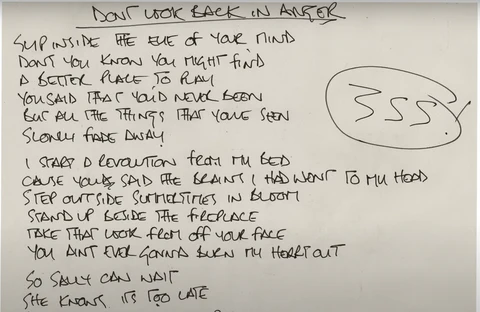
The remainder of the lyrics generally repeat, but across the choruses there is a shift in perspective. “Her soul slides away” becomes “My soul slides away.” It reinforces what Noel said about the song being about no regrets. It is not just Sally’s story. It becomes everyone’s story. That shift from “her” to “my” is the moment the song stops being about a fictional woman and becomes about whoever is listening.
But don’t look back in anger, don’t look back in anger.”
I heard you say, “at least not today.”
The final lyric is honest. Not “don’t look back in anger, ever.” Just not today. It is a small, realistic ask. Hold it together for now. The song does not promise resolution. It asks for one day of grace.
“Everything’s gonna be fine. Stay optimistic. If there’s dark clouds coming, they’ll leave again. They always do. The world is round. Everything is round. The biggest invention of all time, the wheel, is round. Things pass, nothing will stay the same forever. No matter how big a pile of shite you’ve gotten yourself into—be it drugs, financial problems, fucked up relations—you will get over it. It will go away just like the weather. The sun is round, so is the planet we live on, as are marriage rings, and our eyes through which we see the world,” stated Noel.
“The greatest gift that I ever got from ‘Don’t Look Back in Anger’ was the song itself. You know, that in quiet times, when I’m at home, I play that song to myself to sing it to myself, you know what I mean? That’s the greatest reward,” said Noel.
“The great songs that I’ve written, they all just fall out of the sky… Listen, if you wrote, if you’d wrote that song, you’d want to play it every night as well because, uh, it’s become, it’s, it’s for, for a song that technically speaking is not that extraordinary, is an extraordinary song because the people made it extraordinary. So, it’s a pleasure to play it every night,” said Noel.
Noel is living the song.



What does this song mean to you?
Share your thoughts on this song.