Pittsburgh, Pennsylvania. Tuesday, September 23, 1980.
The morning of the show, Jody Wenig, Bob Marley’s agent at Associated Booking Corporation, calls Rich Engler, the Pittsburgh promoter, at his office. “I don’t think Bob can play,” Wenig says. “He’s not feeling very well.”
Engler waits. Around 2:00 p.m., Wenig calls back. The band is doing the show, but Bob’s wife, Rita Marley, does not want him to do it. Bob is compelled. Wenig does not mention that two days earlier, Marley collapsed in Central Park, and that medical examinations in New York had just revealed that cancer had spread to his brain.
At the time, Bob Marley & the Wailers, along with backing vocalists The I-Threes, consisting of Rita Marley, Marcia Griffiths, and Judy Mowatt, were on the fifth stop of their 35-city North American leg of the Uprising Tour. Coming off 33 European dates that summer, Marley had played to more than 2.5 million people, breaking attendance records set by Paul McCartney, the Eagles, and Elton John, with Milan alone drawing an estimated crowd of 120,000 people.
The band performed at Madison Square Garden on September 19 and 20, opening for The Commodores in front of 20,000 people each night.
The day after the final Garden show, Marley collapsed while jogging in Central Park. His body seized and pain shot through his neck. He fell into the arms of his friend Allan “Skill” Cole, who carried him back to the Essex House hotel. The next day, a neurologist examined Marley at the hotel and gave him two weeks to live. Guitarist Al Anderson, Cole, and manager Danny Sims were in the room. “They came in and said, ‘Bob, you’re in a lot of trouble and you need help immediately,'” Anderson recalls. Doctors at Memorial Sloan-Kettering Cancer Center confirmed what the neurologist had found: the cancer that had begun in his right toe three years earlier had spread to his brain, lungs, and liver. They advised him to stop touring immediately.
Guided by his Rastafari faith, Marley viewed his body as a sacred temple and rejected the warnings of Western intervention. He insisted the tour go on. Hours later, the band converged at the Stanley Theatre.
Engler meets Marley at the back door. “I see Bob, and he just looked really, really beat,” Engler recalls. “I said, ‘Hey, Bob, can I do anything for you?’ He goes, ‘I just wanna lay down. Show me the dressing room.'”
In the dressing room, Engler tries once more. “Are you sure you can play?”
“Man, I gotta play,” Marley says. “My band needs the money. I got to play the show.”
At soundcheck, Marley does something out of character. For half an hour, without interacting with anyone, he cycles through a single song: “Keep on Moving.” He repeats the chorus again and again without speaking a word into the microphone, sitting on the drum riser when he is not singing. Lord, I’ve got to keep on moving / Lord, I’ve got to get on down / Lord, I’ve got to keep on grooving / Where I can’t be found. “It was something that he was feeling,” backing vocalist Marcia Griffiths recalls.
Lead guitarist Junior Marvin catches him alone before the show. “I saw him looking at himself in the mirror,” Marvin says, “as if to say, ‘I look okay on the outside, but what’s going on in the inside?'”
His wife Rita has already pleaded with him to cancel the sold-out show of 3,500 and go directly to the hospital. “I said to him, ‘You don’t have to do this, not in this condition,'” she recalls, “but Bob, his spirit was always stronger than his body.”
Moments before show time, “Skill” Cole tells the band what Marley has not: this is the last show of the tour. Possibly their last show ever. “We were like, ‘OK, this has gotta be the best show in history. We’re not gonna make one mistake,'” says Marvin.
That night, Bob Marley takes the stage delivering a 20-song set lasting nearly two hours and two encores, ending with a 6:38 rendition of “Get Up, Stand Up.” It is a performance Engler remembers as “magical.”
“If you keep it up like this, we’ll have to come here every year, every week, every month. Thank you!” Marley tells the cheering crowd before walking off stage. Then, the stage lights dim into darkness.
The Stanley Theatre was Bob Marley’s final live performance.
He never had a Top 40 hit in America. He never broke mainstream U.S. radio. And yet, millions heard his message. To understand how he got there, you have to go back more than three decades earlier, to the hills of St. Ann Parish and the yards of Trench Town.
Danny Sims heard the next Bob Dylan
Born in St. Ann Parish, Jamaica, on February 6, 1945, Robert Nesta Marley began recording music as a teenager in Kingston under the name Bob Marley.
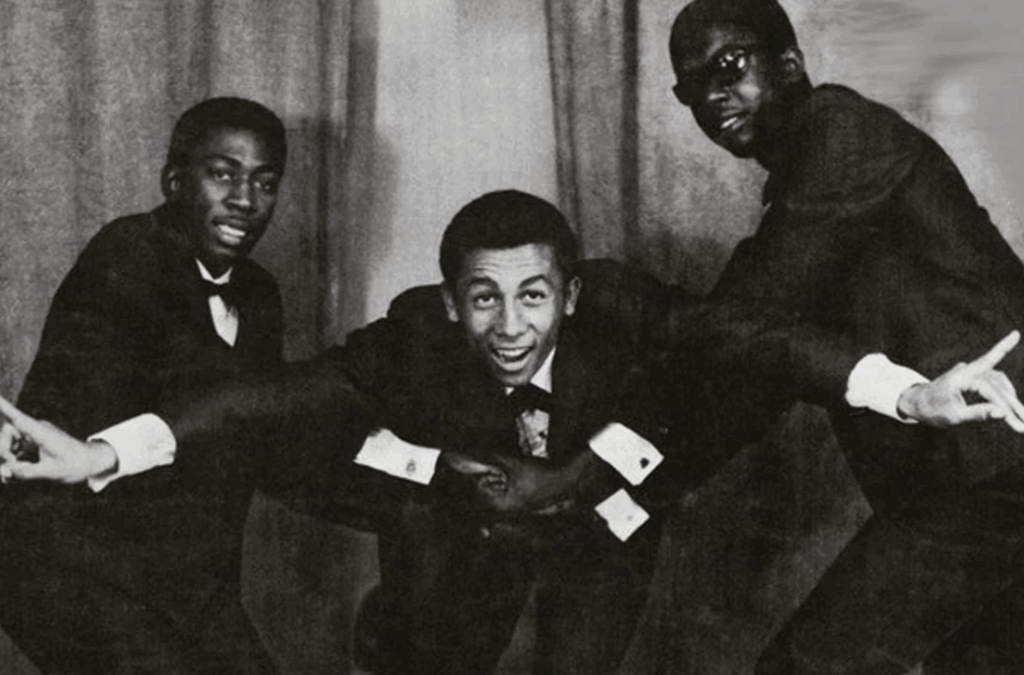
In 1963, Marley formed a vocal group with his childhood friend Neville Livingston, later known as Bunny Wailer, and Peter Tosh, who had moved to Trench Town from Westmoreland to join them. Bob and Bunny were raised together in the same West Kingston household because Marley’s mother and Bunny’s father lived as partners and had a daughter together, making the two boys stepbrothers.
The trio was mentored by singer Joe Higgs, widely recognized as the “Godfather of Reggae,” who held music lessons in his yard in Trench Town. The Wailers quickly became local celebrities, scoring a number-one hit in Jamaica with “Simmer Down” in February 1964.
“I structured the harmony. I am the one who taught The Wailers the craft, who taught them certain voice technique,” said Higgs.
Above all others, Marley named Marcus Garvey, the pan-African philosopher and Jamaican national hero, as “my biggest influence.”
Across the Atlantic, in 1964, Johnny Nash, an American R&B singer who would later achieve fame with “I Can See Clearly Now,” and his manager Danny Sims, a music producer and publisher, formed JoDa Records in New York. By 1965, Nash and Sims had relocated to Jamaica, mainly fleeing pressure from the FBI, but drawn by the affordable studio time and the music scene. Two years later, Nash and Sims partnered with businessman Arthur Jenkins to launch JAD Records, naming it after their first initials: Johnny, Arthur, and Danny.
On January 7, 1967, Nash saw Marley sing at a Rastafarian grounation, an Ethiopian Christmas celebration, in Trench Town and was impressed. “Johnny told me about this fantastic artist,” said Sims. “He said the songs were great, and he had invited him up to see me at my house.”
Marley arrived at Sims’s home with his wife Rita, Peter Tosh, and Mortimo Planno, a revered Rastafarian elder who had served as the group’s spiritual adviser.
“What I heard,” Sims said, “was the next Bob Dylan.”
After hearing Marley sing, Sims signed the Wailers to an exclusive contract with JAD Records, launching a four-year effort to break the group internationally. Sims’s strategy relied on an Americanized Black pop format, stripping out reggae themes and hiring Marley and Peter Tosh to write commercial tracks for Johnny Nash, including “Stir It Up.”
In the fall of 1971, Sims brought the Wailers to London, secured a CBS distribution deal, and released the single “Reggae on Broadway.” To push the track, Sims funded a promotional tour pairing Nash and Marley for acoustic performances across 72 English high schools over 18 days, four schools a day. The records failed to chart.
“Reggae was not accepted as a commercial form at the time,” said David Simmons, Sims’s longtime business partner. “The world wasn’t ready for it.”
Sims and Nash returned to New York without warning, leaving the Wailers stranded in London with no manager, no recording contract, and no money to get home. Sims left them in the care of Brent Clarke, a Trinidad-born freelance promoter and local road manager hired to look after the group’s day-to-day logistics. Clarke realized the band was out of options. UK visa laws prevented them from legally working, and they lacked the cash to buy plane tickets.
Clarke reminded the band that Island Records had been licensing and selling their early Jamaican singles to British audiences for a decade without paying them royalties. Clarke used his connections to secure an appointment with Island’s founder Chris Blackwell at Basing Street Studios.
Island had released Marley’s single “One Cup of Coffee” in England a decade earlier under a license from Leslie Kong, and Blackwell had been tracking the Wailers’ progress for years.
When Marley, Peter Tosh, and Bunny Wailer arrived at the office, Blackwell saw something.
“They were immediately something else, these three: strong characters. They did not walk in like losers, like they were defeated by being flat broke. To the contrary, they exuded power and self-possession. Bob especially had a certain something; he was small and slight but exceptionally good-looking and charismatic. Bunny and Pete had a cool, laid-back nonchalance,” Blackwell recalled.
“As I took the measure of them, I thought, Fuck, this is the real thing. And their timing was good. Jimmy Cliff had just walked out on me a week earlier. Maybe it was kismet, I thought — just when Jimmy stormed out, Bob, Pete, and Bunny strolled in,” Blackwell said.
“They were nobodies, but they were like big stars, their attitude and the vibe they gave off,” Blackwell said.
Blackwell felt it was time to “take the music out of Jamaica without taking Jamaica out of it.”
Blackwell wanted the Wailers embedded in the rock music scene. “I knew I could do something with them — move them away from where they were and make their music attractive to college kids who were otherwise ignorant of or indifferent to Black music,” said Blackwell. “They were shocked when I said that there was no way their music as it currently sounded would get played on US radio. In that era, there were radio stations that played only rock music and R&B stations that played only Black music. And neither category of station played reggae.”
“Pete and Bunny were skeptical, but Bob was immediately intrigued,” said Blackwell. He offered them £4,000 to make an album without asking them to sign anything. “They had been so fucked over and had so many scores to settle that it seemed correct to do it this way,” said Blackwell.
Marley and the Wailers flew back to Jamaica and recorded Catch a Fire across three sessions at Kingston’s Dynamic Sounds studio in October 1972. The vocals were all cut in one day. Back in London for the overdubs, Blackwell hired two American studio musicians, guitarist Wayne Perkins and keyboardist John “Rabbit” Bundrick, to craft the sound toward a rock audience. After experiencing reggae for the first time, Perkins said, “Compared with anything else I’d ever heard in my life, this was back to front.”
“This record was the most, I don’t say softened, I more say enhanced, to try to reach a rock market,” said Blackwell. “Bob always seemed to have a very clear idea of what he wanted from the recordings. I would basically mix them and put them together in an arrangement and compile the albums in terms of their running order. Somebody said to him one time I was his producer and he said no I was his translator, and I liked that. I was very happy with that. I think that was probably what I was doing.”
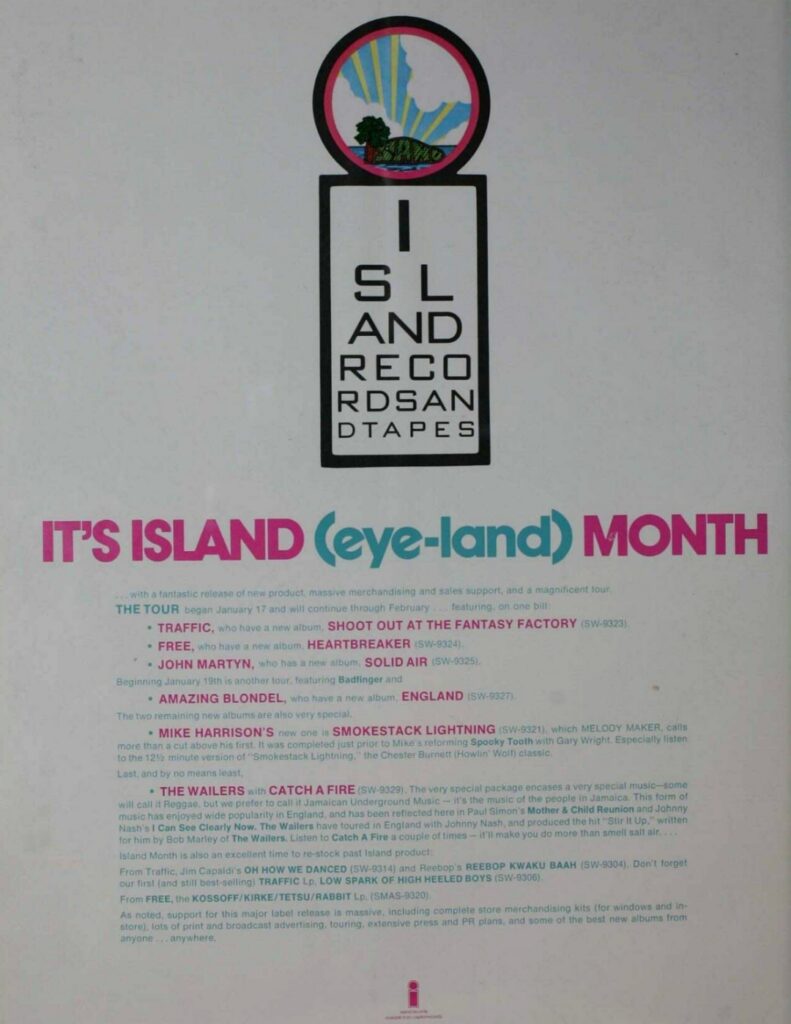
Catch a Fire was released on April 13, 1973. In the American press, a print ad in Billboard showcased its Zippo-lighter packaging. Island introduced the sound not as reggae but as “Jamaican Underground Music.” The promo referenced Paul Simon and Johnny Nash for American audiences unfamiliar with “the music of the people in Jamaica.” The ad also noted that Marley had toured England and written Nash’s single “Stir It Up.”
Billboard declared 1973 “the year of reggae” and called the Wailers “by no means novices.”
To capture the attention of rock fans, Island launched a promo campaign in the UK. The Times declared the record would make rock fans “aware of Reggae’s inherent beauty.” Melody Maker hailed Marley as a “Jamaican genius” on par with Sly Stone and Marvin Gaye. NME predicted they were “the first band to come out of Jamaica who will crack the international market.”
The Wailers embarked on a month-long UK tour through April and May of 1973, opening for Traffic and other Island acts, playing at colleges and universities including Nottingham, Manchester, Essex, and Bristol. The band appeared on BBC Radio and The Old Grey Whistle Test.
In America, Marley’s road manager Lee Jaffe secured an opening slot at Max’s Kansas City in New York on July 18–23, 1973, organized to capitalize on media attention around the emerging Bruce Springsteen. Critic Sam Sutherland’s Billboard review reported that the Wailers were “capable of neatly eclipsing Springsteen’s formidable, growing charisma,” describing Marley as “writer, rhythm guitarist and prime vocal power.” Word-of-mouth had drawn some of the largest crowds at Max’s that summer, following a successful week in Boston. The Wailers, Sutherland wrote, offered “the real thing.”
“It was exciting because it meant that for our purposes we wanted attention… radio wasn’t going to play us,” Jaffe recalled. “There was like a real buzz about the Wailers, this new group. Not only was it a new group, but it was music that people didn’t know about. It was a new genre of music, and it was very social, political.”
The sales told a different story. “Catch a Fire didn’t immediately sell a huge number of copies, about 14,000 in the first year,” Blackwell recalled. “I approached the release with confidence, but there was still a hesitancy at the label. In its first few months, it sold only 6,000 or so copies. I was extremely disappointed, but the prevailing attitude was: ‘That’s good for a reggae record.’ My retort: ‘Don’t think of it as a reggae record. It’s a rock record. It’s a record that has the chance to be something important if we get behind it.'”
The second album with Island, Burnin’, was released on October 19, 1973, with a label ad describing the Wailers as “pure Jamaican.” To break into America, the band secured a high-profile opening slot on tour with Sly and the Family Stone. Billboard reported in November 1973 that one show had gone poorly, noting industry whispers that the Wailers had “played a confusing music.”
Marley, interviewed that same month for Billboard, offered his own diagnosis of the American problem: “The sound just hasn’t been exposed enough here. A lot of Americans don’t understand the full meaning of the lyrics,” Marley said. “I can learn more by looking around me than listening to others. If you listen to others you’re bound to imitate, and I want to remain original.”
“To me, reggae is the people’s music. It deals with reality more than many other forms of music and in a much starker way. Nobody plays a leading role in the music, and perhaps this is because a lot of Jamaicans haven’t had much musical schooling. There are no superstars. We just try to put it together with what we know. The rhythm is the important part, not a lead instrument,” Marley added.
From the very start of the Island partnership, Peter Tosh and Bunny Wailer felt the dynamics shifting toward Bob. Bunny, a fundamentalist Rasta, grew anxious about playing rock clubs and American colleges, uncomfortable with the British climate and the lack of traditional vegetarian ital food. By late 1973, Tosh and Wailer had left the group entirely.
With their departure, the I-Threes, Rita Marley, Marcia Griffiths, and Judy Mowatt, stepped into a more prominent role alongside the rhythm section of drummer Carlton Barrett and bassist Aston “Family Man” Barrett.
“Soon enough, the Wailers became known as Bob Marley and the Wailers,” Blackwell recalled. “Not least because, although Tosh and Bunny were formidable talents and had great rebel presence, Bob had by far the most charisma and the most songs. He was clearly the leader.”
The third Island album, Natty Dread, arrived in early 1975. Billboard‘s review identified Marley as the man most likely to break reggae in the United States, though he was still known to most American audiences through other artists’ recordings of his songs — Eric Clapton’s cover of “I Shot the Sheriff,” Barbra Streisand’s “Guava Jelly,” and Johnny Nash’s “Stir It Up.”
By mid-1975, the Wailers appeared on the Billboard album charts for the first time, entering at number 160. On June 18, they headlined Wollman Rink in Central Park before 8,000 fans. Billboard critic Robert Ford Jr. captured the distance the band had travelled, stating, “In more than three years away from New York, Marley and the Wailers have gone from an ethnic curiosity getting second billing in a small club to a major force in contemporary music.” Marley had “overpowering stage presence” and the band had “the discipline needed to play the infectious reggae rhythms that Marley creates.” Ford Jr. closed with a prediction: “If the rest of the tour is as successful as this show, reggae should make a giant leap forward in popularity and acceptance.”
That same summer, Blackwell recorded the Wailers performing live at the Lyceum Theatre in London. The recording caught an audience that already knew every song. “I saw, and heard, the reaction of the audience to ‘No Woman, No Cry,’ and how they started chanting the chorus over the organ intro and The I-Threes even before Bob had started singing. This was quite a moment,” said Blackwell. “I kept telling my engineers, ‘Give me more audience!'”
Rastaman Vibration was released in the spring of 1976, the first album Marley had produced himself, marking the first time he had exerted total control of his recording on a technical level. Island described it in a full-page Billboard ad as “a brand new album by the most talked about star in music,” with endorsements from The New York Times, the Los Angeles Times, and George Harrison, who called it “the best thing I have seen in ten years.”
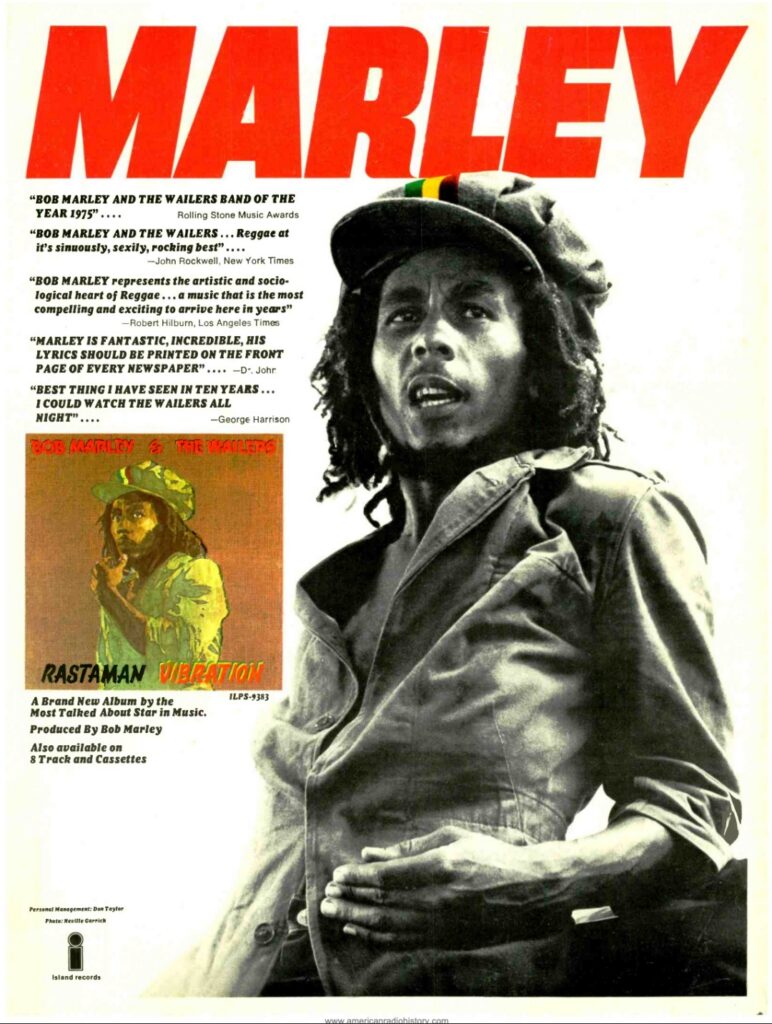
Record World reported that the album was rush-released to coincide with a tour opening at Philadelphia’s Tower Theatre, backed by the largest support campaign in Island’s history. For the first time, the label committed to major advertising buys across print, television, and radio nationwide, with promotion and publicity in every market on the tour.
Marley’s American booking agent, Stu Weintraub, had already turned down an offer from the Rolling Stones to have Marley open their tour. “We could have filled large stadiums like Madison Square Garden easily. But instead I chose to present Bob in medium-sized halls, in more intimate surroundings, where he could come across as what he is — a profoundly religious man expounding a profoundly religious message,” Weintraub said. “Stars don’t open. They headline.”
The decision paid off. Rastaman Vibration became Marley’s first U.S. Top 10 album, peaking at number eight with the lead single “Roots, Rock, Reggae.” Reviewer Robert Palmer, writing in Rolling Stone, noted: “Island Records has been trying to break him in the U.S. since the release of Catch a Fire, four albums ago, and the rock press has been pushing the albums, Marley and reggae music with a unanimous enthusiasm that makes even their efforts in Bruce Springsteen’s behalf seem equivocal. It’s working.”
Just as Marley was ascending, gunmen ambushed his home at 56 Hope Road. Around 9:00 p.m. on December 3, 1976, two days before the Smile Jamaica concert, they entered the house. The band was rehearsing “I Shot the Sheriff” upstairs. Marley was downstairs eating a grapefruit when the attackers emerged from the doorway. Manager Don Taylor, standing near Marley, took five bullets, including one close to his spine. Marley was shot in the left arm, and a bullet grazed his chest. Outside, Rita Marley was shot in the head while trying to escape in her Volkswagen Beetle. Friend Lewis Simpson was shot in the stomach. Miraculously, everyone survived.
Marley later described the night, saying he had dreamed of being caught in a “barrage of gunshot.” When the real shooting started, “the first thing to come back to my mind was the vision that said ‘Don’t run, stand up.'”
Two days later, an unfazed Marley took the stage before an estimated 70,000 people at National Heroes Park. Unable to play guitar because of the bullet still embedded in his arm, he unbuttoned his shirt at the end of the 90-minute set to show the crowd his wounds. As he exited the stage, Rita took the microphone to rally the crowd: “Bob Marley, c’mon, sing it… Praise it! C’mon people, the guy came out of his bed to sing for you tonight.”
Marley retreated to recuperate and write, first to the Bahamas at Blackwell’s Compass Point Studios, then to London, where he arrived in early 1977 and began work on Exodus.
Around this time, disturbed by the death threats that followed the shooting, guitarist Al Anderson departed for Peter Tosh’s band. “Bob was becoming more of a politician at that time than a musician,” Anderson said. “There were death threats from the opposite party and agents all around the place bullying us. His intention was to politically unite Jamaica, but I was not in a position to be threatened wherever I went.”
While listening to session tracks by Island artist Steve Winwood, Blackwell heard a shift in the guitar style and assumed Winwood had reinvented his playing. “Steve said, ‘Oh, that’s not me. It’s this guy named Junior Marvin,'” Marvin recalled. Blackwell called Marvin. “I want you to meet somebody,” he said. He would not say who. Marvin agreed.
“So it’s Valentine’s Day in 1977 and I’m in England again as I was taking time off from playing. Just before Chris picks me up, I get a call from Stevie Wonder at my house. Stevie’s guitarist couldn’t do the tour, so Stevie needed a guitarist. Stevie had heard I was a good player and might be interested,” said Marvin. “‘I’ve heard your albums and I like your feel.’ I said, ‘Okay…’ and then he said, ‘I’d like you to join my band, but if you do, I need you to sign a 10-year contract.'”
“As I was thinking about it, Chris Blackwell knocked on my door to pick me up to meet ‘somebody’. I told Stevie, ‘Can I think about it? 10 years is a long time. I’ll call you back in a couple of hours.’ Stevie said, ‘Okay, no problem,’ and off I went in Chris Blackwell’s Rolls-Royce with my guitar,” said Marvin. “Yes. Chris takes me to this fashionable area and this big Edwardian house. We go in and I see from behind this little guy with dreadlocks who had this aura about him. I’d heard about auras, but I’d never seen one before – this guy had that. He turns around and it’s Bob Marley. He walked right up to me, and I’m like, ‘Holy shit,’ and he slaps me five and says, ‘Welcome to The Wailers, man.'”
Marvin called Wonder back to decline the contract and took the job with Marley. The chemistry was instant. “My first jam that day was ‘Exodus’, ‘Waiting In Vain’ and ‘Jamming’ — we played each song for about 45 minutes,” Marvin recalled. “It was a very electric experience. He was so happy to be alive after the shooting, smiling and having a good time.”
“There was no rush in the studio, nobody watching the clock. We had it booked 24 hours a day; for Bob that was a dream come true. We had a good time recording live, the organic way. It would be drums, bass, piano, acoustic guitar, lead guitar, and rough vocals,” said Marvin. “It really revolutionized the sound of reggae.”
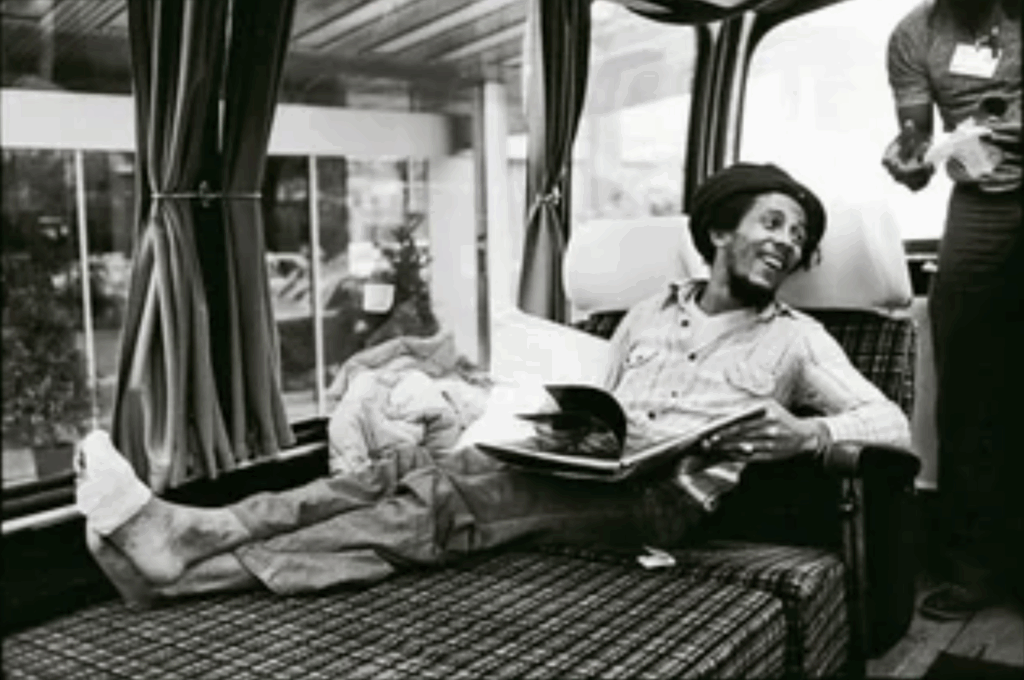
Just before the release of Exodus and its tour in early May, Marley injured his right big toe playing football with French journalists in Paris. “He had a black-and-blue bruise under his big toe. Not the whole toe, just the middle part. He never complained about it,” said Neville Garrick, Marley’s friend and art director.
Released on June 3, 1977, Exodus was the fifth studio album with Island Records, featuring “Jamming,” “Waiting in Vain,” and “Three Little Birds.” The same week, Island announced in Billboard a U.S. summer tour scheduled for “early this summer.” Record World called Marley “the most articulate spokesman of the reggae genre.” The album peaked at number 20 on the Billboard 200 and number eight on the U.K. charts, where it remained for 56 consecutive weeks. Time magazine called Exodus the best album of the 20th century, saying it “is a political and cultural nexus, drawing inspiration from the Third World and then giving voice to it the world over.”
“We finished the tour and went back to America. We had planned to go into America with the Exodus tour, which had done well in Europe, and he went back to England to check up on the books, and also his toe. And that’s where doctors said they think he had cancer,” said Garrick.
In July 1977, doctors examined the ongoing toe injury and found a rare form of skin cancer under the toenail. They advised amputation, but Marley refused, citing his Rastafarian faith. He flew from England to Miami, where on August 26, surgeon Dr. William Bacon removed the tumour and part of the toe. Billboard reported a second surgery was required weeks later. Two operations, both declared successes, but the North American tour was completely cancelled.
Kaya, Marley’s sixth album, was released in March 1978 and became the first certified gold album of his career, and the first gold album Island Records had achieved in North America. In Australia, it went platinum. That June, Marley headlined Madison Square Garden, which Billboard noted was “a much more ethnically mixed crowd” than any past New York show.
Marley returned to Jamaica on April 22, 1978, for the first time since leaving after the assassination attempt, to perform at the One Love Peace Concert at the National Stadium in Kingston. Known as “Third World Woodstock,” the event drew nearly 35,000 people. During “Jammin’,” Marley brought rival political leaders Michael Manley and Edward Seaga to the stage. Briefly, their hands joined, with Marley between them. “Love, prosperity be with us all,” Marley declared.
The title of the next album was personal. Marley had chosen the word deliberately, connecting it to the night gunmen came to Hope Road three years earlier. Survival was released on October 2, 1979.
The album cover art was deliberate. Designed by Neville Garrick, he gathered the flags of every free Black African nation and arranged them around Marley’s photograph. For Zimbabwe, not yet a sovereign nation, still white-ruled Rhodesia, he refused to use the colonial flag, but substituted the emblems of the Zimbabwe African National Union (ZANU) and the Zimbabwe African People’s Union (ZAPU) liberation groups who were fighting for independence. “Anybody who’s in the diaspora from Africa came out through slavery,” Garrick recalled. “What I did was reverse the word Survival out of a slave-ship plan.”

Island and Warner Bros. distributed an educational poster to Black studies programs across the United States, expanding the album’s visual identity into a teaching resource, designed with assistance from UCLA’s Afro-American Studies Department.
Asked in a December 1979 interview why Black Americans were uninterested in reggae, Marley stated, “It’s because you have a black store and a white store. What the record companies put in one, you don’t have in the other. What they don’t realize is that music is for all people.”
The cover’s message translated into history. Marley and the Wailers were the only non-Zimbabwean artists invited to perform at Rufaro Stadium in Harare for Zimbabwe’s official Independence Day ceremonies. Marley covered the costs himself. He had written “Zimbabwe” the year before, when the country was still called Rhodesia. At midnight on April 18, 1980, as the flag was raised, an announcer’s voice was heard across the stadium: “Ladies and Gentlemen, Bob Marley and The Wailers!” The first song played was “Zimbabwe.”
Uprising was released on June 10, 1980. The record featured “Redemption Song” and the lead single “Could You Be Loved,” which climbed to number five on the U.K. charts. The band launched the North American leg of the Uprising Tour in September 1980, a solo headlining arena run scheduled to be followed by an anticipated 60-date co-headlining tour with Stevie Wonder.
In August 1980, building on the momentum of “Could You Be Loved,” Island released “Three Little Birds” as a single, pulling the track from the Exodus sessions recorded three years earlier. Two months later, “Redemption Song” arrived.
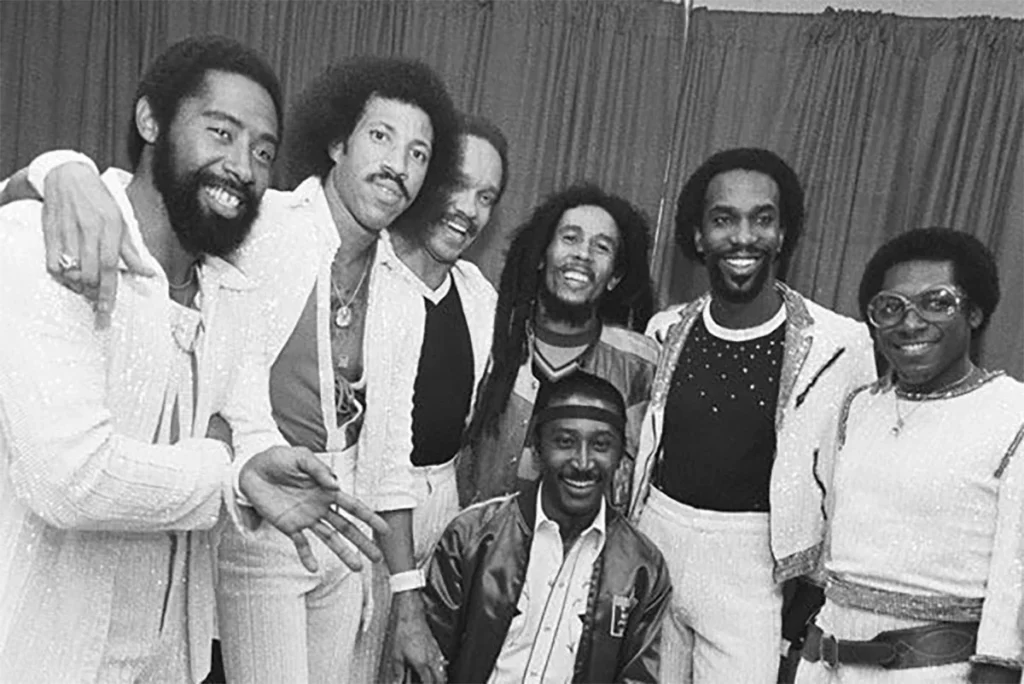
When Billboard journalist Roman Kozak visited Marley in his hotel suite before the Madison Square Garden shows with the Commodores, he noted that the singer “does not look particularly tired or ill. But he is wary.” In his review of the concert, Kozak wrote that Marley’s “timing and phrasing transcend his material, and he has a way with a song that rivals Dylan, Streisand, Willie Nelson or Stevie Wonder — those who believe, obviously really believe, and those who don’t, are tempted.”
“I put my all into getting Bob’s music, and Jamaica’s music, into the mainstream,” Blackwell said.
Despite five million albums sold worldwide within a decade, Marley remained, as Blackwell acknowledged that September, “pretty much a cult artist” in the United States. Blackwell had arranged for him to open for the Commodores specifically to expose him to “a wider, and ironically, blacker audience.” The problem, Blackwell said, was that “a black music act has to first make it in the black music market before it can cross over and sell in all markets.”
Following the final performance in Pittsburgh, Island Records denied any cancer diagnosis through spokesman Howard Bloom, telling press that Marley was merely suffering from “serious exhaustion.” The denial held throughout October and November 1980. By then, Marley had cancelled his tour with Stevie Wonder and begun treatment that took him from New York to Mexico to Miami, and finally to the Bavarian clinic of cancer specialist Dr. Josef Issels in Germany. To treat the brain tumour, Marley was required to stop smoking cannabis and shave off his dreadlocks. NME reported this was “a presumably traumatic experience.” Marley believed the treatment had worked and decided to return to Jamaica. Mid-flight over the Atlantic, his condition collapsed and forced an emergency landing in Miami. He was admitted to Cedars of Lebanon Hospital. Bob Marley passed away on May 11, 1981.
“The whole thing of Bob passing was just really a tragedy, a disgrace in a sense,” said Blackwell. “Nobody, absolutely nobody, from he himself, people close to him, to those who worked with him after that period, including myself, never mentioned anything to him about having regular checkups to see if there were any negative effects from the accident he had on his toe. Nobody did anything, and when it happened it was too late, had spread too much, and there was nothing that could be done.”
Rita Marley issued a statement: “Bob asked me to tell the people that he’s not dead, that he’s gone to the hills to prepare a place.”
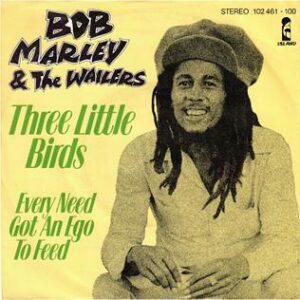
Four years before his death, Marley crafted a song with a message of living. He called it “Three Little Birds.”
Lyrically: Three Little Birds by Bob Marley & the Wailers
On September 18, 1980, the day before the first Madison Square Garden show, Bob Marley sat down with Gil Noble for Like It Is at the Essex House hotel. When Noble asked whether things had been “lean for a long time,” Marley said, “Well, yes, thing was kind of lean and scant, it leave to what is your expectation in how you do, you know. To me it was lean but I could stand it, because coming from the country where you learn to do things like, where you learn to depend on family and all of that. You go out and you plant your own corn and you watch the corn grow. When the corn grow you pick your own corn, you know what I mean? All of them fruits on them tree, you can get them.”
“Well, when you in the city it’s a whole different ball game, you know?” Marley added. “People have to go to work, catch the bus. In the country all the day you go on the donkey and you ride the donkey to the farm and you cool, you know? In the city people must catch the bus, go to work, get off work, come back home, you know? So it was a different thing up there.”
In early 1976, after football and prayer, Bob Marley wrote “Three Little Birds” during a morning meditation in the backyard at Hope Road. Tony “Gilly Dread” Gilbert, his close friend and road manager, was with him. “It was just amazing how he put the words for ‘Three Little Birds’ together in a flow,” Gilbert recalled. “Bob got inspired by many things around him. He observed life. I remember the three little birds. They were pretty birds, canaries, who would come by the windowsill at Hope Road.”
Ricky Chaplin, a family friend and tour guide at the Bob Marley Museum in Kingston, explained why the birds kept coming back. “Every morning, his duty is to get up very early, run, play football, and after that, that morning, he sat right there, smoking his marijuana, meditating. And if he sat there smoking, before you make a spliff, you will make sure the herb is okay. So the seeds, you will pick them out. Sometime you throw them away, and if you throw away the seeds, sometimes birds come and pick the seeds up. And if you do that, it’s all the time he sat there and do that, so it will attract birds to know that this little Rastaman is going to come here and feed us. And then this song came into his mind, and he just wrote that beautiful song.”
“I was performing for the weekend in New Kingston, and I invited sister Judy and Rita to come and do harmonies with me, and they were happy about it. And on the third night, we decided to do a jump session on stage, and the audience loved it, and they all encouraged us to form a group. And Bob immediately invited us in the studio to do… nothing… dream… the rest is history. We became his three little birds. Bobby’s a person who opened my eyes to realize that the music was not just entertainment and dancing and fun. It was much deeper. It’s such a positive vibration. You’re telling yourself, and you accept this message: don’t worry. So it’s like a rejuvenation. It’s spiritual medicine to the soul,” said Marcia Griffiths, a member of The I-Threes, Bob Marley’s backing vocal group.
Griffiths recalled in The Book of Exodus, “After the song was written, Bob would always refer to us as the Three Little Birds. After a show, there would be an encore, sometimes people even wanted us to go back onstage four times. Bob would still want to go back and he would say, ‘What is my Three Little Birds saying?’ If we consent to go on again, then he will go.”
“‘Three Little Birds’ was our song, officially for I-Three. It was more or less expressing how we all came together, when he says, ‘Rise up this morning, smile with the rising sun.’ We loved it. Even when we were recording it, we knew that it was our song. Everybody knew that he was referring to us when he said ‘three little birds’ — he never said four, or two. And then he would tell us that our lips are not for kissing, just for singing. We just laughed when he said that,” Griffiths added.
“Three Little Birds” was recorded during the Exodus sessions in London in early 1977. Recording engineer Terry Barham recalled that the song was one of the true Exodus originals “taken from Jamaican reels” first explored during the Rastaman Vibration sessions. “I’m pretty sure, ’cause I can remember most things, and that song was already there when the London sessions began,” Barham said. “You know that high synth sound? We didn’t have anything in London that was capable of making it.”
Blackwell held the song back from Exodus deliberately. “I always loved ‘Three Little Birds,'” he said. “I thought it was just so light, very poppy, and I thought Bob got away with it fine.” Writing in Melody Maker in November 1978, critic Simon Frith asked whether the message still held: “Who can blame him for marking time? Everything’s gonna be all right? I wish I could still believe it.” Island waited. “Three Little Birds” was released as a single in August 1980, three years after the album, one month before Pittsburgh.
“Yes, the whole thing was really, really positive, from beginning to end,” Griffiths said. “Exodus is really a special album. Ordained by God, written by the hand of God himself.”

“Don’t worry about a thing,
’Cause every little thing gonna be alright
Singing, “Don’t worry about a thing
’Cause every little thing gonna be alright”
In the opening lyrics, Marley is not singing about worry. He is singing to someone who is worrying. He does not say “I don’t worry.” He says “don’t worry.” The song opens as an instruction.
Rise up this morning, smile with the rising sun
Three little birds pitched by my doorstep
Singing sweet songs of melodies pure and true
Saying, “This is my message to you”
Marley does not wake up. He rises up. The distinction matters. In “Get Up, Stand Up,” “Exodus,” and “Redemption Song,” rising is an act of will. In “Three Little Birds,” the act is simply choosing to be present and grateful for the moment. The smile comes before the birds. Before anything external. In “Positive Vibration,” Marley makes a similar connection, stating, “You just can’t live that negative way… make way for the positive day.” “Three Little Birds” says the same thing without saying it at all. The attitude is the foundation.
Singing, “Don’t worry about a thing
‘Cause every little thing is gonna be alright”
Singing, “Don’t worry, don’t worry ’bout a thing
‘Cause every little thing’s gonna be alright”
The message in the chorus is clear and repeated as a reminder. Once is not enough. It has to be lived in practice.
Bob Marley said his music is to spread “peace, love and harmony.” “As time goes on,” he said, “people find out that this is for real.”



What does this song mean to you?
Share your thoughts on this song.