London. October 1975.
Kenny Everett is live on Capital Radio. It is a weekend lunchtime show, and his moment has arrived.
“There is a new one around the corner and we will bring it to you first. In fact, we have their new single. It’s not even been pressed onto wax yet; it’s on tape. And it’s waiting for me to press the button,” he tells his listeners. “Yes, friends. Freddie pressed it into my hot little hand this very last nightness, and he said, ‘Go forth and be fab, Ken.’ So ladies and gentlemen, for the very first time anywhere in this universe of ours, we present, at this moment of time, the new Queen single.”
He presses the button.
At approximately 1:49 PM on Saturday, October 25, 1975, “Bohemian Rhapsody” plays on radio for the first time.
When it ends, Everett can barely speak. “That’s the modern version of Beethoven,” he tells his listeners. “Ooh, me spine’s turned to custard. Love it. Five minutes to two, that was Queen’s new single, available in your local record store quite soon. We’ll take a break.”
Over the last weekend of October 1975 — Saturday, October 25, and Sunday, October 26 — Everett plays the song fourteen times in its entirety. By Monday morning, record stores across the country are inundated with requests. The momentum builds before a single copy has been officially pressed.
The song is “Bohemian Rhapsody.” It is five minutes and fifty-five seconds long. And almost nobody in the music industry wanted it released.
Three Songs in One
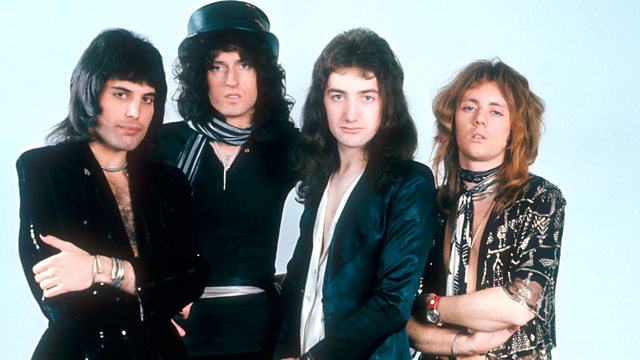
The song did not begin in 1975 but back to the late 1960s, when Queen lyricist and lead singer Freddie Mercury, born Farrokh Bulsara, was a student at Ealing Art College in London, scribbling the first ideas on scraps of paper.
Brian May, Queen’s guitarist, recalled the band getting early glimpses of the song in the early 1970s, when Mercury had a working title for it: “The Cowboy Song,” likely because of the line “Mama, just killed a man.”
By 1975, Queen had promise but little commercial proof. Their 1973 self-titled debut album drew critical praise but the lead single, “Keep Yourself Alive,” sold poorly. Queen II gave them their first UK hit with “Seven Seas of Rhye” in 1974, reaching number 10. Sheer Heart Attack, released the same year, produced “Killer Queen,” their first crossover success, which reached number 2 in the UK and number 12 on the Billboard Hot 100.
The band was getting a reputation as a live act worth experiencing. On February 16, 1975, they headlined Avery Fisher Hall in New York. A Billboard review noted they “come off as a tight, energetic and crowd-pleasing band” and that “from the audience reaction of this concert it is likely that this year will be a big one for Queen.”
The crowds were coming. The money was not. Despite two Top Ten albums and two Top Ten singles, Queen were in financial trouble. Trident, the production company run by brothers Norman and Barry Sheffield, had invested in the band early and taken control of everything in return, including owning their recording contract. The band saw little of what they earned. When bassist John Deacon asked the Sheffields for a £4,000 advance for a house deposit, they refused outright. Drummer Roger Taylor was looking for a small car, Mercury wanted to buy a piano, but the requests were denied.
In late August 1975, Queen split with Trident and negotiated their freedom. It cost them £100,000 and one per cent of royalties on their next six albums. Five years into the band, they were left with no money at all.
Queen began searching for new management and, having turned down an offer from Led Zeppelin’s Peter Grant, approached Elton John’s manager, John Reid, who agreed to take them on. On September 1, 1975, the band signed a management contract with Reid. Their lawyer Jim Beach negotiated a new deal directly with EMI in the UK and Elektra in North America.
While all of this was unfolding, Mercury was refining what would become “Bohemian Rhapsody” at his home in Kensington, London.
“I’d always wanted to do something operatic,” Mercury later said. “Something with a mood-setter at the start, going from a rock type of thing… and then [returning] to the theme.”
What he was assembling was not one song but three songs in one.
“There was so much hunger,” Mercury said. “We just had so much that we wanted to bring out… so we had all kinds of songs and ‘Bohemian Rhapsody’ was basically like three songs that I wanted to put out and I just put the three together.”
One evening in the summer of 1975, record producer Roy Thomas Baker was at Mercury’s Kensington apartment when he first heard the opening. “He played the beginning bit on the piano, then stopped and said, ‘This is where the opera section comes in,'” Baker recalled. “Then we went out to eat dinner.”
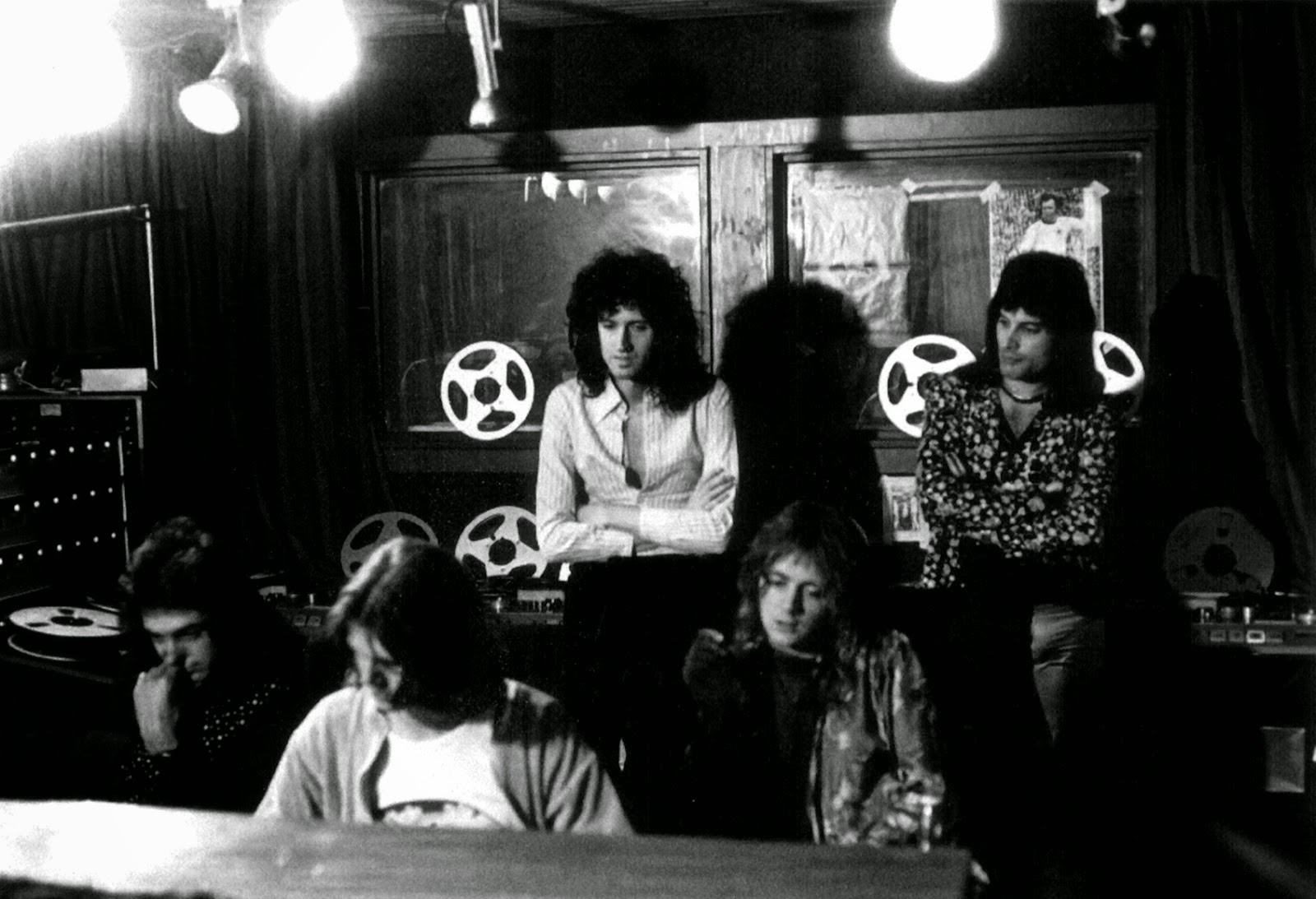
The idea did not leave him. Queen first rehearsed “Bohemian Rhapsody” at Ridge Farm Studio in Surrey in mid-1975, then spent three weeks refining it at Penrhos Court in Herefordshire. On August 24, 1975, the band arrived at Rockfield Studios in Monmouth, Wales. Mercury came with the song already mapped out in his head and on scraps of paper.
“I remember Freddie coming in with loads of bits of paper from his dad’s work and pounding on the piano,” May recalled. “He played the piano like most people play the drums. And this song he had was full of gaps where he explained that something operatic would happen here and so on. He’d worked out the harmonies in his head.”
“It was really Freddie’s baby from the beginning,” May said. “He came in and knew exactly what he wanted. The backing track was done with just piano, bass and drums, with a few spaces for other things to go in… Freddie sang a guide vocal at the time, but he had all his harmonies written out, and it was really just a question of doing it.”
At some point during the sessions, the question of a title came up. “We had an unwritten law that whoever brought the song in would have the final say in how it turned out,” May said. “Probably the most unusual thing was, John [Deacon] said to him, ‘What are you going to call it then, is it called Mama?’ And Freddie went, ‘No, I think we’ll call it Bohemian Rhapsody.’ And there was a little silence, everybody thought, ‘Okaaay…’ I don’t think anybody said, ‘Why?’ but there it was. How strange to call a song ‘Bohemian Rhapsody,’ but it just suits it down to the ground.”
Over three weeks and across six studios, Queen crafted the song layer by layer. A full week was devoted to the opera section alone. The group layered 160 vocal overdubs, with Mercury on the middle register, May on the low, and drummer Roger Taylor on the high. Bassist John Deacon did not sing. Mercury overdubbed his voice until it sounded like an entire chorus.
The tape did not hold up easily.
“We ran the tape through so many times it kept wearing out,” May said. “Once we held the tape up to the light and we could see straight through it, the music had practically vanished. Every time Fred decided to add a few more ‘Galileo’s we lost something, too.”
“We were all a bit mystified as to how he was going to link all these pieces,” said May.
“Nobody really knew how it was going to sound as a whole six-minute song until it was put together,” said producer Baker. “I was standing at the back of the control room, and you just knew that you were listening for the first time to a big page in history. Something inside me told me that this was a red-letter day, and it really was.”
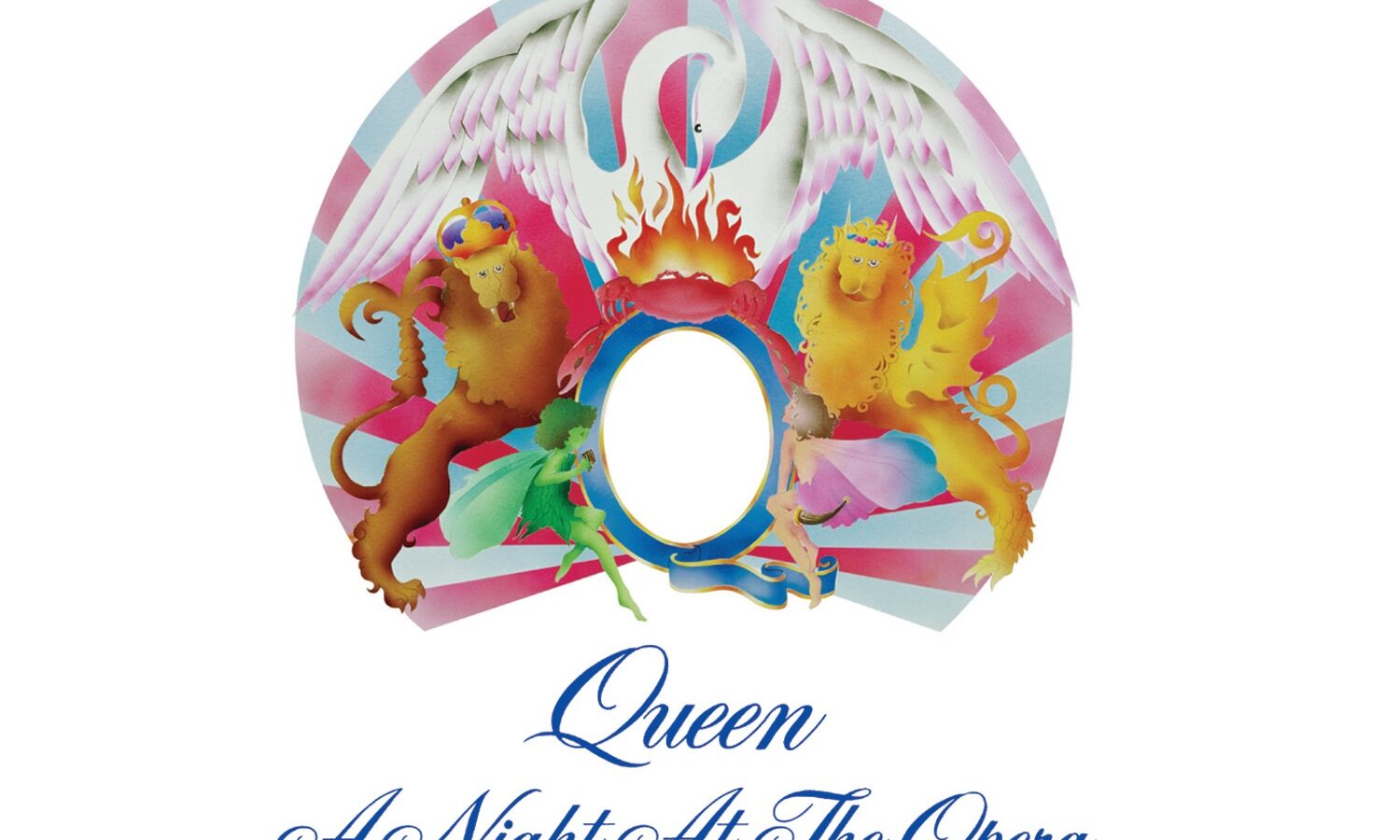
By the time A Night at the Opera was finished, it was [reported] to be the most expensive album ever recorded in a British studio. The title was from a 1935 Marx Brothers film of the same name.
Nobody Will Play It
In 1975, radio stations and record labels expected singles to run between three and four minutes. Shorter tracks fit standard programming and left room for advertising. Anything longer was considered unplayable.
“Bohemian Rhapsody” came in at nearly six.
“We were advised that ‘Bohemian Rhapsody’ wouldn’t work as a single because it was too long. The information we had was that no one would play it, no radio station would play it,” May said. “Even our manager, John Reid — and John Reid was very enthusiastic; it was all new, we’d only just signed with him. He was Elton’s manager at the time, and we’d just signed up with him, and he really did a rescue job on us because we were in debt and in a terrible situation with our former management. He went in and said, ‘Okay, you make the best album you’ve ever made and I will sort out all the business!’ So he was very enthusiastic, but even he said, ‘This is a problem. We have a problem because this single is too long.'”
Reid asked Elton John for his opinion. John was the biggest pop star in the world at the time.
“We listened to the song and I shook my head, incredulous,” John stated. “‘You’re not actually going to release that, are you?’ For one thing, it’s about three hours long. For another, it’s the campest thing I’ve ever heard in my life. And the title’s absolutely ridiculous as well.”
Queen was not interested in cutting the length of the song.
“We were adamant that it could be a hit in its entirety. We have been forced to make compromises, but cutting up a song will never be one of them,” Mercury said. “We just thought there is no point. You either hear it in its entirety or just pick another song. I think we were so confident with that certain number. I mean it is a risk, I know, and we either thought it was going to be an enormous flop or a huge success.”
The Tape That Changed Everything
The fate of the song shifted when it reached Kenny Everett, one of the most popular DJs in Britain on Capital Radio.
Exactly how Everett came to have the tape is disputed. Brian May said Everett stole a copy at a launch party. Others suggested Mercury handed it to him deliberately, telling him not to play it on air, knowing full well he would. A third account said a demo was simply sent to him with strict instructions not to broadcast it. Whatever the truth, Everett was told not to play it. He played it anyway, claiming to his boss on every occasion that “his finger slipped.”
“The situation only really changed when we had our launch party,” May said. “It was attended by a DJ who was very popular in this country at the time, called Kenny Everett. He was a DJ for Capital Radio. He basically stole a copy of the still-unfinished master tape and immediately played it on his radio station. He had this hugely confident feeling about ‘Bohemian Rhapsody’ and he just kept playing it and people loved it. He got a fantastic response.”
Everett had confidence in the song. “I love this song,” he said. “This is so good, they’ll have to invent a new chart position. Instead of it being number one, it’ll be number half.”
Everett spun it fourteen times over two days. The phones didn’t stop.
Tommy Vance, one of the biggest names in rock radio with shows on Capital, BBC Radio One and Virgin Radio, described hearing “Bohemian Rhapsody” for the first time as “the rock equivalent of the assassination of JFK. We all remember what we were doing when we first heard it. I was doing the weekend rock show at Capital at the time.”
EMI released “Bohemian Rhapsody” as a single in its full length on Friday, October 31, 1975. The album, A Night at the Opera, followed on November 21, 1975, in the United Kingdom, and December 2, 1975 in the United States.
The press took notice. NME wrote that Queen “moved into a creative area which certainly hadn’t been explored as fully by any other band since The Beatles” and that “quite frankly this band are the best thing to have happened to British music this decade.” On “Bohemian Rhapsody” specifically, the review called it “the definitive track of the album” and “the quintessential example of Queen’s magnificence in terms of writing and production.” The review concluded, “if it’s the most expensive album ever made in a British studio, it’s also arguably the best. And I mean that.”
In the United States, Cash Box stated, “Queen has been putting in its licks over the years as a hard rock band, but lately it has been showing definite signs of an ability to promote its more sensitive side. ‘Bohemian Rhapsody’ is a softly sung ode to the prospect of moving on from staid ways. Good singing, good production.”
Not everyone was convinced. Melody Maker acknowledged Queen’s craftsmanship but dismissed “Bohemian Rhapsody” as a “farrago of nonsense” that illustrated “more about their constantly improving recording technique than any lyrical content.” The song’s meaning, or the question of whether it had any, would follow it for decades.
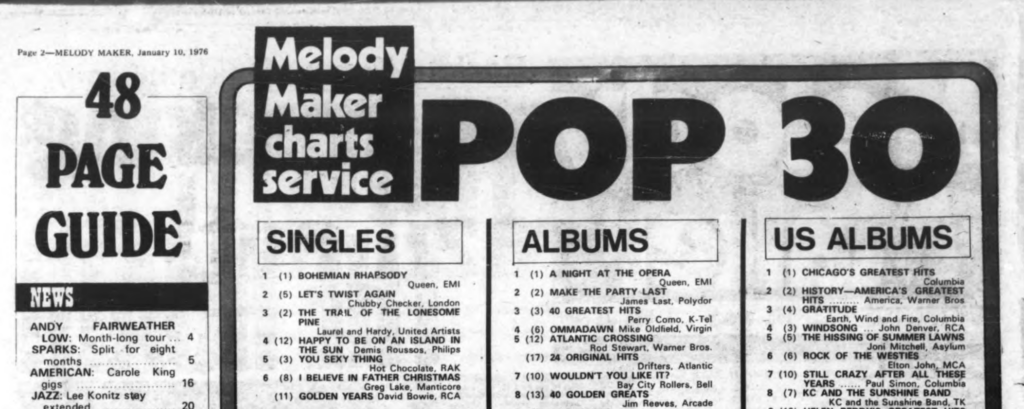
“Bohemian Rhapsody” topped the UK Singles Chart for nine weeks beginning in late November 1975. The song crossed the Atlantic. By February 1976, the band was headlining the Beacon Theater in New York City. A Cash Box reviewer noted that “Bohemian Rhapsody” earned “perhaps the most plaudits from a solidly committed audience.” The song climbed to number 9 on the Billboard Hot 100 in 1976.
“It got us out of debt!” said May.
After Freddie Mercury’s death on November 24, 1991, the song returned to number one in the UK for another five weeks.
“Bohemian Rhapsody” is listed on Rolling Stone‘s “500 Greatest Songs of All Time” and has been inducted into both the Grammy Hall of Fame and the National Recording Registry by the Library of Congress. In 1976, Mercury earned an Ivor Novello Award for the song; decades later, in May 1992, it won a second Ivor Novello for Best Selling ‘A’ Side following its chart-topping re-release. In 2002, the Guinness Book of Records named it the top British single of all time.
Lyrically: Bohemian Rhapsody by Queen
The Cambridge Dictionary defines “bohemian” as “a person who is interested in artistic and unusual things.” A “rhapsody” is “a piece of music written without a formal structure that expresses powerful feelings and emotional excitement.” In ancient Greece, the word referred to an epic poem.
The band has remained tight-lipped about the lyrical meaning behind the song.
“I don’t think we’ll ever know, and if I knew I probably wouldn’t want to tell you anyway,” May said. “I certainly don’t tell people what my songs are about. I find that it destroys them in a way, because the great thing about a great song is that you relate it to your own personal experiences in your own life. I think that Freddie was certainly battling with problems in his personal life, which he might have decided to put into the song himself. He was certainly looking at recreating himself. But I don’t think at that point in time it was the best thing to do, so he actually decided to do it later.”
Jim Hutton, Mercury’s partner in the last years of his life, offered his own interpretation. “‘Bohemian Rhapsody’ was Freddie’s confessional,” Hutton stated. “It was about how different his life could have been, and how much happier he might have been, had he just been able to be himself, the whole of his life.”
Mercury preferred to leave it open.
“A lot of my songs are fantasy. I can dream up all kinds of things. That’s the kind of world I live in. It’s very sort of flamboyant, and that’s the kind of way I write. I love it,” said Mercury.
Is this the real life? Is this just fantasy?
Caught in a landslide, no escape from reality
Open your eyes, look up to the skies and see
The opening trio of lines sets the tone for the song and presents the listener with a philosophical question of two options. “Is this the real life? Is this just fantasy?” It is the question of someone standing at a crossroads between two versions of themselves. “Caught in a landslide, no escape from reality” suggests there is no turning back. “Open your eyes, look up to the skies and see” is an invitation to face whatever comes next.
I’m just a poor boy, I need no sympathy
Because I’m easy come, easy go
Little high, little low
Any way the wind blows doesn’t really matter to me, to me
If “Bohemian Rhapsody” is Mercury’s attempt to articulate a life in transition, this verse is his protection. “I’m just a poor boy, I need no sympathy” is not humility. It is a refusal to be judged for what he is about to confess. “Little high, little low, any way the wind blows” hints at detachment from the outcome. Whatever happens, the direction is beyond his control.
Mama, just killed a man
Put a gun against his head, pulled my trigger, now he’s dead
Mama, life had just begun
But now I’ve gone and thrown it all away
Mama, ooh, didn’t mean to make you cry
If I’m not back again this time tomorrow
Carry on, carry on as if nothing really matters
Sir Tim Rice, a lyricist who worked with Mercury during his solo career, stated, “I’ve spoken to Roger Taylor [the band’s drummer] about it. There is a very clear message in it. This is Freddie admitting that he is gay. In the line ‘Mama, I just killed a man’ he’s killed the old Freddie, his former image. With ‘Put a gun against his head, pulled my trigger, now he’s dead’ he’s dead, the straight person he was originally. He’s destroyed the man he was trying to be, and now this is him, trying to live with the new Freddie. ‘I see a little silhouetto of a man’ — that’s him, still being haunted by what he’s done, and what he is. Every time I hear the song I think of him trying to shake off one Freddie and embracing another — even all these years.”
These lines are spoken directly to one person who matters. “Mama, life had just begun / But now I’ve gone and thrown it all away” is a declaration of someone who understands the cost of the decision. “Mama, ooh, didn’t mean to make you cry” is the line that makes the verse human. “If I’m not back again this time tomorrow / Carry on, carry on as if nothing really matters” closes with an instruction to move forward. He is preparing to leave, and he is telling the people he loves how to go on without him.
Too late, my time has come
Sends shivers down my spine, body’s aching all the time
Goodbye, everybody, I’ve got to go
Gotta leave you all behind and face the truth
Mama, ooh (any way the wind blows)
I don’t wanna die
I sometimes wish I’d never been born at all
The verse escalates. Time has run out. This is a formal farewell from a man who has made his peace. “Gotta leave you all behind and face the truth” confirms he is moving toward something, not away from it.
Then the song cracks open. “I don’t wanna die / I sometimes wish I’d never been born at all” is the deepest part of the song. The wish to have never existed is the statement of someone in so much pain that the idea of the pain never having started feels like relief.
I see a little silhouetto of a man
Scaramouche, Scaramouche, will you do the Fandango?
Thunderbolt and lightning, very, very frightening me
(Galileo) Galileo, (Galileo) Galileo, Galileo Figaro, magnifico
But I’m just a poor boy, nobody loves me
He’s just a poor boy from a poor family
Spare him his life from this monstrosity
The opera section of “Bohemian Rhapsody” brings a scene filled with theatrical imagery. Scaramouche is a character from the Italian commedia dell’arte, a type of theatre that flourished from the 16th to the 18th centuries. Fandango is a lively Spanish dance. “Bismillah,” taken from the Quran, means “in the name of Allah.” The “thunderbolt and lightning” that is “very, very frightening” reflects the chaos of what he is living through.
Galileo refers to the Italian astronomer, physicist, and engineer Galileo Galilei, known as the “father of modern observational astronomy” and associated with the pursuit of truth and enlightenment. “Galileo Figaro Magnifico” may be Mercury’s own theatrical invention, combining the astronomer’s name with “Figaro,” from Mozart’s opera The Marriage of Figaro, and “Magnifico,” Italian for “magnificent.”
“Freddie kept coming in with more ‘Galileos’ and we kept on adding to the opera section,” said Baker, who produced the song.
The repeated “I’m just a poor boy, nobody loves me” brings the song back to a world that may not have a place for him, pleading for understanding.
Easy come, easy go, will you let me go?
No, we will not let you go (let him go)
We will not let you go (let him go)
We will not let you go (let me go)
Will not let you go (let me go)
Will not let you go (never, never, never, never let me go)
No, no, no, no, no, no, no
The call-and-response section unveils the conflict the song has been building toward. The voice asking “will you let me go?” is the man trying to move forward. The voice refusing is everything holding him back: the past, expectation, identity, fear. The tension between them is not resolved here. It simply builds.
Oh, mamma mia, mamma mia
Mamma mia, let me go
Beelzebub has a devil put aside for me, for me, for me
The plea to be free is now desperate. “Mamma mia, let me go” is exhaustion. “Beelzebub has a devil put aside for me” suggests he already knows he will be punished for his decision.
“Beelzebub” is another word for Satan. Mercury offered a glance at his own attachment to the imagery. “I mean, uh, doesn’t necessarily mean I’m, I study demonology and things. I just love the word Beelzebub, great word, isn’t it?” Mercury said.
So you think you can stone me and spit in my eye?
So you think you can love me and leave me to die?
Oh, baby, can’t do this to me, baby
Just gotta get out, just gotta get right outta here
The hard rock section arrives like a fist and shifts from pleading to defiance. “So you think you can stone me and spit in my eye?” is a direct challenge to anyone who would judge him. The repetition of “just gotta get out” is about not letting their opinions matter.
“Freddie was a very complex person; flippant and funny on the surface, but he concealed insecurities and problems in squaring up his life with his childhood,” said May. “He never explained the lyrics, but I think he put a lot of himself into that song.”
Ooh
Ooh, yeah, ooh, yeah
Nothing really matters, anyone can see
Nothing really matters
Nothing really matters to me
The closing lines settle the song. The storm has passed. The repetition of “nothing really matters” reveals that the fighting has stopped. The journey that began with “is this the real life?” ends not with an answer but with acceptance. He is at peace, finally.
Carry on, carry on
The song took on new dimensions through the decades.
Rather than appear on the BBC’s Top of the Pops to promote the single, Queen filmed a promotional clip to play in their place. It was a decision that changed the music industry. The clip cost £5,000 to make. Mercury reflected on what it became, stating, “‘Bohemian Rhapsody’ was one of the first videos to get the kind of attention that videos get now. We decided we should put ‘Rhapsody’ on film, and let people see it. To us, it was just another form of theatre. But it went crazy. We recognized that a video could get to a lot of people in a lot of countries without you actually being there. It became very fast and it helped record sales greatly.” MTV launched seven years later, in 1981.
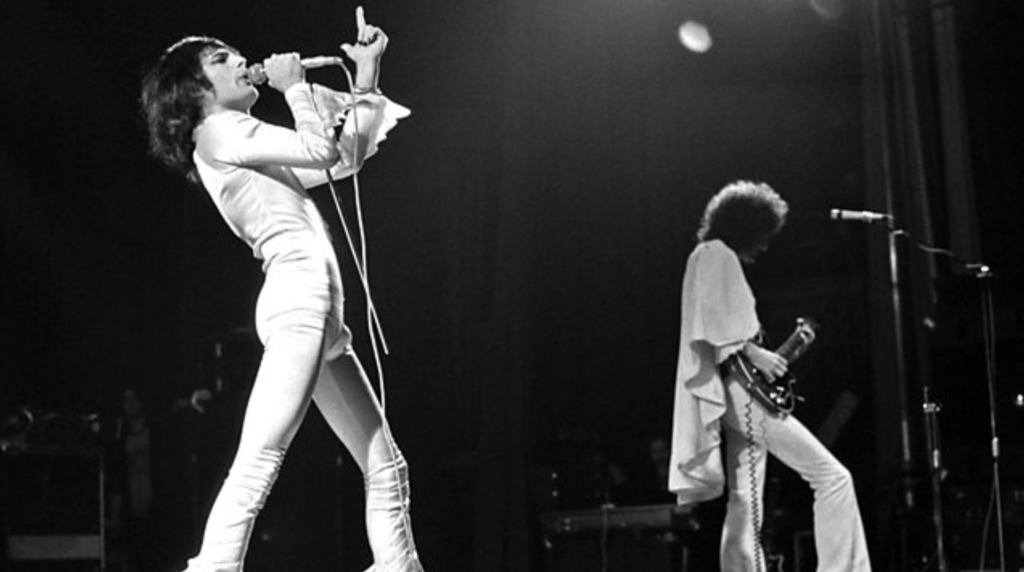
On Saturday, July 13, 1985, at 6:41 pm BST at Wembley Stadium in London, Queen took the stage for their 21-minute set during Live Aid that drew in 72,000 people and an estimated 1.9 billion viewers worldwide. It is widely regarded as one of the greatest live rock performances in history.
Mike Myers, the comedian behind Wayne’s World, insisted on using “Bohemian Rhapsody” in the movie.
“An example of something I fought very, very hard for and it was my first movie, it was ‘Bohemian Rhapsody’ in Wayne’s World. They wanted Guns N’ Roses. Guns N’ Roses were very, very popular, they were a fantastic band,” said Myers. “Queen, at that point, not by me and not by hard-core fans, but the public had sort of forgotten about them. Freddie [Mercury] had gotten sick, the last time we had seen them was on Live Aid and then there were a few albums after where they were sort of straying away from their arena rock roots. But I always loved ‘Bohemian Rhapsody,’ I thought it was a masterpiece. So I fought really, really hard for it. And at one point I said, ‘Well, I’m out. I don’t want to make this movie if it’s not ‘Bohemian Rhapsody.'”
“Mike Myers phoned me up and said, ‘We’ve got this thing which we think is great, do you want to hear it?'” May recalled. “‘Do you think Freddie would want to hear it?’ Now Freddie was really sick by that time but I said, ‘Yeah, I’m sure he will.’ Mike gave me a tape which I took round to Freddie and played to him and Freddie loved it, he just laughed and thought it was great, this little video.”
Mercury died on November 24, 1991, eight months before the film opened. Wayne’s World was released on February 14, 1992. In the film’s opening scene, Wayne, Garth, and their friends are driving through downtown Aurora, Illinois in “The Mirthmobile,” a baby blue 1976 AMC Pacer complete with painted flames, headbanging to the song and each singing “Galileo.” The scene redefined how a generation experienced “Bohemian Rhapsody,” turning it from a complex operatic rock piece into something communal and joyful.
In the United States, sixteen years after its original release, the song reached number 2 on the Billboard Hot 100 that year.
In 2018, Rami Malek played the role of Freddie Mercury in the biographical film Bohemian Rhapsody, with Myers making a cameo appearance as a record executive. The film told the story of Mercury’s life and Queen’s rise to fame. Malek earned th


What does this song mean to you?
Share your thoughts on this song.