
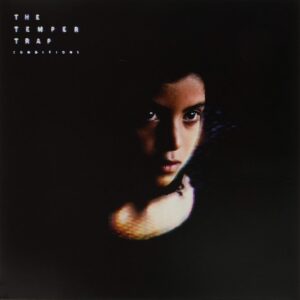
St. Kilda, Melbourne. Late 2007. Lorenzo Sillitto, guitarist for Melbourne indie rock band The Temper Trap, finishes a shift in construction and gets home around four in the afternoon. He has a little time before rehearsal. He sits down with his guitar and a delay pedal and works something out in his room.
By the time he leaves for The Base, the band’s “tiny, tiny sweatbox” of a rehearsal room in the suburbs, he has the beginning of a riff.
He plays it when he arrives. The band is already working on something else. “My ears perked as soon as I heard the first few notes,” said singer Dougy Mandagi.
Toby Dundas came up with a drum beat straight away. With the band’s bassist away, Mandagi jumped on bass. “It was just pretty immediate. It happened quite quickly,” Sillitto recalled. “By the end of that rehearsal session, the basis of the music bed was done.” Mandagi went home and wrote lyrics. He came back the next day and they finished it. It was, Sillitto said, “probably one of the quickest songs that came together on the record.”
“It was literally done like that.”
What began as a riff in a St. Kilda bedroom would be heard at weddings, tattooed, and streamed over a billion times. The Temper Trap called it “Sweet Disposition.”
Four Friends From Melbourne
The Temper Trap officially formed in 2005 in Melbourne, Australia, with Mandagi on lead vocals, Toby Dundas on drums, and Jonathon Aherne on bass. Lorenzo Sillitto joined on lead guitar in 2006.
“I was working at a General Pants on Chapel Street in 2003 and I just wanted to start a band,” Mandagi said. “So, I pushed a few people. One guy from this church that I used to go to, he played guitar. Then I poached Toby [Dundas], who worked at the store as well.”
“We went through a bunch of guitarists after that. But Toby, myself, and Johnny, I guess we were the founding members. And we’ve been together since,” Mandagi said.
Aherne came from next door. “Johnny, who was one of my first friends that I made when I moved to Australia from Bali, was working right next door to General Pants at a surf shop,” Mandagi recalled. “So, that day when we all finished work, I ran next door because we desperately needed a bass player. I just kind of pulled him and said, ‘Do you want to have a go playing bass?'”
He was not there the night “Sweet Disposition” was written. Aherne was on his honeymoon in Mexico. Mandagi picked up the bass himself. “It was just three of us,” Mandagi said.
The band name had an unlikely origin. “It’s derived from Temper Temper, which is a name we were thinking of,” Aherne said. “But we changed it because there was already an emo band in Milwaukee or something called Temper Temper. I remember not wanting to go with the Temper Trap because I thought it didn’t mean anything. But I guess it has sort of a psychological angle to it.” The name is also a combination of the band members’ favourite song, “The Lady is a Tramp,” and their favourite film, The Parent Trap.
In the early days, the band wrote and rehearsed almost daily. “I just knew that I wanted to do it for a living. I wanted to be successful in it,” Mandagi said.
The band built its earliest following on the Melbourne live circuit, playing St. Jerome’s Laneway Festival in March 2006. That same year they signed with Liberation Music in Australia and released their debut EP, The Temper Trap, that November, produced by Scott Horscroft. Two years later, Korda Marshall came calling.
Marshall had just left Warner after eight years as managing director and planned to retire. His daughter, a booking agent at CAA, took him to the Astoria one night to see one of her bands. His children then dragged him to the Borderline to see a Melbourne act that Liberation founder Michael Gudinski had found and brought to London to showcase. “I kinda stood there relatively bored and waiting to go home,” Marshall recalled.
The band opened with an instrumental. Then Mandagi walked out in a little green beanie hat and started singing “Sweet Disposition.” “The voice of an angel came out,” Marshall said. He went back the following night. He met the band for lunch the next day. “It was really evident three songs into their set that this was one of the most wonderful things I’d discovered in my 26-year career,” he said. “I very quickly came to the realization that with an act as really-really great as that, I could start a new record company. I was supposed to be going sailing.”
Gudinski made the call. “Gudinski rang me and said, ‘Do you want it?'” Marshall said. “And Infectious version two was born.”
The band had not gone unnoticed. They had attracted offers from Geffen, Sub Pop, and Warner before choosing Infectious. “I’m so excited they chose to go with us for the world,” Marshall said.
The label made the terms clear. “Before we moved to London, we got signed to a London label and it was part of the deal. Basically, the label said, ‘We’ll sign you, but you have to move to London.’ So, it wasn’t like we had a choice,” Mandagi recalled.
The four members moved into a flat in London’s East End. Their introduction to the neighbourhood was swift. “Some kids from the estate jumped over our fence, so I chased them out,” Mandagi said. “That was a big mistake. They came back in greater numbers, calling us out for a stabbing.”
Building an audience in the UK came easier than expected. They played more than 30 festivals and built a word-of-mouth reputation across Europe. “Compared to starting out in Australia, it has been an absolute breeze,” Mandagi said.
Recording Conditions
The band began recording Conditions at Sing Sing Studios in Richmond, Melbourne, in late 2008, completing the album in London with producer Jim Abbiss in March 2009. Abbiss had previously worked with Arctic Monkeys and Adele. Liberation’s A&R manager Damian Slevison had watched the band showcase in the UK and the United States and was direct in his assessment of what set them apart. “Dougy is a unique vocalist not just on the Aussie but the world stage,” Slevison told Billboard.
“Radiohead, Prince, Massive Attack and U2 influenced the band’s atmospheric feel and infectious, anthem-size guitar riffs,” Mandagi said.
“Sweet Disposition,” Mandagi said, is “a rip-off of a U2 song, to be quite frank.”
“The influence there, for us, was probably more in terms of the fact that we were using delay pedals and in U2 The Edge is the most iconic delay pedal maestro,” he told Music Feeds. “It’s not that we were listening to U2 in particular when we wrote that song. Nothing was ever really too thought out back in those days, we just wrote what felt natural.”
“We wrote the record over a period of three or four years, and with time you get influenced by different things,” Mandagi said. “That’s why you get the diversity.”
Of everything on the record, “Sweet Disposition” came fastest. “‘Sweet Disposition’ literally came together in two days,” Mandagi said.
Lyrically: “Sweet Disposition” by The Temper Trap
“‘Sweet Disposition’ is kind of a song about the exuberance of youth, the ups and downs,” Mandagi said. “As a band we were all so green and inexperienced in making and performing music, and I guess, in short, ‘Sweet Disposition’ sort of encapsulated that moment in our lives as an indie band starting out in Melbourne perfectly.”
“Just young and excited,” he said of where he was when he wrote the lyrics. “The words were just a reflection of what the music made me feel. It just had this visceral kind of melancholic-but-also-kind-of-hopeful feeling. I guess the lyrics just followed accordingly to that.”
Sweet disposition
Never too soon
Oh, reckless abandon
Like no one’s watching you
The opening lyrics describe a moment before the compounding of lived experiences makes you careful. You act on instinct. You do not calculate.
“When we’re young, we act first and think later,” Mandagi said. “Basically, the song is about capturing the innocence of youth.”
A moment, a love
A dream, aloud
A kiss, a cry
Our rights, our wrongs
A moment, a love
A dream, aloud
A moment, a love
A dream, aloud
The repetition in “a moment, a love, a dream, aloud, a kiss, a cry, our rights, our wrongs” is purposeful. It is, as Mandagi described it, “melancholic-but-also-kind-of-hopeful.” Youth does not move in a straight line but travels from one experience to another. The cry is next to the kiss. The wrongs are next to the rights. Nothing is resolved and everything coexists.
Just stay there
‘Cause I’ll be coming over
And while our blood’s still young
It’s so young, it runs
And won’t stop ’til it’s over
Won’t stop to surrender
“While our blood’s still young, it runs / And won’t stop ’til it’s over” is the only line in the song where time appears as a limit. Everything before is present tense, immediate, unpredictable. This line introduces the condition. The blood is young now. The reckless abandon exists now. The song does not say what happens when it stops being young. You do not stop because you decided to stop. You stop because the phase of youth is over.
Songs of desperation
I played them for you
These lyrics arrive without explanation. Every other lyric in the song is addressed outward or stated as universal truth. “Sweet disposition, never too soon.” “While our blood’s still young.” These lines are different. They are addressed directly to another person. “I played them for you.” We do not know what the songs were. We do not know who the person is. It only records that it happened.
A moment, a love
A dream, aloud
A kiss, a cry
Our rights, our wrongs
A moment, a love
A dream, aloud
A moment, a love
A dream, aloud
Stay there
‘Cause I’ll be coming over
And while our blood’s still young
It’s so young, it runs
Won’t stop ’til it’s over
Won’t stop to surrender
The remainder of the song repeats, with one exception: the word “Just” has been dropped. “Just stay there” is a gentle request. “Stay there” is a command. The song nears its end. The urgency is the “innocence of youth” fading away.
Won’t stop ’til it’s over
Won’t stop ’til it’s over
Won’t stop ’til it’s over
Won’t stop to surrender
The final verse repeats. Youth does not stop until it is over.
“Never in our wildest dreams did we expect it to go as far as it has, but we knew we were onto something good,” Mandagi said. “It was an immediate feeling.”
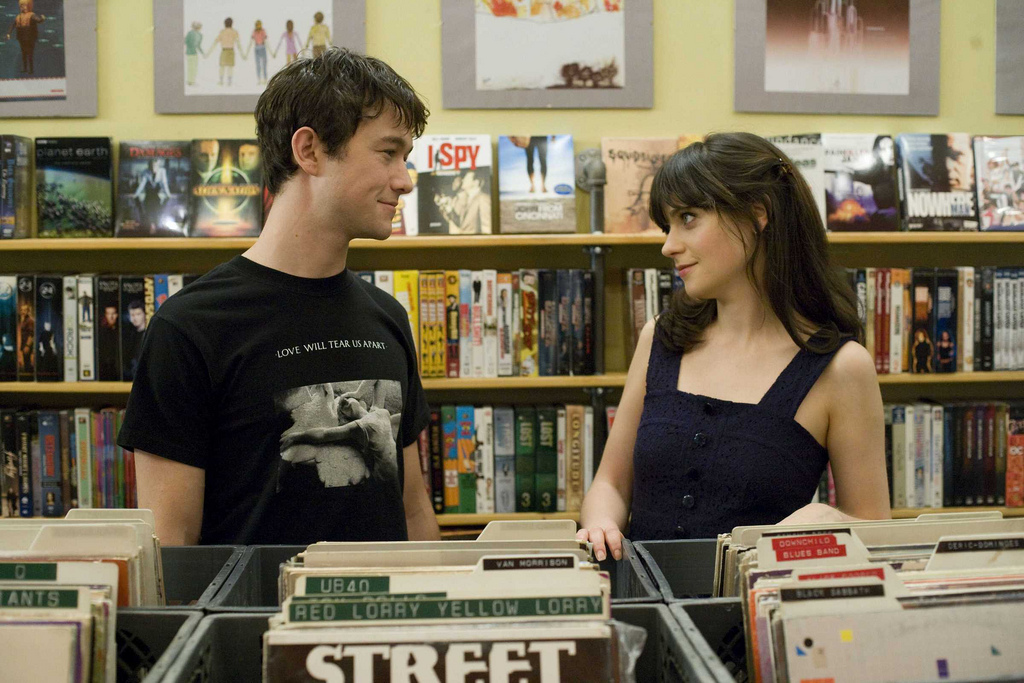
(500) Days of “Sweet Disposition”
“Sweet Disposition” was released as a single on Liberation in Australia on September 16, 2008. The international release followed in the United States on July 14, 2009, three days before (500) Days of Summer opened in American theatres, then in the United Kingdom on August 2.
In the film, starring Joseph Gordon-Levitt as Tom and Zooey Deschanel as Summer, “Sweet Disposition” plays during two key scenes. The first shows the couple bonding while exploring Los Angeles together. The second, after they stop seeing each other, captures them briefly reconnecting and reminiscing about their past. In the opening monologue, the narrator explicitly says, “you should know up front this is not a love story.”
The placement was not the first choice. Director Marc Webb had originally wanted to reprise The Smiths’ “Please, Please, Please, Let Me Get What I Want” but the budget could not afford multiple uses of the song. Fox Searchlight music executive Amy Driscoll brought in “Sweet Disposition” as a replacement. “We had to find some analogous tonal piece to substitute,” Webb said. “What can I say? It fit.” The band was still unsigned internationally when the film was released.
When the film premiered, Mandagi was in the room. “We got a special world premiere,” he said. “I took my mum as my date.” By the time the band left Melbourne for their first international showcases, audiences already knew the song. “People had already heard of us because of that movie,” Mandagi said. “That movie did amazing things for us.”
The inclusion of “Sweet Disposition” in the film brought The Temper Trap to international stages quickly. Tours with the Rolling Stones, Florence and the Machine, Coldplay, and Imagine Dragons followed, taking the band across Australia, New Zealand, the United Kingdom, Germany, France, the Netherlands, Ireland, Switzerland, Canada, and the United States.
“Sweet Disposition” reached the top 10 on the singles charts in the UK, Ireland, and Belgium, and peaked at No. 9 on the US Billboard Alternative Songs chart. By 2010, Conditions had sold well over half a million records, and in the middle of their rise, the band was still asking their management to borrow change for coffee, reportedly unaware of the scale of what was happening around them.
Dundas remembered the moment the reality of it landed. “We were in London, watching music on TV. It’s like, Lady Gaga, some R&B star, and ‘Sweet Disposition’?!” he said.
Marshall had deliberately licensed the song as widely as possible. “It’s one of the most synced records of the past decade,” he said.
By December 2009, “Sweet Disposition” was the lead track in a national Rhapsody advertising campaign airing across MTV, VH1, Spike, and Comedy Central. “Sweet Disposition is an amazing track that harnesses the emotional power of music,” said Jessica Friedberg, Rhapsody’s senior director of consumer marketing. The band was simultaneously on tour in the UK with Florence and the Machine.
While the song is considered by many a love song, Mandagi disagrees. “I mean so many people have gotten married to that song and whatnot, it’s not even a love song!” he said. “But it takes on a whole life of its own. People decipher the lyrics in their own way, and it speaks to them in its own way. So I’m happy for that. I’m glad that the song belongs to so many other people.” Some have embraced the lyrics so fully they have had them tattooed on their bodies, sometimes incorrectly, like Harry Styles.
“I’m just happy that it became the soundtrack to so many people’s lives,” Mandagi said a decade later. “It’s more what other people take out of it.”
The film and the song have the same understanding. We see and hear what we want to see and hear.
Sillitto played a riff in a St. Kilda bedroom. The world decided what it meant.



What does this song mean to you?
Share your thoughts on this song.