At 17, Abel Tesfaye grabbed his mattress, dragged it out of the apartment, and threw it in the van. His mother watched. He remembers she had “the worst look anyone could ever have. She looked at me like she had failed.”
To understand how Abel Tesfaye became The Weeknd and a Starboy, one must first understand him as just a boy.
Born on February 16th, 1990, in Scarborough, Ontario, Canada, Tesfaye was an only child, raised in a small apartment by his mother and grandmother. He was first taught to speak Amharic, an Ethiopian language, and then English at age 5.
His parents, Samra and Makkonen Tesfaye, never married and separated shortly after his birth in 1990. His mother worked multiple jobs in nursing homes and hospitals to provide for the family.
“Had no dad, and mom was working 24/7, so my grandma raised me until I was like 5. No English,” said Tesfaye.
“I didn’t have a father figure in the house. No boys around. Just me and my mom. But I didn’t want a sister, I wanted a brother. And then…” said Tesfaye. “You realize you can’t have that.”
“I had to learn everything from TV,”said Tesfaye. Growing up, his influences were from TV, films and music, including Michael Jackson, Prince, R. Kelly, along with music from Ethiopia.
“People forget, ‘We Are the World’ is for Ethiopia. At home, if it wasn’t Ethiopian music, it was Michael. He was our icon,” said Tesfaye.
“I grew up with this music in my household. [Michael Jackson’s] ‘Don’t Stop ‘til You Get Enough,’ from Off the Wall, is actually the song that helped me find my voice. It’s the reason I sing,” Tesfaye stated. “The sadness I inherit is from the Ethiopian music my mother would play. A lot of sad songs about heartbreak. Even though I couldn’t really make out what they were saying, I could feel it.”
“I’ve been told my singing isn’t conventional. Ethiopian music was the music I grew up on, artists like Tilahun Gessesse, Aster Aweke, and Mahmoud Ahmed. These are my subconscious inspirations.”
In 2007, while attending Birchmount Park Collegiate Institute, Tesfaye found the brother he always wanted in La Mar Taylor. The two met on the first day of business class, talked about music and films, and did drugs. Lots of them.
“I just always wanted to sing. I would sing in class. I would sing at the dinner table. And I would get in trouble for it because it was inappropriate at the time. It wasn’t until I met La Mar, my best friend. He heard me sing and was like, ‘You should sing for Canadian Idol,'” said Tesfaye.
Six months into the school year, feeling confined in Scarborough, Tesfaye persuaded Taylor to join him in dropping out of school and moving out on their own.
Shortly after, the van pulled up.
Tesfaye and Taylor shared a one-bedroom apartment in Toronto’s Parkdale area with another friend, Hyghly Alleyne, for $850 a month. This was mostly covered by welfare checks and selling weed. For food, they shoplifted from supermarkets. For everything else, they got high on painkillers, weed, MDMA, Xanax, cough syrup, cocaine, ketamine, and mushrooms.
Eventually, they were evicted. When he couldn’t find a place to sleep, Tesfaye told girls he loved them and bed-hopped.
But somewhere in all the chaos, he started writing.
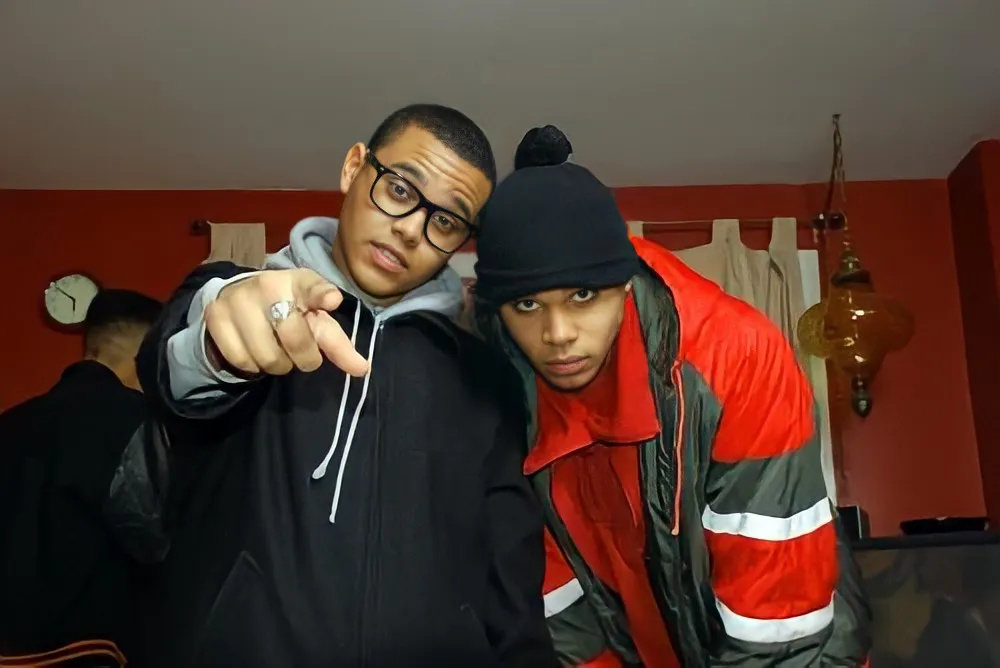
In January 2008, somewhere between the welfare checks and the shoplifting and the bed-hopping, Tesfaye began writing lyrics, singing first to himself, then with Jesse Bedard Dempster, another Scarborough native who rapped under the name JesseRay. The two met through friends, bonded over music, and eventually formed Bulleez n Nerdz, a rap/R&B duo.
The name came from the idea that “we were bullies, but we looked like nerds,” said JesseRay. Tesfaye took on the stage name Kin Kane.
They wrote consistently, even spending one night writing rhymes at a local Tim Hortons after missing the last subway home. Their first tracks were “Godzilla,” “Have You Tonight” (ft. Majes-D), “When The Grip Hits,” “Krispy,” and “Blue,” five songs uploaded to SoundCloud and YouTube, with mixtape tracks in the plan.
Their music caught the attention of Tyse Saffuri, founder of Entyse Entertainment, and his partner Nicki Clarke. Through Saffuri, the duo connected with Kashif Majeed, a Toronto producer known as Kid Klassic.
“Someone brought Abel and his friend Jesse to my studio as they needed some production/recording. Abel was rapping/rap singing and I was like ‘damn this kid has a really cool tone!'” said Kid Klassic. “I asked him if he wanted to come back on his own and we could try recording/writing.”
Bulleez n Nerdz performed in bars across Toronto, including The Nile, and at the University of Toronto in front of “about 1,000 people.” “We had fun,” said Kin Kane of the show in his first radio interview.
However, Bulleez n Nerdz was short-lived. In 2009, Dempster retreated after a friend committed suicide. “I wasn’t making music. I wasn’t talking to anyone. I was in this depressed state,” said Dempster.
Tesfaye moved forward, leaving Kin Kane and Saffuri behind. He was looking for “someone bigger” to help him with his music.
Starting to make Noise
Tesfaye reached back out to Kid Klassic and took him up on the offer to record alone. They eventually formed a writing and production team called The Noise with two other vocalists, Tyler Done and Natalie Di Luccio.
The Noise signed with Lavish Life Management, a company with connections to major labels.
“We’d try to emulate songs that would appeal to specific acts (e.g. Justin Timberlake, Chris Brown),” said Kid Klassic. “The first song we created together was called ‘Superhero.’ He didn’t exactly know what harmonies were but his ear was so good, I would sing him the parts line by line and he’d nail it. And I have to emphasize, his work ethic was amazing.”
The Noise created clean songs fit for labels and radio such as “Do It,” “Material Girl,” “Rescue You,” “Birthday Suit,” “Love Through Her,” “Appointment,” and “X-Ray.”
Drake reportedly heard the track “Birthday Suit” and considered including it on his debut album, Thank Me Later, but it was ultimately omitted.
“We sent out hundreds of our Noise demos on CD to labels,” said Kid Klassic. “When an A&R from Sony/ATV reached out to us after we sent out The Noise demos… They were inviting us to their studio every Wednesday to work on music. Unfortunately they were just leading us on.”
As The Noise fizzled out, Tesfaye continued creating his music. La Mar Taylor and Hyghly Alleyne were also creating something. On October 13, 2009, they created the Twitter account She’s So Lovely, abbreviated as SSL, a platform built to spotlight artists. They already had one in mind.
A Rose has thorns
In 2010, Tesfaye continued to record music but needed money. “I was struggling at the time. A good friend of mine hooked me up with a job at American Apparel and I was folding clothes there,” said Tesfaye.
Then, one night at a poutine shop changed everything.
Enter Jeremy Rose.
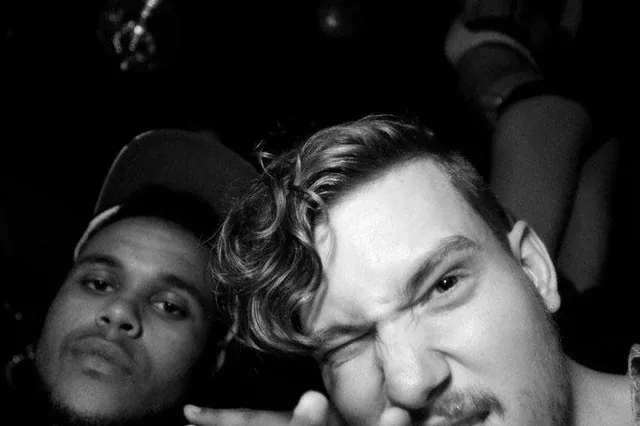
“My girlfriend was working at Poutini’s [a poutine spot in Toronto, obviously] and I used to hang out with a couple of these Australian guys that worked there. That’s where I met Abel, he was hanging out at their house. I was showing them some things in Ableton, because they were interested in that stuff and I was playing the beat for ‘What You Need.’ I had that thing for a couple years and I didn’t know what to do with it. Anyway, Abel was there and he started free-styling on top of it,” said Rose.
“When I met him I heard some of the stuff that he was doing… It was this group, with him and another producer and it was called The Noise. They were a straight kind of R&B, just really light and kind of candlelight… ‘I wanna see you in your birthday suit,'” said Rose. “And I was just like, ‘Aw, fuck that shit. No man, let’s talk about, fuckin’ and getting too high and trying to fuck bitches and it not working out. Let’s get really grimy about it.'”
Rose asked Tesfaye “if he wanted to work on something, I had this idea for a dark R&B project. Abel seemed to suit the project.”
Tesfaye and Rose started working on music and partying. “We started as a group; it was he and I, and we called ourselves ‘The Weekend,'” a name Rose says he came up with.
Four songs were created: “What You Need,” “Loft Music,” “The Party,” and “The Morning.”
SSL shared “What You Need” on September 10th at 10:58pm EST, “The Morning” on October 20th at 3:43am EST, and “Loft Music” on November 8th at 9:12pm EST. All through YouTube, Tumblr and Twitter.
The dynamic was going well. Until it didn’t.
“I don’t know if it was a change in his heart or the people around Abel trying to guide him, but he was starting to push for doing club tracks and I didn’t really want to do that,” recalled Rose.
“I left,” said Rose. “I was like, ‘You can have those three or four tracks, I’ll give you the stems, just take ’em, but I don’t want to work with you anymore.’ I was really congenial about it, but I told him, ‘Just make sure that you give me credit.'”
Tesfaye moved on, along with the songs.
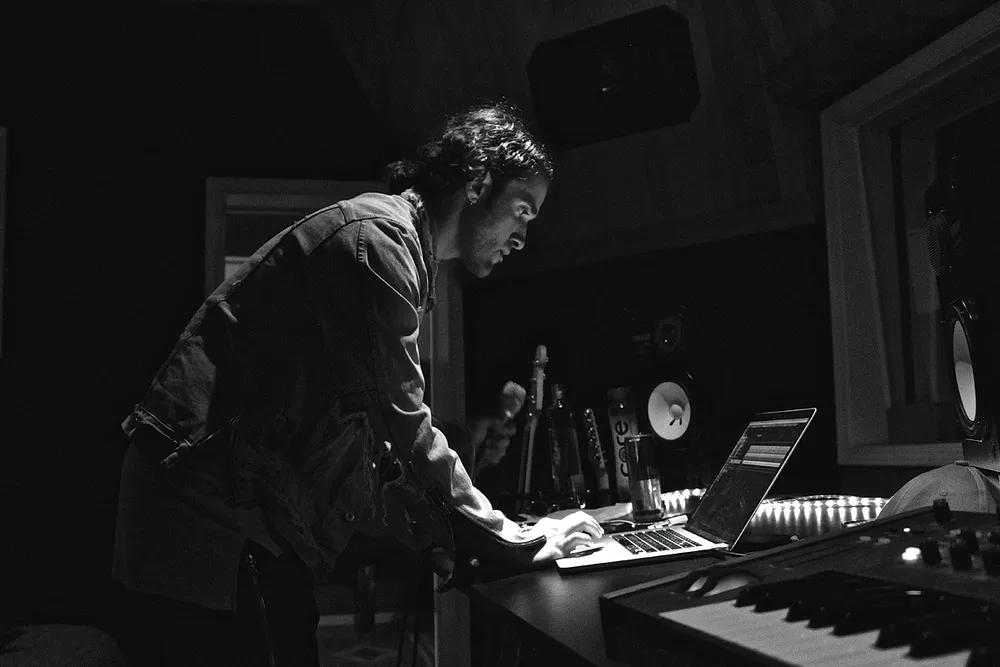
Another pivotal moment came in December 2010. While at Dream House Studios, a recording studio in Toronto, Tesfaye met producer Carlo “Illangelo” Montagnese.
“It was a chance meeting, but the moment we met, I knew that this was it,” said Illangelo.
“We just met at the studio. I was just working on something, and he came by with a few friends,” said Illangelo. “There wasn’t even much of a conversation. Abel came into the room, and immediately I started playing something on the keys, he started singing, and I had the mic set up right next to me. These rooms we were in were very small. He did his thing and I didn’t say anything; I did my thing and he didn’t say anything, and we just created these songs. It was a really special moment.”
Tesfaye adopted the name “The Weeknd” and quietly began circulating his music online.
“I hated my name at the time, though, so I tried it as a stage name. It sounded cool. I took out the ‘e’ because there was already a Canadian band named The Weekend (copyright issues),” said The Weeknd about his new persona.
La Mar Taylor uploaded the songs as audio files to YouTube in early December with “The Morning,” “What You Need,” and “Loft Music” under the channel “xoxxxoooxo” and shared the links to Facebook.
This time, the people heard it. Felt it.
Drake was parked outside his Toronto apartment at 15 Fort York Boulevard with his friend and manager, Oliver El-Khatib. It was raining, and El-Khatib played him The Weeknd.
“I remember that I heard two songs: there was a song called ‘What You Need’ and a song called ‘The Party & The After Party.’ And I’ll never forget… that was the night I realized that this is the greatest thing that happened to music in a long time,” said Drake.
On Sunday, December 12, 2010, at 3:46 a.m. EST, El-Khatib posted songs from The Weeknd on the OVO website with “Introducing The Weeknd” as the title.
Out of obscurity. On to a stage.
People commented on Drake’s blog: “YO!!!! GOOD MUSIC, so WHO’S THE WEEKEND????? Wanna know more about…,” and “Can we get more info on the The Weekend. All I can find are a couple of tracks but no wiki or articles on them/him/she.” Along with “Damn this is good where can I buy this?,” and “…The Weekend is killin it! Someone sign them NOW!!”
Another comment read, “to exclusive for wiki look out in 2011 nuff said…..SSL.”
The Weeknd’s music spread across the border.
In Miami, Amir “Cash” Esmailian was busy promoting rapper Belly through CP Records, the independent label he ran with Ottawa‑based associate Wassim “Sal” Slaiby, when a friend sent him The Weeknd’s music. Cash “left everything” and departed for Toronto as soon as he heard the songs. “This kid is ahead of his time,” he said. “I knew it right away.”
The day Cash arrived in Toronto, he hit the clubs with Tesfaye, the one who “would change the sound, change the world of music.” They became friends, and Cash soon became “the manager, the road manager, security, and the driver.”
Slaiby was soon introduced to The Weeknd, recalling that “La Mar and Abel were going through a hard time. They had a different team that screwed over their businesses. The songs were flying. Their career was flying. But their business was in a danger zone because they didn’t have the right team.”
“We surrounded ourselves with people who thought they knew everything and almost literally ruined our chances,” said The Weeknd about the people previously around him.
SSL wound down. In its place came XO, an independent label formed by The Weeknd, La Mar Taylor, and managers Wassim “Sal” Slaiby and Amir “Cash” Esmailian.
The Weeknd takes form
With the unplanned co-sign from Drake, interest in the enigma that is The Weeknd reached a constant buzz, gaining new fans and prompting others to want more from this unknown artist. More music and more background.
Cash recalls waiting in line with Tesfaye at a Starbucks when customers around them were talking about The Weeknd’s music, unaware that the artist they were discussing was standing right beside them.
The New York Times wrote, “Each is a marvel of texture, drawing from the aching moans of screw music and the sexual impulses of early 1990s new jack swing, all buried in a hazy cloud that’s part too-cool affectation, part bleeding-out puddle.”
“If you haven’t heard much about The Weeknd, it’s because there isn’t much info out there on them — that is, if the mysterious project… is a ‘them’ and not just a ‘him’ or ‘her,'” said Pitchfork.
“I think that’s really what captivated everyone,” said Taylor, about the rise in awareness of The Weeknd.
The pieces fit together
With the XO structure in place, The Weeknd and his team went into planning mode.
Building on the momentum while maintaining the mystery, The Weeknd withheld information about his identity and declined interviews, which in turn fuelled speculation and anticipation of a next move.
“I was everything an R&B singer wasn’t. I wasn’t in shape. I wasn’t a pretty boy. I was awkward as fuck. I didn’t like the way I looked in pictures — when I saw myself on a digital camera, I was like, ‘Eesh’,” recalled The Weeknd.
“Me not finishing school — in my head, I still have this insecurity when I’m talking to someone educated,” he said.
The Weeknd was preparing the world to experience him.
During this time, The Weeknd worked with producers Illangelo and Doc McKinney to refine his sound and produce more songs. Drake asked The Weeknd to collaborate on his second album Take Care, which further amplified his image.
When The Weeknd was ready to give more, he uploaded a song called “Wicked Games.” Drake shared this to the masses on March 6th, 2011, stating “OVOXO Gang” with a link to “The-Weeknd.com.”
People commented, “Banger! I’ve missed RnB like this.” And, “Bring your love, I’ll bring my shame.” “Love this song: just listened to it over 10 times,” and “Amazing Song. I feel in love with the music.”
Not a typical Monday
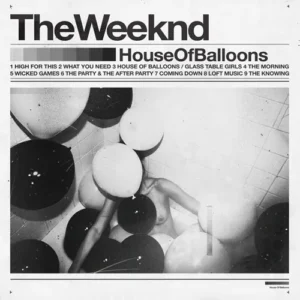
March 21, 2011 was a special Monday. The Weeknd’s website went live with a free mixtape called House of Balloons. Nine tracks. No price. No interview. No image of the artist.
“House of Balloons was special because I had no deadlines and nobody knew me so there were no expectations. Spent a year making it perfect. Every song had at least like 7 different versions to them before picking the right one,” said The Weeknd.
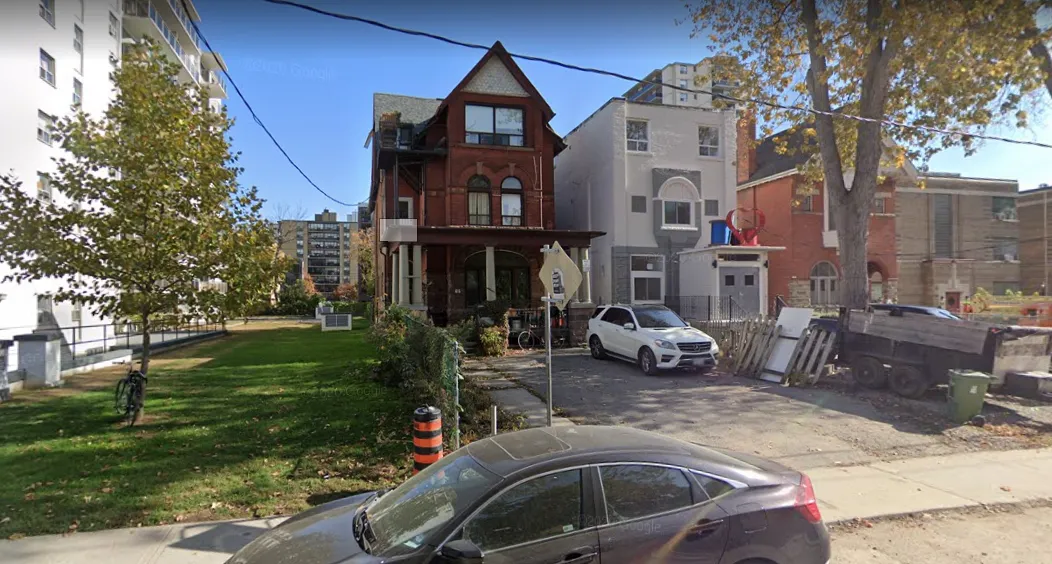
The title came from a real house. The Weeknd stated that House of Balloons is “65 Spencer in Parkdale.” That was the house he rented with La Mar Taylor and Hyghly Alleyne.
The songs that make House of Balloons are “High for This,” “What You Need,” “House of Balloons / Glass Table Girls,” “The Morning,” “Wicked Games,” “The Party & The After Party,” “Coming Down,” “Loft Music,” and “The Knowing.”
The album cover for House of Balloons was created by La Mar Taylor. It lacked any image of The Weeknd and featured a black-and-white photo of a disheveled party with a nude woman in a bathtub surrounded by balloons.
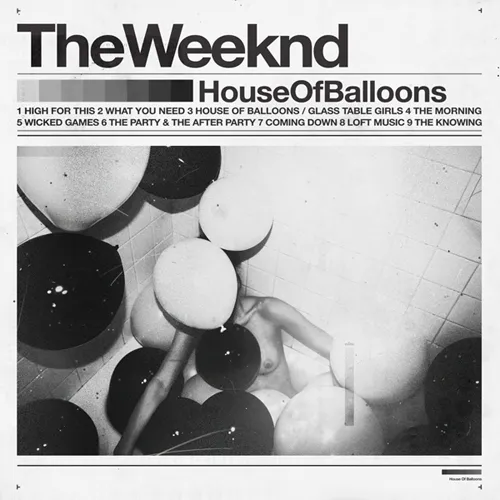
Pitchfork declared House of Balloons as its Best New Music of 2011, stating, “This project has ridden a wave of online buzz thanks in part to a deliberately murky backstory, but the music, a kind of spectral R&B, transcends hype.”
“Debauchery is obviously nothing new in R&B, but this takes it a step further — the drugs are harder, the come-ons feel predatory and lecherous, and the general feeling is self-hating rather than celebratory,” stated Pitchfork’s Joe Colly. “And even though the image of nightlife painted by the Weeknd isn’t a place you’d ever want to live, it’s one that’s frankly very hard to stop listening to.”
“Toronto singer Abel Tesfaye, who seems to be the entire group, has a striking high tenor: at points on ‘House Of Balloons/Glass Table Girls,’ he sounds like Michael Jackson yelping into an intercom in a Propofol haze. It can all be disturbingly raw, even when — especially when — Weeknd overplay the tales of the tragic high life — check the plea ‘Bring the drugs, baby/I can bring my pain,’ on the killing, blue-black ‘Wicked Games’,” wrote Rolling Stone. “The wormy hooks and earnest falsettos suggest the possibility of ginormous hits if Weeknd were to clean things up a bit, both lyrically and sonically.”
“Despite being a free mixtape, House of Balloons feels like a true album, a true labor of love (and pain and hardship and everything else), more genuine than more prominent R&B stars, but perhaps that is due to The Weeknd’s anonymity. The music stands before the image – indeed, defines the image – contrary to so many other artists,” wrote Sputnik Music. “Throughout House of Balloons, Tesfaye croons in a silky smooth R&B voice that gives The-Dream a run for his money, and frankly, blows Frank Ocean out of the water.”
Billboard wrote, “With hypnotizing production and a sultry yet painstakingly honest take on romance in the 21st century, the 20-year old singer is bringing R&B into the new millennium.”
House of Balloons had over 200,000 downloads in the first three weeks.
The Weeknd takes the stage
Whatever happened inside the mind and body of Abel Tesfaye between mid-December 2010 and Sunday, July 24, 2011 to fully become The Weeknd is a transformation worth respecting.
The Weeknd was ready for the world to experience him. A series of events unfolded before he finally showed himself.
While The Weeknd withheld interviews and public appearances, HBO miraculously, yet fittingly, struck a partnership with XO and featured “High for This” as its lead song for the trailer to promote the July 24th series premiere of Season 8 of Entourage.
A 30‑second teaser aired through HBO and its websites, YouTube, and social media starting May 22, and further elevated The Weeknd. One comment noted, “You wanna be high for this… is the theme song… shits crazy.” Another comment asked, “What’s the name of the song?”
On May 24, Drake announced additions to his OVO Fest 2011 lineup, now including The Weeknd as the opener, followed by Rick Ross. The festival was set for July 31st at the Molson Amphitheatre, an outdoor venue with a capacity of 16,000.
While preparing for his reveal, The Weeknd was unknowingly captured checking out random shows in Toronto, such as the unofficial NXNE rooftop BBQ featuring Montreal’s AIDS Wolf on June 17th.
Then, on July 6, House of Balloons was announced as part of the Polaris Music Prize shortlist, a Canadian music award presented annually to the best full‑length album. It was the first time a free download had been included in the shortlist, and The Weeknd was not yet signed.
On July 13, at midnight, The Weeknd announced his first live show at The Mod Club in Toronto on Sunday, July 24. This coincided with the airing of the premiere of Season 8 of Entourage, and took place one week before OVO Fest.
The design of the poster for his debut show resembled the cover of House of Balloons. Tickets were available at 431 Richmond Street West, the Toronto location of Stussy, for $20 in advance or $25 at the door, with “no guest list, no cameras, no media.”
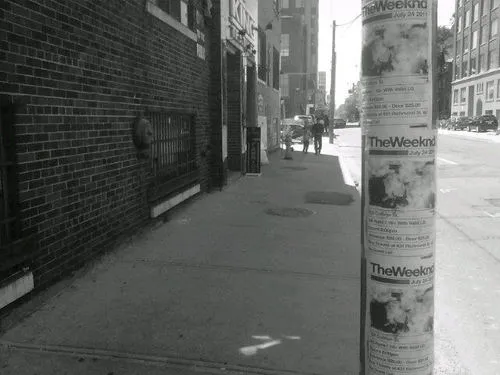
The capacity of the Mod Club was 600 people, and tickets sold out within 90 minutes. Ticket holders started to flip for quick profit, with some getting between $250 and $300 per ticket.
The day of the show, July 24th, saw “hundreds of fans” line up along College Street. At night, the temperature was a beautiful 24°C.
Inside the Mod Club, anticipation was building. The sold-out show had drawn 618 people, over capacity. Drake was on the balcony in the VIP section. Reps from New York record labels were present, including Bad Boy Records. “For a first show? I’ve never seen anything like this,” said one rep.
There was merch: 250 black T-shirts with an image of balloons on the front. The tag featured The Weeknd, the date 24.07.2011, and size.
“He was calm, but still nervous. It’s sort of crazy going from no one knowing you to selling out the Mod Club in a matter of seconds. But he was nervous in a good way… As soon as he hit that stage, he killed it,” said La Mar Taylor.
The room was dark, filled with just the right amount of fog from the machine. As the red curtains parted, The Weeknd stood at center stage, dressed in a camo jacket.
This was his moment.
The crowd was cheering, screaming, clapping, yelling, praising him. In return, The Weeknd offered a boyish smile of disbelief and gratitude.
The three-piece band on stage consisted of Doc McKinney, Illangelo, and a guitarist that Drake used.
The Weeknd adjusted his earphones, hands confidently placed on the mic. High For This was the first song, and the long intro fed energy around the room. He almost started 30 seconds in; however, the crowd was still cheering.
Thirty seconds later, The Weeknd’s vocals surrounded and engulfed everyone present with the lyrics “You don’t know.” In that moment, the crowd joined in by singing every word of the song.
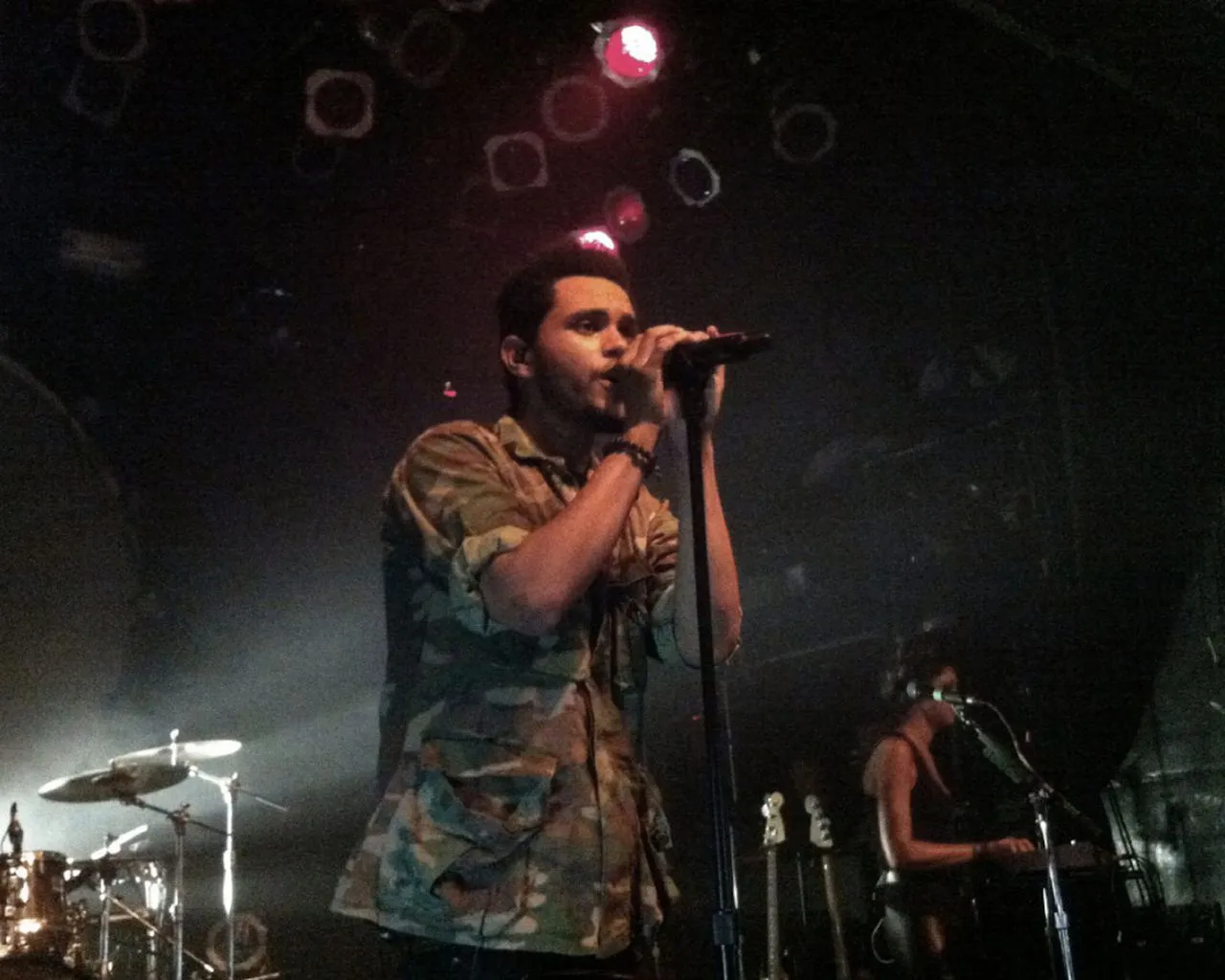
Regardless of the request for “no cameras,” people captured the moment with their BlackBerrys, iPhones, and digital cameras. History was unfolding.
The Weeknd was pointing to people in the crowd, smiling, sweating, giving peak stage presence. Living the experience. At the end of the song, the audience wanted more. They were hooked. The Weeknd bowed, raising both hands to the audience.
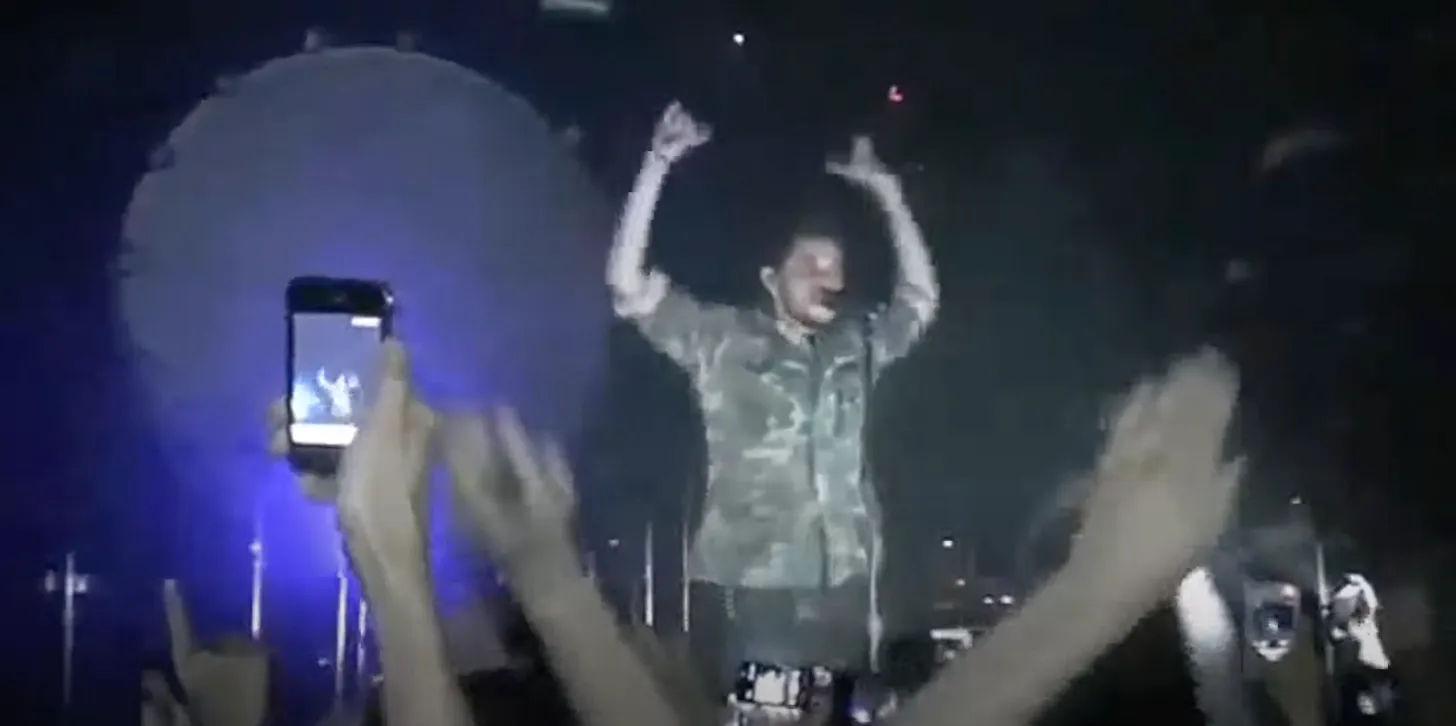
“It was crazy,” said Nate Albert, an A&R executive at Republic Records. “It was totally sold out. The audience knew every word to every song. It was very, very odd. He was standing there very still and the whole crowd was singing along. It was an incredible moment.”
The Weeknd followed with The Morning, then interacted with the crowd, saying, “Toronto XO… You guys are my number one fans… It’s unbelievable. Who’s ready to get fucked up? Who’s already fucked up?”
The set moved through “Coming Down” (he played the keyboard), “What You Need,” “The Party & the After Party,” and “House of Balloons / Glass Table Girls.”
When the next song started, people were attempting to sing along, but this was a new song. Unreleased. The crowd was for it, cheering and wanting more, like they needed another hit.
“Baby, I got you, ooh / Until you’re used to my face / And my mystery fades / I got you, ooh,” sang The Weeknd during his song Rolling Stone. He encouraged people to “light this up with your cameras” and made a gesture with his left hand as if he were holding a lighter. Drake did it.
Wicked Games, Loft Music, and The Knowing all followed. The show ended, and The Weeknd went backstage. The crowd wanted more. Over a minute passed, then another 30 seconds, and now they were chanting, “Weeknd! Weeknd! Weeknd!”
The Weeknd appeared and sang another unreleased song called “The Birds, Part 1.” As the song ended, The Weeknd waved to the fans, put his index fingers together in the shape of an “X,” and exited the stage.
The crowd, once again, was chanting, “Weeknd! Weeknd! Weeknd!”
After the show, Drake tweeted to The Weeknd, “I am so fuckin’ proud. You performed magic tonight.”
The Morning After
The Weeknd was right. People were high for this.
“His songs sounded spot-on, if not better, live, proving the wait for Tesfaye has been completely worth it. Though apparent on recordings, Tesfaye’s voice is even more astounding in person; it soared over the screaming crowd, which sang along to every song,” said Melody Lau from Rolling Stone. “The Weeknd is a complete band live. With the help of a drummer, guitarist and bassist/keyboardist, a majority of the samples were recreated onstage, with the laptop merely tucked away side-stage, used sparingly in between everything.”
“Until now, the Weeknd has existed as almost a figment of our collective imaginations, his ascent fuelled by anonymity, his communications coming via Twitter and Tumblr, his music existing only as web-distributed ones and zeroes. He could’ve dissipated like a dotcom bubble. But by bringing his aching digi-laments out of the Internet’s shadows and onto the stage, Tesfaye triumphantly proved that the Weeknd has no end in sight,” wrote Joshua Ostroff of the Globe and Mail.
“When the concert ended roughly an hour-and-a-half later, not much more was known about The Weeknd except that he’d pulled off one of the most remarkable debuts in the city’s recent history,” reported Toronto’s Now Magazine.
“I really wanted people who had no idea who I was to hear my project. You don’t do that by asking for money,” said The Weeknd. “I kind of treat my albums like films when I write them, telling one big story… More visual candy and hopefully a venture into my first true love, cinema.”
“I know deep down in my heart that everyone would have been successful in their own realm if we’d never met,” said The Weeknd. “But us together — [what we’ve created] wouldn’t have happened without every single one of us in this room. All of the decisions I make, I don’t make without these three people here.”
While one entourage was ending, The Weeknd and his entourage were just beginning.
Lyrically: Starboy
When Abel Tesfaye took the stage during his debut show as The Weeknd, months out from hopping beds and stealing food, the failure he saw in his mother’s eyes had already begun its transformation. Five years later, it had a name: Starboy.
Following House of Balloons, The Weeknd released two more mixtapes, Thursday and Echoes of Silence. The trilogy was complete. A “strategic partnership” between Tesfaye, his XO entourage, and Republic Records was formed, which led to a remastered collection of all three mixtapes released as Trilogy. The album debuted at No. 4 on the Billboard 200 and eventually went multi‑platinum.
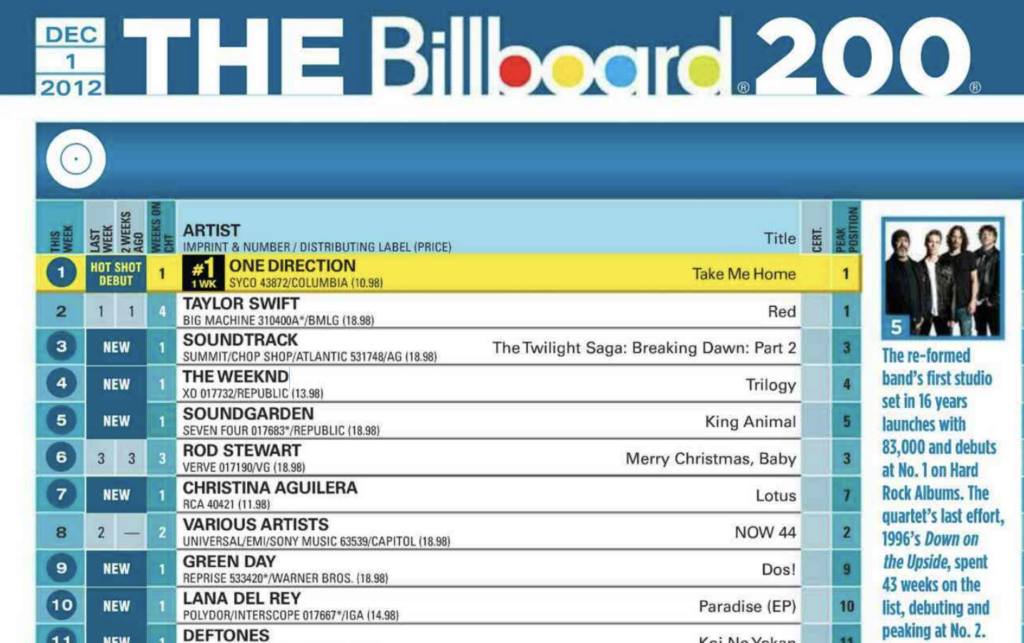
Kiss Land followed in 2013. It was darker, more cinematic, and confirmed he was no accident. Then Beauty Behind the Madness in 2015 introduced him to everyone else. This was his commercial breakthrough and captured the No. 1 spot on the Billboard 200, driven by “Earned It,” which The Weeknd recorded for the Fifty Shades of Grey soundtrack and later included on the album, along with “The Hills” and “Can’t Feel My Face.” The album earned multiple Grammy nominations including Album of the Year, and won Best Urban Contemporary Album.
Then Starboy in 2016, where The Weeknd’s transformation became undeniable.
“Trilogy was more like, the wealth was the motive. Then after Kiss Land, you finally have the wealth and we’re enjoying it. And then, of course everybody wants to be rich but it comes with its negatives as well,” said The Weeknd.
Starboy was released on September 22nd, 2016, as the lead single from his album Starboy, which was later released on November 25th, 2016.
“Starboy is next chapter in this chronicle, this saga, my fans call it chapters, so I guess this is in the fourth chapter… he’s a character that we kind of created,” stated The Weeknd. “He’s definitely made his appearance in different records in the past as well, more like braggadocious kind of character that we all have inside of us.”
The song features the “robots from outer space” French electronic duo Daft Punk.
“These guys are our idols,” said The Weeknd. “Their branding, it’s unbelievable. I was definitely inspired by that at the beginning of my career because nobody knew how I looked as well. It was because of Daft Punk and a lot of artists I like to be enigmatic and mysterious, and fans didn’t really see how I looked until my first show, so being able to work with them, it felt like a bucket list.”
“And then we got into the studio… we literally did Starboy and I Feel It Coming in like two or three days,” said The Weeknd. “We went to Paris, I came into the session, and Thomas and Guy-Manuel had already started a track, which was I Feel It Coming. I was writing the lyrics to I Feel It Coming… and probably finished it in about an hour. I went into the booth and started recording.”
“While I’m recording the record, through the talkback, I can hear some sort of feedback, some sort of drum loop every time. Thomas is like, ‘Okay, next take…’ So I’m like, ‘What the F is that? What is that sound?,” stated The Weeknd. “So I walk in, and it’s Guy-Manuel on his phone, or on his laptop or something, and it’s the drums of Starboy. I say, ‘put that shit on the f’n speakers. Let me hear that…’ and it’s just this crazy, monstrous loop. So I put I Feel It Coming to the side, and I’m writing this. Literally wrote Starboy in 30 minutes.”
Starboy, the song, is The Weeknd’s way of expressing his success, along with the fame, wealth, and transformation.
The opening lyrics set the mood and are for anyone who listens, has listened, or will listen in the future:
I’m tryna put you in the worst mood, ah.
What follows is a detailed look at a luxurious lifestyle that only a few will ever experience.
P1 cleaner than your church shoes, ah
Milli point two just to hurt you, ah
All red Lamb’ just to tease you, ah
“The McLaren, it’s beautiful. I put in the Starboy video,” said The Weeknd. “It inspired that song and I think it’s a great representation of where I’m at.”
The Weeknd owns a deep red $1.2 million McLaren P1 and keeps it meticulously clean. So clean it puts the shoes worn to church to shame. This is also the first mention of religion, highlighting the tension between his P1 and church shoes, symbolizing either driving on the road of materialism or walking on the path with God.
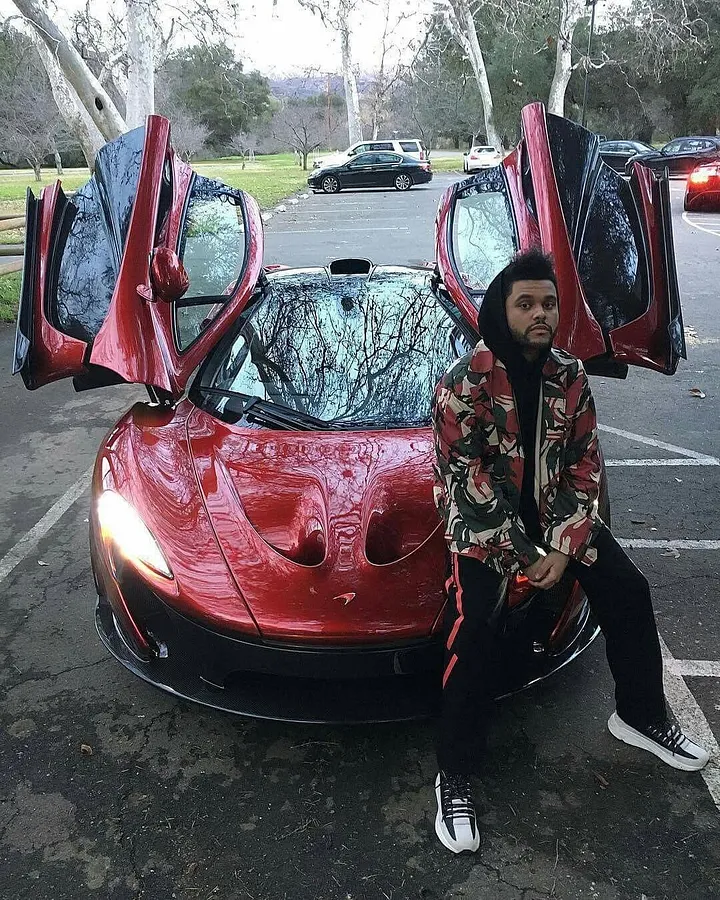
To further put us in “the worst mood,” the “All red Lamb just to tease you, ah,” is The Weeknd’s red Lamborghini Aventador LP 750-4 Superveloce (SV) Roadster, valued at $550,000 USD.
“I don’t really splurge. I just really started buying expensive stuff now. I just bought all these cars. It’s this new thing I’m on. Recently, I’ve been really interested in McLaren, of course Ferrari, Lamborghini. McLaren really grabbed my attention,” said The Weeknd.
None of these toys on lease too, ah
Made your whole year in a week too, yah
The Weeknd owns everything, and more importantly, owes nothing. He further reinforces his lifestyle by highlighting the immense wealth he continues to accumulate.
And finally, the end of the first verse, within seconds of the song starting, he was correct. He has it all. We are in the “worst mood” because “Main bitch outta your league too, ah / Side bitch outta your league too, ah.”
“With Starboy, I didn’t think it’d be a single. I thought it was me just being like star boy, did it feel like an album opener. It just felt like a dope vibe, so I brought it back to Toronto and I played it for the team and they lost their fucking mind. I played it on the speakers and everybody’s like yeah, this is the next single,” said The Weeknd.
When The Weeknd wrote Kiss Land in 2013, the lyrics revealed his life at the time:
I got a brand new place, I think I’ve seen it twice all year
I can’t remember how it looks inside
So you can picture how my life’s been
I went from starin’ at the same four walls for twenty-one years
To seein’ the whole world in just twelve months?
That’s a complete flip. Three years later, The Weeknd says his “House so empty, need a centerpiece,” suggesting he’s still away from home and he needs to place something decorative in the center of a table.
These lyrics have another possible meaning, a deeper meaning with another religious connection. The Weeknd’s “house so empty” may refer to his own spiritual emptiness that needs to be filled. If the definition of “centerpiece” is the “central importance” of something, like a God, then The Weeknd may be seeking a guiding force. Matthew 16:26: “What good will it be for someone to gain the whole world, yet forfeit their soul? Or what can anyone give in exchange for their soul?”
Then we swing back to a life of someone playing a role in a movie:
Twenty racks a table, cut from ebony
Cut that ivory into skinny pieces
Then she clean it with her face, man, I love my baby, ah
The Weeknd went from Glass Tables to a Starboy, now owning tables made from ebony, each costing $20,000. His girl then takes the skinny pieces of ivory (cocaine) and handles it, using her face, which he adores.
You talkin’ money, need a hearin’ aid
The net worth of The Weeknd in 2016 was reportedly worth an estimated $55 million, a staggering amount, and even more impressive considering the environment he grew up in.
You talkin’ ’bout me, I don’t see the shade
Switch up my style, I take any lane
The Weeknd doesn’t have time for gossip and can easily adapt to whatever comes next, simply by being able to “switch up my style, I take any lane.”
While switching lanes, The Weeknd is also switching up vices for the pain: “I switch up my cup, I kill any pain.”
(Ha-ha-ha-ha-ha, ha-ha-ha-ha-ha)
Look what you’ve done
(Ha-ha-ha-ha-ha, ha-ha-ha-ha-ha)
I’m a motherfuckin’ starboy
(Ha-ha-ha-ha-ha, ha-ha-ha-ha-ha)
Look what you’ve done
(Ha-ha-ha-ha-ha, ha-ha-ha-ha-ha)
I’m a motherfuckin’ starboy
The Weeknd observes the gap between where he is and where the listener is while laughing with “(Ha-ha-ha-ha-ha, ha-ha-ha-ha-ha).”
“Look what you’ve done” shifts between two emotional gears. The first is a signal to his fanbase for making him become widely successful and a Starboy. The second signals the darker side of success and what it has cost him.
The song continues by constantly flexing wealth, such as, “Pull off in that Roadster SV, ah / Pockets overweight, gettin’ hefty, ah.”
“Coming for the king, that’s a far cry, ah” suggests he has no competition, everyone else is on a different level. “The competition, I don’t really listen,” confirms it. The Weeknd is only competing against himself.
“Coming for the king, that’s a far cry, ah,” may be a nod to Michael Jackson, who was a strong influence and widely regarded as someone without competition.
“I’m in the blue Mulsanne bumping New Edition” refers to a $300,000 blue Bentley and how The Weeknd enjoys playing New Edition while driving.
Legend of the fall, took the year like a bandit
The Weeknd claims he “took the year like a bandit,” meaning he owned the attention of the music scene. In 2016, Starboy dominated the charts, went triple platinum, and later earned The Weeknd a Grammy for Best Urban Contemporary Album in 2018.
Bought mama a crib and a brand new wagon
Now she hit the grocery shop looking lavish
“Imagine if you were in my shoes and one of your old buddies is now seven-Grammy-nominated, and you literally know this guy didn’t have five bucks in his pocket a couple years ago,” said Jesse Bedard Dempster in 2016, who was JesseRay from Bulleez n Nerdz. “He bought his mom a house. It’s so inspiring.”
The Weeknd talked about his mother and how proud she is of him. A full-circle moment compared to the perception of failure from 2007.
“You gotta understand, she’s just happy that I’m doing something that I love. There was a point where, you know, dropping out of school, getting into fights, not being home forever because I left home, much scarier and more heartbreaking things you could do to your parents,” said The Weeknd. “She’s just happy I’m not dead or in jail. At this point, it’s just the fact that I get to make music and make hundreds and thousands and millions of people happy, you know, make her proud and my family proud and really make a name, really represent where I come from and the culture that I’m from because there aren’t many Ethiopian artists like American Canadian pop artists.”

This follows another mention of a car with “Star Trek roof in that Wraith of Khan,” a reference to the Rolls-Royce Wraith Kahn Edition, which comes with a $400,000 price tag. A custom feature in the car, called the ‘starlight headliner,’ adds hundreds of fiber-optic lights to the driving experience, and transforms “the roof into the illusion of a star-filled night sky.”
Girls get loose when they hear this song
“Girls get loose when they hear this song” is both a boast and an observation. At this point in the song, The Weeknd has a plethora of cars, houses, wealth, white ivory, and fame. The lyric is a natural conclusion to everything that preceded it, confirming that the Starboy lifestyle attracts exactly what it is designed to attract.
A hundred on the dash get me close to God
We don’t pray for love, we just pray for cars
“A hundred on the dash get me close to God” equates speed with spiritual connection, the car doing what prayer cannot. The follow-up is the most direct religious inversion in the song: love has been replaced by cars as the object of devotion. It is not a boast. It is a confession.
The Weeknd sings the pre-chorus and chorus one more time, ending with “I’m a motherfuckin’ starboy.”
It’s true. He is.
“I kind of saw it going like this around Kiss Land, not House of Balloons. I didn’t think I’d make so much music when I was making House of Balloons because I spent my entire life making House of Balloons if you think about it. You always spend the rest of your life making your first record,” said Abel Tesfaye.


What does this song mean to you?
Share your thoughts on this song.