Sexual fantasies about your friends’ hot mom peaked in 2003. It wasn’t because of the premiere of The OC. It wasn’t how crazy in love Beyoncé and Jay-Z were, nor the river that poured out of Justin Timberlake. It wasn’t even the Madonna/Britney/Christina kiss at the MTV VMAs.
It was one song about Stacy’s mom. The emotions were pent-up since puberty.
Chris Collingwood and Adam Schlesinger first met in the spring of 1986 on the roof of Lehman Hall at Williams College in Williamstown, Massachusetts. Collingwood, who studied psychology, taught Schlesinger, who studied English and philosophy, the correct chord changes to an R.E.M. song. Both freshmen, they quickly bonded over music and spent their college years playing shows under names like Are You My Mother?, Woolly Mammoth, and Three Men Who When Standing Side By Side Have a Wing Span Of Over Twelve Feet.
“A lot of our time was spent listening to records and saying to each other ‘This band made it, how hard could it be?’ We played albums by bands like the Replacements and R.E.M. and had long conversations about what their daily lives must be like,” said Collingwood. “So we learned to play guitar from R.E.M. and Replacements albums and got to know each other’s voices by singing that stuff, and of course The Beatles.”
“When we were in school, when Adam and I first met, you were really into The Police and stuff,” said Collingwood. “And I was listening to all this Britpop, like Aztec Camera and The Smiths. I think the only thing we had in common at that point was the Beatles. We both loved the Beatles, but I think Chris turned me on to a lot of stuff that I wasn’t aware of,” said Schlesinger.
After graduating in 1989, the two moved to Boston. “After we graduated, when we both moved to Boston, we started playing locally in Boston clubs as Wallflowers, a name that we were eventually paid a few thousand bucks to stop using,” said Schlesinger. The name was sold to Jakob Dylan for between $2,000 and $5,000, which “gave us enough money to pay off the lawyers,” said Schlesinger. They regrouped and recorded under the name Pinwheel with drummer Jeff Perrott.
One of those early recordings made its way to the desk of music manager Michael Krumper. “I was immediately blown away,” he said. “It reminded me of a lot of British bands that I loved that weren’t particularly fashionable. Aztec Camera, Prefab Sprout. Even on a poor-quality cassette, you could hear the songs were that good.”
In 1993, Krumper became their manager and booked them a showcase at CBGB, calling in every favor he had to get label people through the door. “I sat there and I thought they were great,” he said. “And no one got it.”
Pinwheel fell apart shortly after. Perrott left for Yale’s Master of Fine Arts program. Collingwood stayed in Boston, supporting himself with temp jobs at Harvard, MIT, and Shawmut Bank. “I was temp of the month twice in Boston,” he said. “Then one day, I woke up and realized I worked at a bank and said, ‘I’ve got to get the hell out of here.'”
Schlesinger decided to move to New York and co-founded Ivy, an indie-pop trio fronted by vocalist Dominique Durand, with Andy Chase on guitars, keyboards, and production. The band signed to Seed Records, a label funded by Atlantic, and gained early attention with their debut single “Get Enough,” which was named “Single of the Week” by the UK’s Melody Maker.
Collingwood moved to New York in December 1995 with the intention of recording a solo record, with Schlesinger producing. “I had written some songs, and when I played them for him he was going to produce my record. He was anxious to get some producer credits under his belt, and I had enough songs to make a demo and that’s how it started,” said Collingwood. Most of the songs were written at a West Village bar called Hogs and Heifers.
In January 1996, at a studio called The Place in New York, Collingwood and Schlesinger recorded four songs for their first demo: “Radiation Vibe,” “Leave the Biker,” “Joe Rey,” and “Barbara H.” The two recorded the debut with Collingwood on lead vocals and guitar, Schlesinger on drums, and Danny Weinkauf on bass. Weinkauf left after the recording to become a long-term member of They Might Be Giants.
“We didn’t really think about it being a band until the album was done,” said Collingwood.
The duo came up with a name that finally stuck. It was one Schlesinger had been sitting on since childhood. Every time his family drove past a lawn ornament store in Wayne, New Jersey, he would say the same thing: “Fountains of Wayne. That would be a great band name.”
The debut album was recorded in an eight-day session, with a third of its twelve songs written in a single evening. “I guess the whole project just came together out of luck,” said Collingwood. “It was some holiday weekend, and we were the only two people left in New York, so we just got together and started writing again. Ever since, things have been just as unplanned.”
By this time, Krumper, who kept in touch with Collingwood and Schlesinger, started working at Atlantic, first as a publicist, then into the marketing department. When a Fountains of Wayne demo landed on his desk, Krumper passed it to A&R rep Steve Yegelwel. Another label also expressed interest, sparking a bidding war, but Atlantic won and signed the band.
Fountains of Wayne released their self-titled debut in 1996, with “Radiation Vibe” as its first single. “We’ve always been more into songwriting than most of the people we’ve played with over the years. I guess you could call us the grunge Everly Brothers,” said Schlesinger in Billboard.
“There’s something really unique about what they do—it’s not merely an aping of what’s going on elsewhere,” said Krumper in Billboard. “There’s a casual quality and a sense of humor that people will respond to right away.”
Guitarist Jody Porter, formerly of The Belltower, and drummer Brian Young, formerly of The Posies, joined as touring and later full members of the band. Young had reached out to a friend at the label after The Posies began slowing down. “When I auditioned for them I sat down and played the beat to ‘Swingtown,’ the Steve Miller tune, and they all looked back, nodded their heads, and we jammed,” recalled Young.
That same year, Schlesinger wrote “That Thing You Do” for Tom Hanks’ film of the same name, earning nominations for both an Oscar and a Golden Globe. He was already a proven hitmaker.
“Who wouldn’t want to be in a band with their best friend?” said Collingwood. “We had both had the same dream since we were teenagers, and the idea that some giant company was going to give us more money than we’d ever seen to go around the world playing music seemed too good to be true.”
Utopia Parkway, named after a Queens, New York boulevard, followed in 1999. “Our first record was very much of an in your face first album, which is to say all the songs were immediate and straightforward and stripped-down. On this record, we just wanted to try some different ideas,” said Schlesinger.
Its lead single, “Denise,” Billboard declared, “blends solid rock with a Cars-like hook and jubilant hand-clapping straight from the 1950s. Altogether, ‘Denise’ accomplishes more in its oh-so-short span (clocking in at 2:32) than most complex rock anthems. If we’ve ever heard a song to court the sunshine, this is it. Absolutely marvelous.”
Elton John called Schlesinger directly to say how much he admired it, calling it “uniquely American, and conjuring up vivid images of suburbia.”
But tensions with Atlantic were brewing. When the band’s cheeky cover of Britney Spears’ “Baby One More Time” began getting airplay in Los Angeles, the label wanted to release it as a single. The band refused. “The promotion department at the time went, ‘Oh my God, we have a single!’ And the guys in Fountains were just like, ‘No fucking way,'” said Krumper. Atlantic dropped them in late 1999 over poor album sales.
Collingwood stated, “At the end of four years of the hardest work I’d ever done in my life, more traveling and being away from my wife the whole time, I had nothing to show for it. I got back home and I had nothing. I was broke, I was demoralized, I was exhausted. I think I just needed a year to recharge my batteries.” He formed a country band called the Gay Potatoes, playing shows around Northampton, Massachusetts. Schlesinger kept working, producing albums for the Verve Pipe, David Mead, and They Might Be Giants, and co-writing songs for the Josie and the Pussycats and Scary Movie soundtracks.
“Chris in particular felt kind of burned out, and he was just spending time at home and not doing much,” said Schlesinger. “At one point, though, I did have to ask him if he was into [re-forming] because I had a bunch of songs and wanted to do something, and luckily he came around. Hey, we’ve been doing this together for half of our lives. Guess you just need a break to get excited again.”
Four years passed. Labels called, but the meetings went nowhere. “They were like, ‘Yeah, we love you guys! Let’s hear your next big smash single,'” said Schlesinger. “And we said, ‘Well, we don’t have one right now.'” So they went into the studio without telling anyone. “We pretty much did it without the label even knowing we were doing it, and then said, ‘Here it is. It’s done,'” said Collingwood.
“We didn’t even have a record deal. I remember Adam put up the money to do the recording, we converged in a studio in upstate New York, and we didn’t know what to expect,” drummer Brian Young recalled. “We all showed up with basically nothing. I had a stick bag, and the engineer mentioned to me, ‘You know, it would’ve been a lot cooler if you showed up with nothing at all.’ We were kind of going through the studio basement, looking for gear and taping stands together. It was funny.”
Schlesinger had a reason for that approach, stating, “It prevents label people from being able to come down and try to join the band during sessions.”
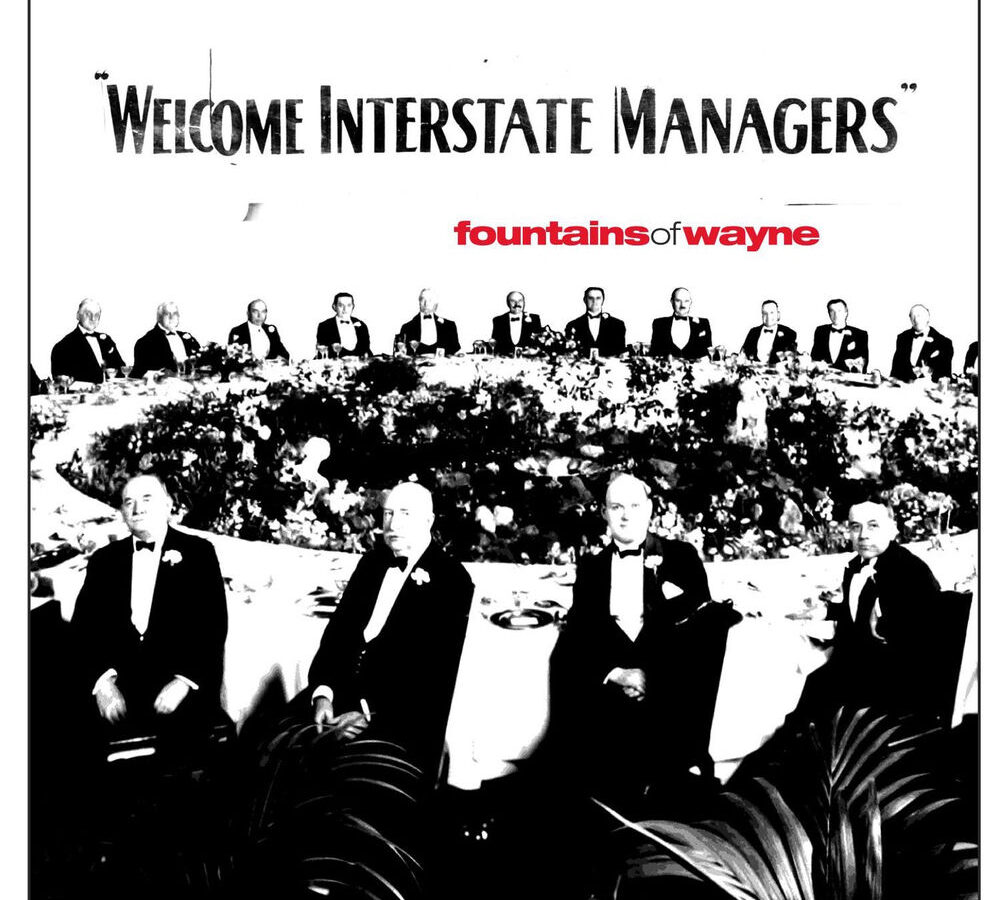
The finished record, called Welcome Interstate Managers, made its way to Steve Greenberg at S-Curve Records, a Virgin Records affiliate, through Steve Yegelwel, their old Atlantic A&R rep. “He just went to Greenberg and said ‘this band is unsigned. I’ve worked with them, can we do this?'” said Collingwood. “He already knew Adam, so, yeah it was pretty easy, actually.”
But the song that would define the album, and the band, nearly didn’t make it. “Nobody thought ‘Stacy’s Mom’ sounded like a hit when we handed that in,” said Schlesinger. “The only guy that heard a hit with it was the guy who signed us, Steve Greenberg, and he made it a hit.”
Collingwood didn’t fear the song would fail. He feared it would succeed.
“I tried to talk him out of ‘Stacy’s Mom.’ I could see exactly what was going to happen, and when it started happening in slow motion it just felt inevitable,” Collingwood said. “I was reluctant to [record] it at all, but in the moment you don’t want to kill the session by not being a good sport. When it was done, I didn’t think it belonged on the album. Even on a record that was stylistically all over the place, that song didn’t fit in. It sounded like a different band. I knew it would be a single, and I knew it would be a hit, and everyone else knew it too. But I was the only one who didn’t think a novelty hit was a good thing.”
Can I come over after school?
“Lyrically and musically, I tend to write lyrics first a lot of the time, or at least have some kind of lyrical idea going. Maybe not an entire lyric, but I like to have a title or a few lines. That helps me focus the whole thing,” said Schlesinger. “When I was younger, I would just imitate my songwriting heroes… I would write stuff that sounded like fake Beatles songs or fake Elvis Costello songs or fake Joe Jackson songs or something. And then eventually you just start finding ways to have your own voice. But I feel like a bit of a chameleon, because a lot of times what I’m doing is almost trying to write something that will come out of the mouth of someone else. So it’s almost less about my personality and more about what I think they can put across.”
That instinct for voice and character developed over time.
“When we started writing about things we actually knew, our songs instantly got a lot better,” said Schlesinger.
Released on Monday, May 19, 2003, “Stacy’s Mom” was “probably written in five minutes,” according to Schlesinger, and drew from something closer to home.
“There’s hopefully a sense of innocence in that song… You know, it was supposed to kind of be about that age where suddenly you just are attracted to everyone for a few years. I mean, one of my best friends actually announced to me when he was about 12 that he thought my grandmother was hot. And I was kind of appalled by that thought,” said Schlesinger.
“But his grandmother was hot,” said Collingwood.
“She was, I admit it, but you know, I didn’t wanna hear it from my best friend at age 12,” said Schlesinger.
“We’ve always sought to strike some kind of balance between humor and personality,” Schlesinger said. “But the main difference in that song and the others is that the narrator is not us. We’re not pretending to be a teenage kid when we sing the song. We take the storytelling perspective.”
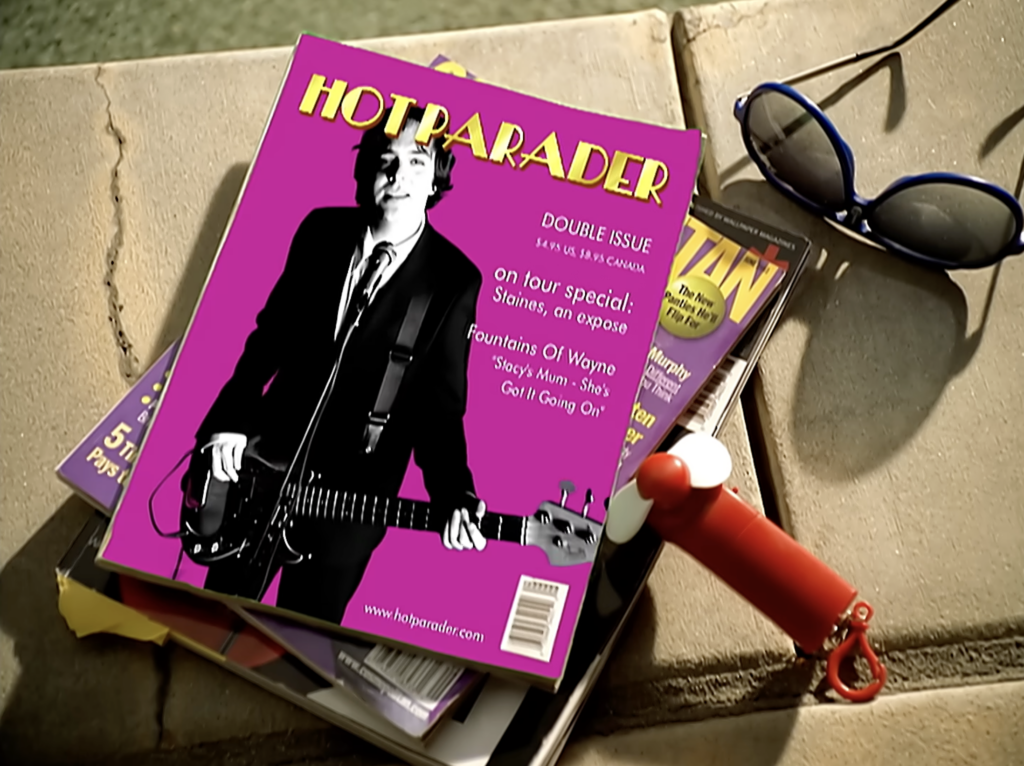
“‘Stacy’s Mom’ was definitely conceived as sort of a cross between the Cars and Rick Springfield… it was definitely kind of a period piece, almost intended to refer really specifically to a certain era in music, and so was the video… it was all supposed to be really obviously ripping off stuff from the ’80s,” said Schlesinger.
“‘Stacy’s Mom’ finds the narrator longing for the mother of a female acquaintance, à la ‘Mrs. Robinson’-only without any of the drama,” wrote Billboard. “The subject would make for a throwaway novelty song by any of today’s more inept bands, but by keeping the music crisp and the lyric clever, Fountains of Wayne makes it work brilliantly.”
“‘Stacy’s Mom’ may be the second-catchiest song ever written about a girlfriend’s parent,” declared The New Yorker.
“Stacy’s Mom” is “an irresistible tribute to being smitten with your pal’s mother,” wrote VH1. “Its subject is familiar to any adolescent horn-dog with a box of Kleenex and time on his hands.”
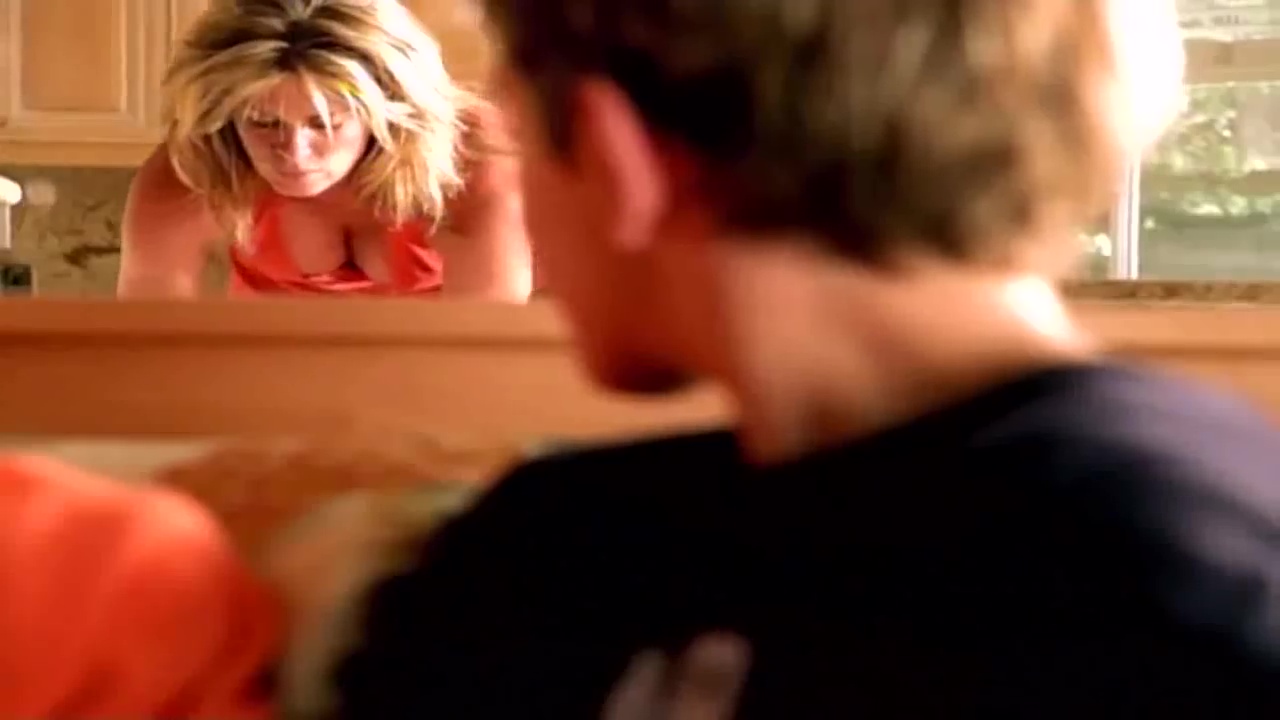
The video has a number of references to the 1980s, including a lookalike boy resembling Cars lead singer Ric Ocasek, Stacy’s mom’s license plate reads “I <3 RIC," and the posters on the wall showing signs of the music video for "Just What I Needed.” There is also a recreated scene that has Stacy’s Mom coming out of the pool, similar to Phoebe Cates’ scene from Fast Times at Ridgemont High.
The song went mainstream, infiltrated radio and TV, mainly due to the music video starring model Rachel Hunter as Stacy’s mom.
“I think our video obviously had a lot to do with the fact that this album’s doing well. I mean, it was just… it was a great video. The director Chris Applebaum did a great job, and I think it was the first time that we had a video that just matched the song perfectly,” said Schlesinger.
“It doesn’t hurt that Rachel Hunter is gyrating around in the S&M outfit. We’re going to do that in our next video too,” said Collingwood. “And all future videos,” Schlesinger added. “And album covers,” Collingwood replied.
Directed by Chris Applebaum in Los Angeles in late May 2003 and released in June, the video features scenes of a teenager doing whatever it takes to be in the presence of Stacy’s mom and catch any glimpse of her. “Yeah, we didn’t really hold back at all,” said Schlesinger. “We looked at a lot of treatments and some directors were trying to be kind of arty and subtle with it, but Chris Applebaum went completely for the jugular.”
“It was 7 a.m., and there was Rachel Hunter doing a striptease on the kitchen counter,” Schlesinger recalled. “She was a fan, she liked the song and the band, and she thought it was a good idea, and who are we to say no? She was absolutely perfect for it, she totally got the song and did the video in the right spirit.”
“I worked for Cover Girl for many years and always had that kind of clean, fresh look, and then when I got the treatment for the video I was like, why not?” Hunter said.
The song earned nominations for Best Pop Performance by a Duo or Group with Vocals and Best New Artist that year at the 46th Grammy Awards, but didn’t capture either award.
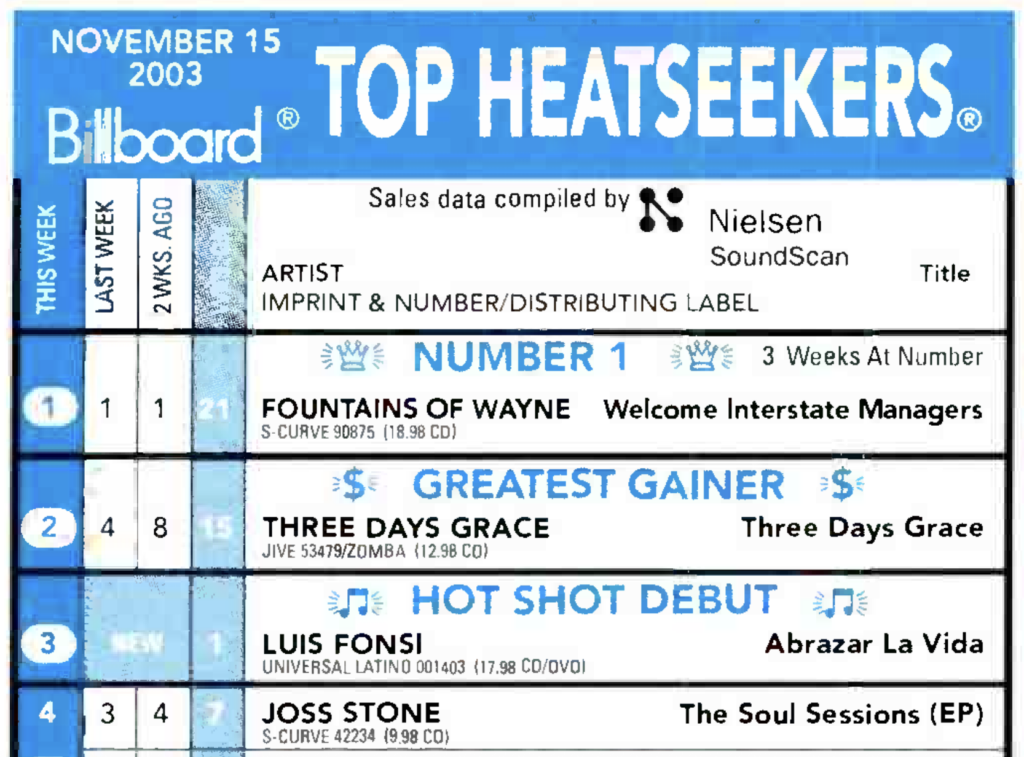
“Stacy’s Mom” lasted 17 weeks on the Billboard Hot 100 and climaxed during the week of November 21, 2003, at number 21.
“People are watching the video and downloading the single, but they don’t know us or our record at all. It’s kind of disappointing. It’s a novelty song,” said Collingwood. “There’s a large contingent that just wants the single, or holds up the sign that says, I’M STACY’S MOM… I hope it doesn’t haunt us.”
Lyrically: Stacy’s Mom
“Stacy’s Mom” is a coming-of-age song that defined a fantasy for a new generation, following in the footsteps of Simon & Garfunkel’s “Mrs. Robinson” and Rick Springfield’s “Jessie’s Girl,” while giving a nod to The Cars’ “Just What I Needed.”
“Stacy’s mom has got it goin’ on” opens the song as a repeated declaration. An infatuation with Stacy’s mom laid bare four times in a row before addressing Stacy directly. Those lyrics embedded themselves into many minds.
Stacy, can I come over after school? (after school)
We can hang around by the pool (hang by the pool)
Did your mom get back from her business trip? (business trip)
Is she there, or is she trying to give me the slip? (give me the slip)You know, I’m not the little boy that I used to be
I’m all grown up now, baby, can’t you see?
These lyrics blend worlds as he asks Stacy to hang out after school, suggesting they spend time by the pool, but his true intentions are revealed when he asks about her mother’s whereabouts. The line “You know, I’m not the little boy that I used to be / I’m all grown up now, baby, can’t you see?” shows self-confidence while speaking directly to Stacy, insisting he’s mature enough to be taken seriously, and perhaps mature enough to be with her mom.
Stacy’s mom has got it goin’ on
She’s all I want and I’ve waited for so long
Stacy, can’t you see?
You’re just not the girl for me
I know it might be wrong, but I’m in love with Stacy’s mom
The chorus is deceptively simple and instantly memorable. The lyrics express conflicted teenage emotions, telling Stacy directly that she’s “just not the girl for me” and that it’s her mom he’s really wanted “for so long.” This blunt confession is awkward yet courageous, confident yet impulsive.
Stacy, do you remember when I mowed your lawn? (mowed your lawn)
Your mom came out with just a towel on (towel on)
I could tell she liked me from the way she stared (the way she stared)
And the way she said, “You missed a spot over there.” (a spot over there)And I know that you think it’s just a fantasy
But since your dad walked out, your mom could use a guy like me
The backing vocal echoes of “(mowed your lawn),” “(towel on),” and “(a spot over there)” definitely strike the “balance between humor and personality” that Schlesinger aimed for.
Schlesinger’s “sense of innocence” is captured in this verse with being “attracted to everyone,” including your friend’s mom. The “dad walked out” lyrics complicate that innocence as the character isn’t just infatuated; he’s rationalizing, telling Stacy her mom “could use a guy like me,” positioning himself as the solution to the family. He believes Stacy’s mom wants him back, reading her correction about the missed lawn spot or the towel as flirtation. He’s constructing an entire relationship in his head.
Collingwood had a name for this kind of character. “One of the reasons I love Nabokov is that I love the unreliable narrator,” he said. “It’s not just telling a story, it’s telling a second story.” The narrator of “Stacy’s Mom” thinks he’s telling a love story. The second story, the one the listener hears, is about a teenage boy who has talked himself into believing every signal points his way.
As the song fades, the chorus repeats and his confession holds firm, declaring he “knows it might be wrong,” but he’s “in love with Stacy’s mom.”
“Being a one-hit wonder is a good thing. That one song gets heard by everyone. But then it allows you to have an artistic life for the people who are paying attention to all of your music,” said Schlesinger.
“I just hope that people can like dig a little deeper than the single. I hope that this record is not over after ‘Stacy’s Mom’,” said Collingwood.
Collingwood had seen it coming all along.



What does this song mean to you?
Share your thoughts on this song.