Everyone does it, and it turns out, everyone should do it.
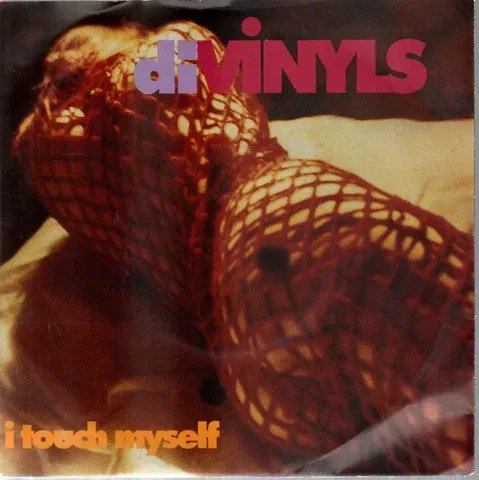
In November 1991, Chrissy Amphlett, lead singer of the Australian rock band the Divinyls, was declared “one of the steamiest women in rock.” The reason? A song. A song that captured your attention, that was honest, and said what others wouldn’t: “I Touch Myself.”
After four rock albums with an edgy schoolgirl persona, Virgin Records signed the band and gave them something to believe in, a vision that Amphlett “had it in her to be another Madonna.”
Virgin knew exactly who to call: Billy Steinberg and Tom Kelly, the songwriting duo behind Madonna’s “Like a Virgin,” Cyndi Lauper’s “True Colors,” Whitney Houston’s “So Emotional,” Heart’s “Alone,” and the Bangles’ “Eternal Flame.”
“I just felt like Chrissy Amphlett… was one of the great female rock singers, right up there with Janis Joplin or Chrissie Hynde. A very short list of great female lead vocalists,” said Steinberg.
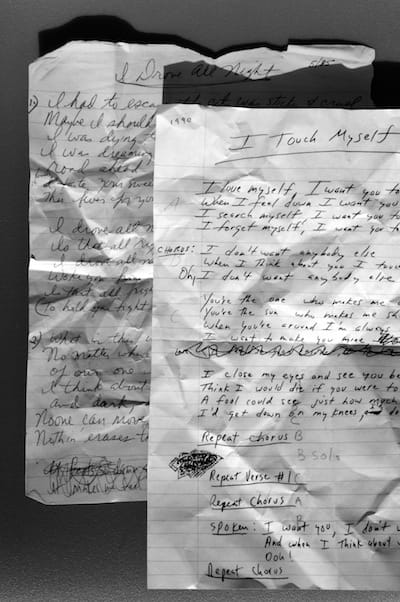
“I really wanted to work with the Divinyls, and Tom was up for it and we made it happen,” said Steinberg. “Before we wrote ‘I Touch Myself,’ I got together alone with Chrissy at a little cafe in Hollywood and I had notebooks full of lyrics and I said, ‘Well, I’ll show you some ideas I have,’ and one was ‘I Touch Myself.’ And I had ‘I love myself, I want you to love me.’ I had that whole verse lyric. She said, ‘I like that one, I Touch Myself.’ I knew she would. That’s the one I wanted her to like.”
“We got together with Mark McEntee, her guitarist, and with Tom and we knocked out ‘I Touch Myself,’ and it was an interesting song because it isn’t a real blatant conversation about masturbation, right? The lyric has some dexterity,” said Steinberg. “Usually you go verse, chorus, verse, chorus, bridge. But with that song we have the verse and then the chorus and then we go right into the bridge. It has an odd structure if you listen to it, but it really works. I remember when we wrote it I felt like it kind of had a little bit of a Rolling Stones vibe to it. I thought, like poppy like ‘Let’s Spend the Night Together,’ but also rock. So I thought, ‘Wow, we nailed it with that song.'”
“I Touch Myself” is sexual and thought-provoking. It was designed that way.
“The song is about touching yourself emotionally, touching yourself physically, touching yourself spiritually—you know, touching yourself in all sorts of different ways,” said Amphlett. “When we wrote the song that is how we were feeling.”
“Really, it was about being touched from the heart, from the soul. We just discovered it was one of those ambiguous titles that work both ways, you know. And we took it from there. We worked it,” said Amphlett. “But I like that double-entendre thing. Because then the song lends itself to interpretation. It’s playful, it’s not just one-dimensional.”
“It’s the ultimate mass-appeal theme. You don’t have to be a dancer to touch yourself,” said Virgin VP/promotion Michael Plen.
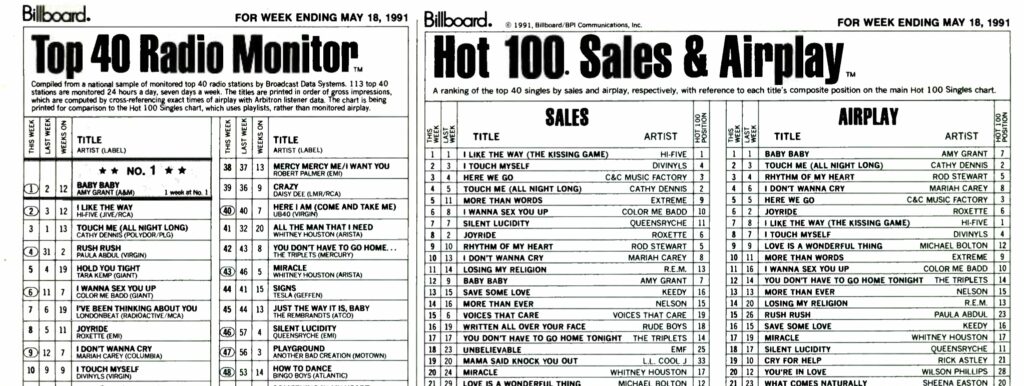
The album “Divinyls” was released on January 29, 1991, and the song “I Touch Myself” became a No. 1 single in Australia, reached No. 4 in the United States, and No. 10 in the United Kingdom.
“It seems Australian bands always do five albums before they get lucky over here,” said Amphlett.
Amphlett in three acts: Christine, Christina, Chrissy
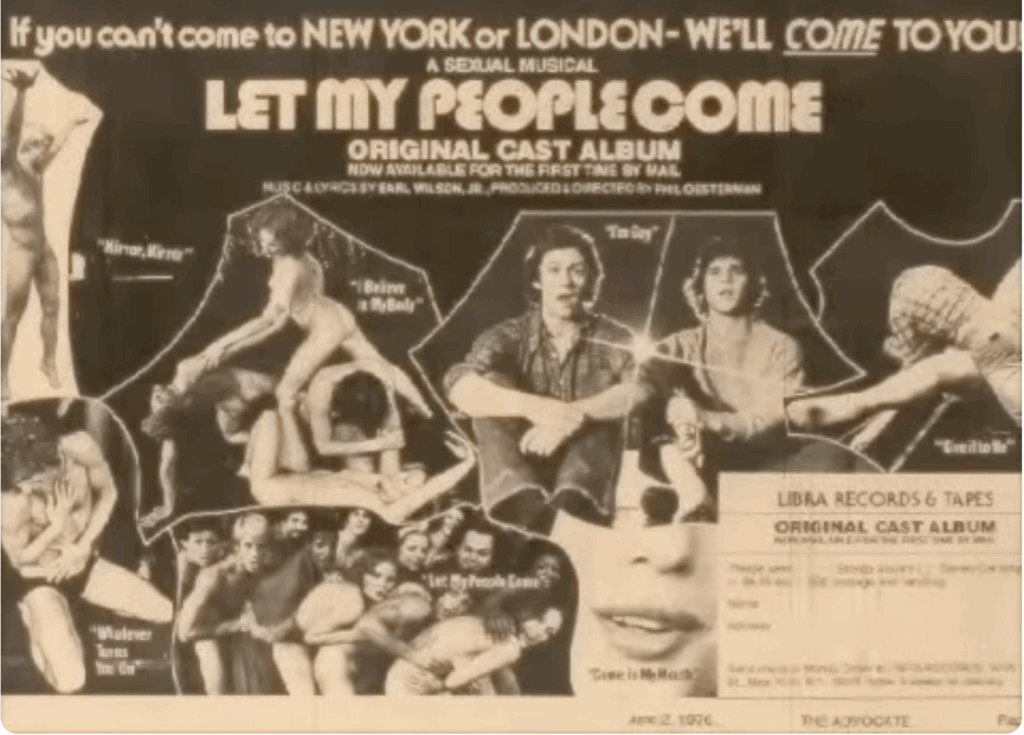
Christine Joy Amphlett was born on October 25, 1959, in Australia. Her mother Mary recalls her being “wild” and “wilful” during her childhood. By the age of 17, Christine took up acting and her first role was playing Linda Lips, a porn queen in the Australian production of the adults-only musical “Let My People Come.”
“They cast me as Linda Lips and I was the porn queen. And we had to take our clothes off in it, which I kind of—I didn’t care. It was a gig and it was eight shows a week and it was my ‘Shakespeare.’ And mum was supportive and I didn’t tell my father,” said Amphlett.
“Before doing this show, I was so modest. And then I remember the day we all had to take our clothes off, we got all that over… Linda Lips, I had this corset on and these suspenders and stockings, and I had rollers in my pubic hairs, big ones,” said Amphlett. “All of a sudden I was accepted into this new world, and they thought I was a little different.”
“Then I got a song in the show: ‘Come in My Mouth.’ But it was funny. I had to fight for that song… It was extraordinarily liberating being naked on stage and I really enjoyed up there shocking people. All that was sort of developed and seeing people’s faces and embarrassing people, and I sort of got a taste for it. And I felt just strong and powerful, but I felt really good about my body. It’s so weird, but from that show, a lot of things came out of that show. My pathway,” said Amphlett.
“I don’t know if I was really wild in those days. I was quite shy, but I was very adventurous, and to connect with people I would sing. I felt it at some deep level. I felt special, even though probably I had low self-esteem and everything. Somehow I felt good because I had this vocal thing,” said Amphlett.
Four years later, in 1980 at the age of 21, Christina met guitarist Mark McEntee while performing at a church choir.
“I was performing in this opera house with all these nuns and priests in the audience. I put out feelers. I really wanted to sort of meet Mark. I heard he was a good guitar player,” said Amphlett. “So he came, of all places, to this concert this night, and I got the sack from the choir that night because the microphone wrapped around the stool. So I’m dragging this stool all around the opera house stage, and they just had enough, Christine, and I got thrown out of the choir.”
“The first time I heard Chrissy’s voice it was great,” stated McEntee.

The band began as a five-piece with Amphlett and McEntee at the core, performing in Sydney pubs and clubs. Their breakthrough came in 1982 when director Ken Cameron asked the band to provide the soundtrack for his film Monkey Grip. Cameron also cast Amphlett in a supporting role as Angela, a temperamental rock singer. The Divinyls’ “Boys in Town” from the soundtrack reached No. 8 on the Australian singles chart, capturing the attention of Chrysalis Records, who signed them in 1983.
The follow-up album “Desperate” went Platinum and the band went on a U.S. tour opening for The Psychedelic Furs and U2. Amphlett, in this act, was recognized as “Female Vocalist of the Year.”
“Divinyls’ lead singer Christina Amphlett is indeed an awesome sight to behold in concert—sort of a deranged Pippi Longstocking type with a strong, husky set of vocal chords capable of emitting primal, passionate cries. While Amphlett’s antics make for a visually emotional presentation, what’s really striking about the band is its overall sound—a blend of blistering hard rock and bouncy new bop,” stated Billboard.
“When I started singing with the band, I was extremely shy,” said Amphlett. “I’d get off the stage and the boys would say ‘Why don’t you do something?’ So gradually I got little steps together and worked on them and developed them. I never had anybody in mind except the characters I was singing about. That person up there on stage just comes out of the songs themselves.”
“I needed something, some sort of wall to separate me between singing these really personal lyrics. So I went out and bought a school uniform and I put suspenders and stockings on, and it just gave me this character that freed me up to sort of have a bit of this character and this girl that was this Centurion’s girl that I could just offset this vulnerable me. And it just gave me this wall and this costume to express myself with, and all of a sudden I’m running up and down the stage and this whole persona emerged,” said Amphlett.
The momentum for the band continued and the album What a Life! was released in 1985 with a song about a toxic, potentially abusive relationship called “Pleasure and Pain.” Billboard reported, “Modifications in management, production and songwriting have resulted in a tempering of the group’s raw, angry attack to facilitate a U.S. breakthrough without diluting its intense identity.”
This move proved correct as “Pleasure and Pain” shot to No. 11 in Australia, but then fizzled out and peaked at No. 76 in the United States.
The band released Temperamental in 1988 and was subsequently dropped by its label as the songs were not translating a return. “We still owed them more than a million dollars,” stated Amphlett. “Unpaid reimbursement of their advances for recording, distributing and promoting three albums, and supporting all those tours, yet they let us off the hook. Chrysalis knew, as did we, that we’d never be able to repay such a sum. They figured that because Temperamental hadn’t broken us in the States, we were never going to make it there and they’d be smarter to write off our debt as a tax deduction. ‘It’s time to split,’ they said. ‘We can’t do anything more with Divinyls.'”
Amphlett said being dropped by Chrysalis “felt great. It was like being let out of jail.” McEntee echoed this sentiment, noting, “They never seemed to understand what we were on about, and we didn’t seem to have any friends there.”
“I don’t really know what the image of the Divinyls is. I don’t sit there and analyze it. It’s just the way we are,” said Amphlett. “I’m the front person of the band and I’m doing my job,” said Amphlett. “I really love that thing of seeing a sexy person up there with sexuality and something that’s very earthy, and I really like that personally. I love to see that on a performer, and a bit obsessed, and I love it… I don’t like people to be too serious and to take themselves too seriously. I think you’re up there performing and giving out to the audience, and I think that that’s part of, part of being a human being is your sexuality and your sensuality and you should give it out. And that’s rock and roll too. It’s part of rock and roll. It’s part of performing. You shouldn’t be afraid of it. You should explore it and, and because that’s part of your essence.”
With the start of a new decade, the Divinyls started a new act. Polished with its new label Virgin Records, the duo of Amphlett and McEntee moved to Paris and started to write new material for their self-titled album, “Divinyls.”
“Mark and I have an intellectual relationship, and we obviously have something for it to last together this long. We both seem to be able to express ourselves within the Divinyls, which keeps us together… We argue a lot. I’ve always argued. In fact, we didn’t really even get on for about the first two and a half, three years. It’s just argument, but we worked together,” said Amphlett.
“I’d say more like 10,” remarked McEntee.
It had been a decade since they met at that church choir in 1980. Ten years of creative expressions, arguments, label struggles, and failed attempts at cracking into the U.S. But the chemistry that kept them together was about to get rewarded.
“The ‘I Touch Myself’ phase came and everybody forgot anything else and I became this sexual person,” stated Amphlett.
“I Touch Myself,” dubbed as “a wry, autoerotic anthem,” was released on November 19, 1990, in Australia and made its way to the United States for the album release in January 1991. When the song hit the airwaves, people embraced it. “Fresh, tuneful label debut for this Aussie quartet seems to be succeeding where previous efforts have failed, and should follow the trail blazed by its modern rock smash,” said Billboard in its review of the album, noting it “could find similar mass acceptance given a boost from a video appearance as, er, eye-catching as lead singer Christina Amphlett’s in ‘I Touch Myself.'”
“The decade-old Divinyls have notched up their first Australian No. 1 with ‘I Touch Myself,’ a graphically sensual song which looks set to become the band’s first American hit since 1985’s ‘Pleasure And Pain.’ With singer Christina Amphlett and guitarist Mark McEntee still at the helm, the band is as volatile as ever, turning out tensile singles drenched in arrogant sexual energy,” said reviewer Glenn Baker. “As one London pop magazine observed: ‘Amphlett’s the most complex, the most true female singer and songwriter since Chrissie Hynde.'”
Even as Madonna had pushed boundaries throughout the ’80s, when “I Touch Myself” was released it caused a minor stir. A female rock singer openly singing about masturbation was still provocative territory in 1991. But unlike Madonna’s 1990 Toronto arrest for simulating masturbation during her “Like a Virgin” performance, the Divinyls faced no legal troubles. Radio stations, despite some initial hesitation, couldn’t resist the infectious hook. As radio editor Sean Ross noted, it was “a rock record so cool that dance stations had to play it.”
The video, shot by an up-and-coming director named Michael Bay in a nunnery in Pasadena, California, became as much a part of the song’s success as the music itself. Bay, who would later direct mega blockbuster movies like “Armageddon” and the “Transformers” franchise, was just beginning his career. The video featured black-and-white sequences of Amphlett without the schoolgirl outfit and in lingerie, moving seductively in bed, gazing into mirrors, reclining in lounge chairs, and mystery women creating a dreamlike, erotic atmosphere. MTV played the video in heavy rotation.
“We shot it here in a nunnery in Pasadena. We sent the nuns away for the weekend to a hotel. So they were whooping it up around the pool. Nuns have got to do what they’ve got to do at times to make some money and keep everything going,” said Amphlett. “I don’t think they’d approve. I had this contortionist in the video touching herself—something a contortionist can do very well.”
The images within the video proved too much for Australian TV, and it was initially banned in the country, which only enhanced interest. The video received three nominations at the 1991 MTV Video Music Awards, including Video of the Year.
The combination of Virgin Records, Amphlett, McEntee, Steinberg, Kelly, and a video that had people entranced climaxed at No. 1 in Australia and No. 4 in the United States. “I Touch Myself” crossed over genres as “a rock record so cool that dance stations had to play it,” said radio editor Sean Ross.
The song lasted on the Billboard charts for six months, then gently faded when Virgin started pumping a new song. Billboard declared, “Now that she’s finished touching herself, singer Christina Amphlett ponders other romantic issues.”
When asked about seeing her daughter on the television, Amphlett’s mother Mary stated that it was just “an act” and that she “knew what she was like anyway.”
Lyrically: I Touch Myself
The double-entendre that Amphlett talked about is the poetry within the song. “I Touch Myself” took something private and perfectly balanced desire and vulnerability. The song helped normalize a conversation about touching oneself and “took the shame out of female masturbation.”
I love myself, I want you to love me
When I feel down I want you above me
I search myself, I want you to find me
I forget myself, I want you to remind me
The opening lyrics set the tone for the entire song, which revolves around self-love, honesty, and safety.
“I love myself” and “I want you to love me” reveal that self-love is where all love begins, but in this context, love also needs to be reflected by external validation from someone else.
“When I feel down I want you above me” is another example of the “double-entendre” at play. The lyrics are both emotional and physical. When I’m feeling sad, I want your comfort. When I’m lying down, I want you physically above me.
“I search myself” and “I want you to find me” reveal that self-discovery is important to understand how you want to be loved, but there is also a desire to be seen by another.
“I forget myself” shows that it’s possible to be lost in your own pleasures or while you’re searching for yourself, and “I want you to remind me” expresses the desire for someone to remind you of the characteristics that make you who you are.
During an interview, Amphlett subtly captures the dependence of the most basic need in the opening lyrics within her own life off the stage, stating, “I love going to the supermarket with my husband because he’s always on the road and I travel a lot too, and it’s a really nice thing we do together. I really like going shopping, and he’s a real foodie, and then he’s really got me eating more. But if he’s not there, I tend to not look after myself quite as much, but he makes sure there’s breakfast, lunch, and dinner, and he gives me that food structure, which is really good.”
I don’t want anybody else
When I think about you I touch myself
Ah-ah-oh, I don’t want anybody else
Oh-no, oh-no, oh-no”
The chorus comes out early with a direct message of devotion, a repeated declaration of “I don’t want anybody else,” then vividly ties together a fantasy to physical action with “When I think about you I touch myself.” Then an orgasmic expression of “Ah-ah-oh,” “Oh-no, oh-no, oh-no.” Nothing in hidden. Everything is in the open.
You’re the one who makes me come runnin’
You’re the sun who makes me shine
When you’re around I’m always laughin’
I wanna make you mine
This is the “odd structure” Steinberg mentioned. The bridge comes immediately after the first chorus, not later in the song. The intensity doesn’t sit and rushes from confession to joy and glides between feelings of need, pleasure, and happiness.
I close my eyes and see you before me
Think I would die if you were to ignore me
A fool could see just how much I adore you
I’d get down on my knees, I’d do anything for you
This verse shows the tension within the song. Touching herself is an act of independence and fantasy, but the lyrics reveal a deep emotional need and that the fear of rejection is real with “Think I would die if you were to ignore me.”
The lyrics once again hold nothing back as “A fool could see just how much I adore you.” Another double-entendre enters with “I’d get down on my knees, I’d do anything for you.” It suggests both praying that love is reciprocated and performing a sexual act.
I touch myself, I touch myself
(When I think about you) I touch myself, I touch myself
(I don’t want anybody else) I touch myself, I touch myself
(When I think about you I touch myself) I honestly do, I touch myself
(I don’t want anybody else) I touch myself, I touch myself
(When I think about you I touch myself) I honestly do, I touch myself
I touch myself
I touch myself
The remainder of the lyrics repeat, building into a declaration and a confession: “Yes, I really do this. I’m telling the truth.” The phrase “I touch myself” becomes a meaningful mantra, and the whispered “I honestly do” at the end breaks the repetition, making the act intimate, personal, vulnerable, and natural.
The cultural impact of “I Touch Myself” has carried itself through generations and has become a message of self-love and awareness. The song has extended beyond its initial meanings. In 2010, Amphlett announced she had breast cancer. This was three years after she was diagnosed with multiple sclerosis in 2007.
“I really wish now that I touched myself. It’s so appropriate now more than ever,” said Amphlett. “It really should be the breast cancer song. Not to be prudy and to find the health in that now to really touch ourselves and feel ourselves and connect with our bodies more than ever.”
Amphlett passed away three years later at the age of 53. Her husband and former Divinyls drummer Charley Drayton stated, “Chrissy expressed hope that her worldwide hit ‘I Touch Myself’ would be utilized to remind all women to perform annual breast examinations.”
In 2014, the I Touch Myself Project launched by Cancer Council NSW and transitioned the song into “an anthem for breast health around the world” as a reminder for women “to check their breasts regularly and to take action if there are any changes.”
During an acoustic version of the song, Amphlett stated, “It’s going to be interesting what happens emotionally and what comes out because it’s a bit different. It’s going to be presented in a different way. It’s a credit to the song that it’s a really good song, and I think you can do it in a lot of different ways, and that is what makes a good song—that you can interpret it. And that’s what I love about this song because really, you know, everybody has always seen it in one way, but I see the beauty of this song. It’s about both of those sides—our higher self and our lower self and our sexuality and everything.”
In 2006, the Divinyls were inducted into the ARIA Hall Of Fame, and the song is included in Billboard’s “500 Best Pop Songs of All Time” at number 326.