To create a song titled “Born To Be Wild” and incorporate those words into the lyrics, one would have to understand what being wild entails. “Wild” in itself is open to interpretation, but that road is open to everyone.
“Born to Be Wild” was written by Mars Bonfire in late 1967. Bonfire is also known as Dennis Edmonton, but born as Dennis McCrohan. Bonfire’s brother is named Jerry Edmonton, who was born Jerry McCrohan. The brothers both took “Edmonton” as their surname, named after the Canadian city, when they played with the band Jack London & The Sparrows.
“Our father operated a ballroom in Canada, and he would bring in swing bands and then later on, rock and roll. As a youngster, I’d go down to the ballroom with him and hang out, and I heard this music live, basically every week,” said Bonfire. “Then I ended up going to college, I was going to be a psychiatrist. But during a summer break, I got involved in a surf band. Then we got a singer, and to my amazement, we got a record deal with Capitol Records Canada. So I never went back to university. I just dropped out and followed music.”
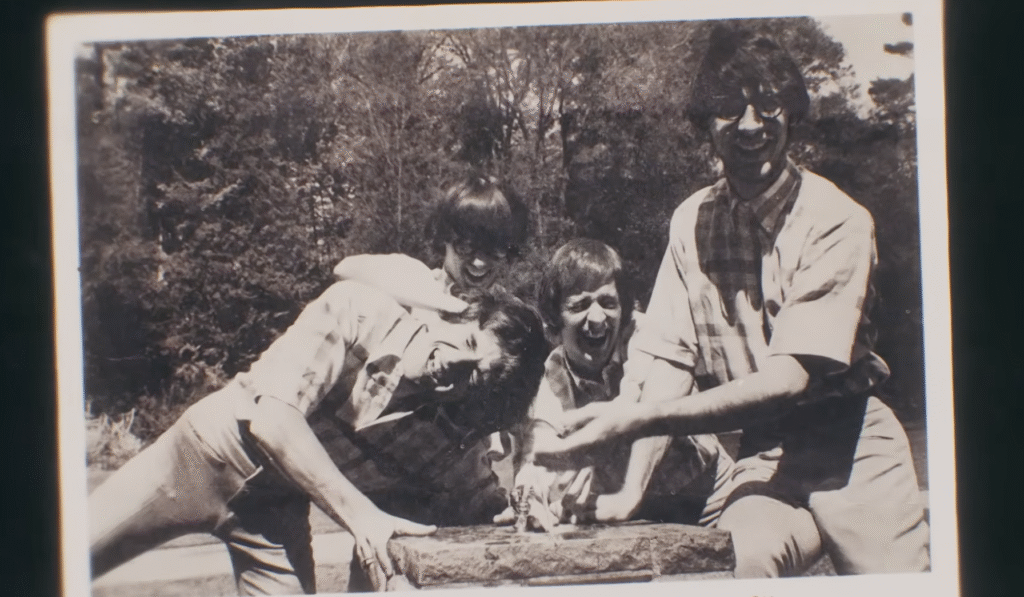
“Even though my early experiences were very intensely involved with music, my father discouraged me from music as a career because he realized it’s definitely unpredictable. But once I got a taste of it by playing in a surf band and getting a record deal, I realized that was my original love, and I was going to stay with that. And then there was my brother… He was still in high school when I convinced him to drop out and join the band. That really sent my parents for a loop,” said Bonfire.
“My brother Jerry and I were living in Toronto and playing in a band called the Sparrow. In search of success, we all moved to San Francisco at the height of the psychedelic 60s. We were on drugs. We played with the Doors and Janis Joplin,” said Bonfire. That’s wild.
While the group had tasted some success with a Top 5 single, “If You Don’t Want My Love,” the constant touring took a toll on Bonfire and the momentum stalled.
“I took LSD, and against the advice that everyone gave me before, which was just stay there, I wandered off,” said Bonfire. “And I went to some movie theatre, which was playing avant-garde, cutting-edge movies. And then I felt like I had just collapsed on the floor, and everybody gathered around, wondering, you know, what was wrong with me? And that feeling was so intense that to this day, I’m not 100% sure I ever got off the floor or if I’m just down there dreaming all this.”
“I wake up one morning and I realize I’m Mars Bonfire. It sounds crazy,” said Bonfire.
Not crazy. Definitely wild.
Bonfire left the band mid‑1967, later saying The Sparrow “didn’t really happen for us, so I left the band to focus on writing songs.”
“Songwriting was really what I loved to do,” said Bonfire. “I didn’t like touring all that much… I never really saw myself as a musician per se. I can’t play much on an instrument and I can’t sing very well, but writing songs always seemed to come naturally to me and I didn’t feel I needed to be a part of a group to do that.”
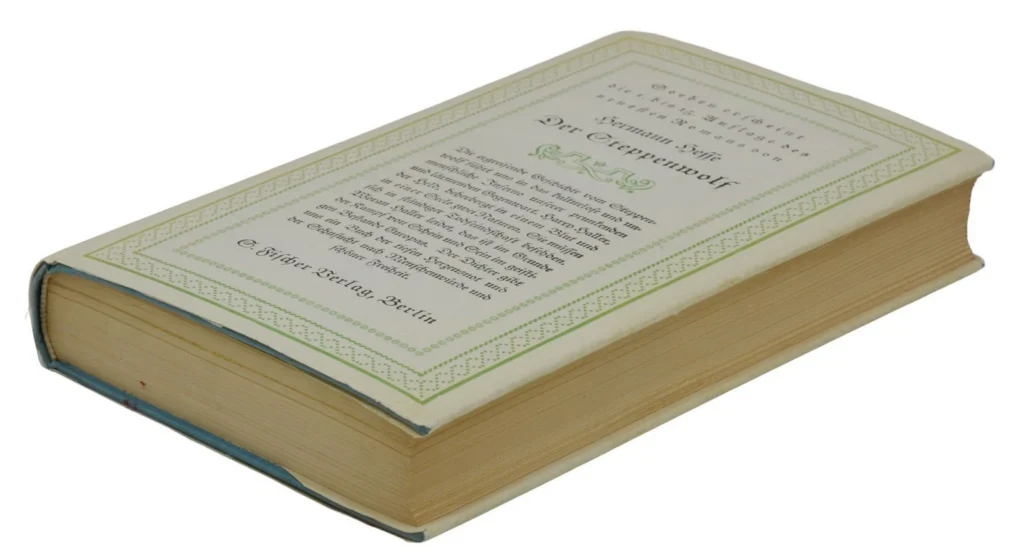
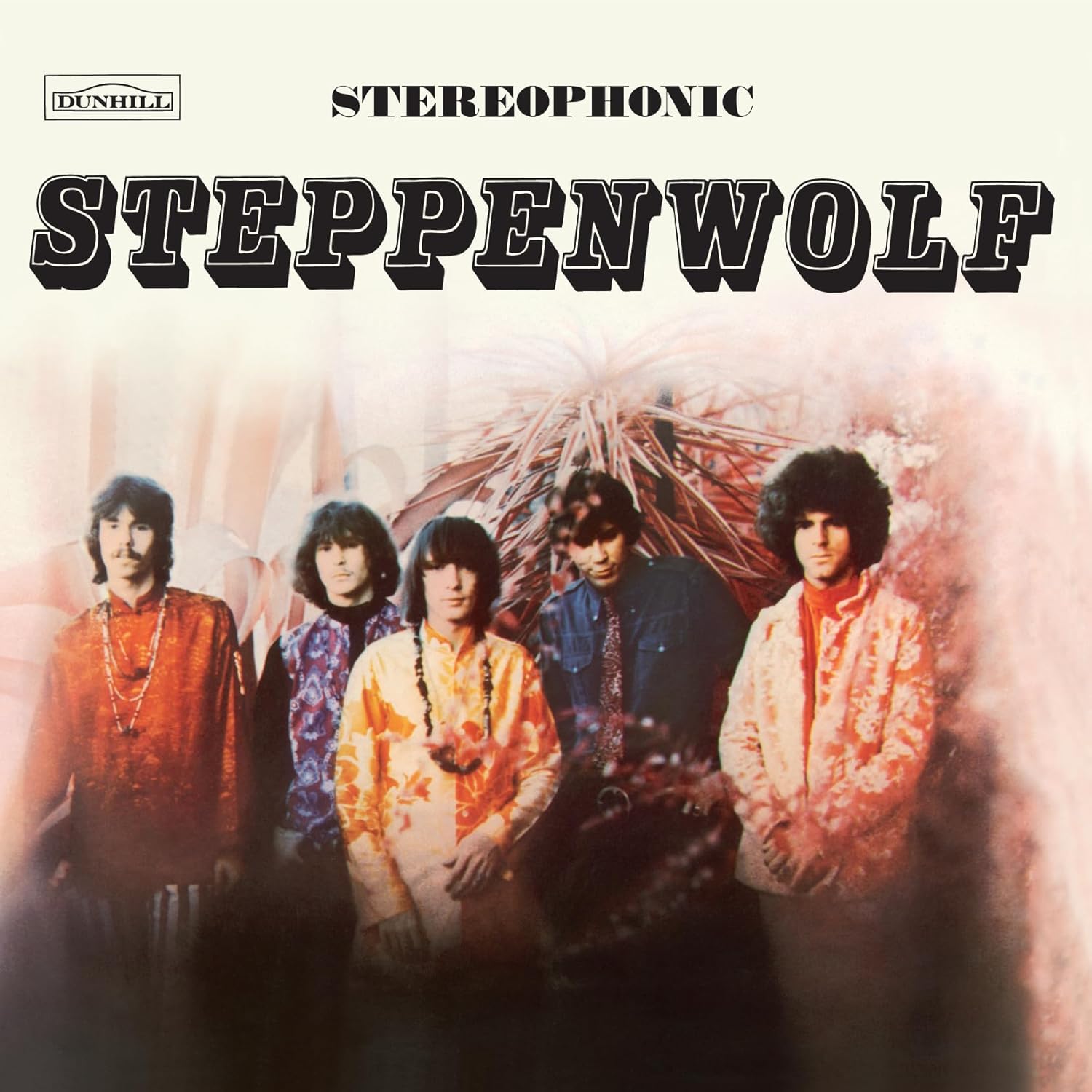
Along with Bonfire departing The Sparrow, three months after, three other members left the band and took the form of another animal. A wolf. John Kay on lead vocals and rhythm guitar, Goldy McJohn on keyboards, Jerry Edmonton on drums. The trio then recruited Michael Monarch on lead guitar, and Rushton Moreve on bass. This 5-pack called themselves “Steppenwolf.” The name was suggested by their producer, Gabriel Mekler, and was based on Hermann Hesse’s 1927 novel Der Steppenwolf, a story that follows a man’s search for balance between his dual nature: one of fitting into society and its rules, the other feeding his wild, instinctual impulses.
“None of us had read the book. All we knew was that it looked, the word Steppenwolf looked good in print and sounded good even in English,” said Steppenwolf’s John Kay.
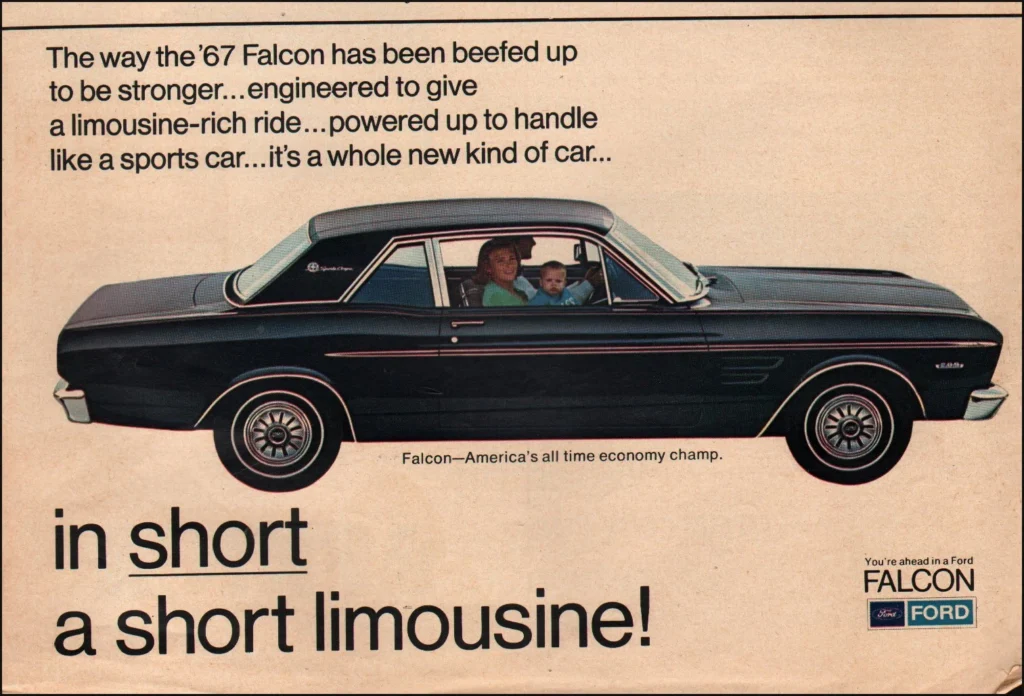
Free from the confines of a band, Bonfire pursued songwriting. “I was walking down Hollywood Boulevard and there was a poster in a window saying ‘Born to Ride’ and there was a picture of a motorcycle erupting out of the earth like a volcano with all this fire around it. And around this time I had just gotten my first car which was a Ford Falcon.”
The Falcon was marketed as “a short limousine” that’s “Mustang-bred” with power.
“Prior to that moment, I had pretty much just been trapped in my apartment,” said Bonfire. “I couldn’t plug into my amp because the lady upstairs always complained about noise.”
“When I got that car I was able to drive out to the ocean and up into the mountains, and I realized how incredibly diverse the city really was. The feeling that came with being out on the road in my car was total freedom,” recalled Bonfire.
One night, driving his Falcon into the San Bernardino mountains and deserts around LA, inspiration struck Bonfire. “The mountains, the ocean, the high desert — I’d never seen anything like it… I was driving around and I like the feeling of being in a car and out on the open road,” said Bonfire.
This is when “Born to be Wild” was born. It was born on the open road.
“I got the basic guitar riff quick, and the lyrics were written chronologically.”
“‘Get your motor running / Head out on the highway.’ Those lyrics just flowed right out of me,” said Bonfire.
Later on, “One afternoon, I had encountered a thunderstorm so ferocious I had to pull over as the road turned into a river. The sky was ominous, the colour of lead. I was struggling to describe it in words until I remembered the periodic table of elements I’d studied during chemistry class at school. The term “heavy metals” came into my head,” recalled Bonfire. “I had no idea how important those words would soon become.”
“I had that riff going on the guitar, but I didn’t have the rest of the chord progression and I didn’t have any idea of lyric. I just play the riff and then ideas started coming, you know, unconsciously I guess. And the phrase ‘born to be wild,’ I just found myself singing it,” said Bonfire. “I couldn’t make much noise and I still had my Telecaster but I couldn’t plug it in so I did the demo with the Telecaster dry, unplugged.”
Bonfire completed the music and lyrics to “Born To Be Wild” and recorded a demo. “I actually presented ‘Born To Be Wild’ to three or four publishers, but nobody showed any interest,” said Bonfire. “They were into pop stuff, like the Turtles.”
Stalled but not out, Jerry asked Bonfire if he had any songs. Bonfire knew the right song for the right band and dropped the demo off at Jerry’s house in Los Angeles.
“Mars left this cassette tape. He came by the house and he slipped the cassette tape through the mail slot in the front door, and he heard the big dog on the other side. He thought, ‘For all I know that dog just chewed it up or ate it,'” said Kay. “This caused Tiffany, Jerry’s great dane, to go crazy, barking and scratching. Mars came to us and said: ‘I think the dog’s eaten the damned tape!'”
“The demonstration recording that I gave to Steppenwolf was simply me singing with one guitar,” said Bonfire. “so it sounds more like a banjo, and my very, very weak voice. It had the softness of a ballad.”
“You barely heard the strings, what the parts were, and he was singing it something along the lines of ‘Get your motor runnin” you know. It was very subdued,” added Kay. “The demo sounded puny, but we thought we could knock it into shape.”
“Luckily Steppenwolf understood the essence of it and translated it very well, stated Bonfire.
“I thought it had killer lyrics and an interesting guitar riff but sounded somewhat puny on Dennis’s demo… We picked up the tempo a bit from the demo and found a key that worked for me. I don’t remember spending more than an afternoon transforming it from the demo to our version, but once we were through, it was ours,” stated Kay.
“Gabriel Mekler, who was our producer, was a next-door neighbour of mine, and his wife knew my wife, and you know, one thing led to another. And he was with Dunhill Records at the time, who had no act who played any music like we did, and we made a demo, and the demo led to a contract, and the contract led to the making of an album,” said Kay.
Steppenwolf’s label, ABC Dunhill, had a unique way to gain interest of new artists and songs. “The head of the label, Jay Lasker, would run potential tracks by his teenaged son and daughter to get their reactions, and his daughter Marcy—who had recommended that he sign the band in the first place—preferred ‘The Girl I Knew,'” said Kay. “Lasker said, ‘Well, I listened to this and I got to tell you, I don’t have a clue, but my 16-year-old daughter will…’ He gave us the thumbs up!”
“The first one was recorded in 4 days because we knew our stuff well. I mean, it was recorded and mixed, everything, in 4 days,” recalled Kay.
Steppenwolf’s first single, “A Girl I Knew,” was released in 1967, but it didn’t chart and failed to gain traction. The follow-up, “Sookie Sookie,” arrived in early 1968 and managed to chart in Canada at number 92, but went under the radar in the United States.
On January 29, 1968, Steppenwolf’s self-titled debut album was released with 11 songs.
“Steppenwolf is a new rock group with step-out chances. The quintet is electronically oriented and their sing-out is candid and pertinent. The boys have something to say and they know how to say it as witness ‘Everybody’s Next One,’ ‘Born to Be Wild’ and ‘Take What You Need.’,” stated Billboard in March 1968.
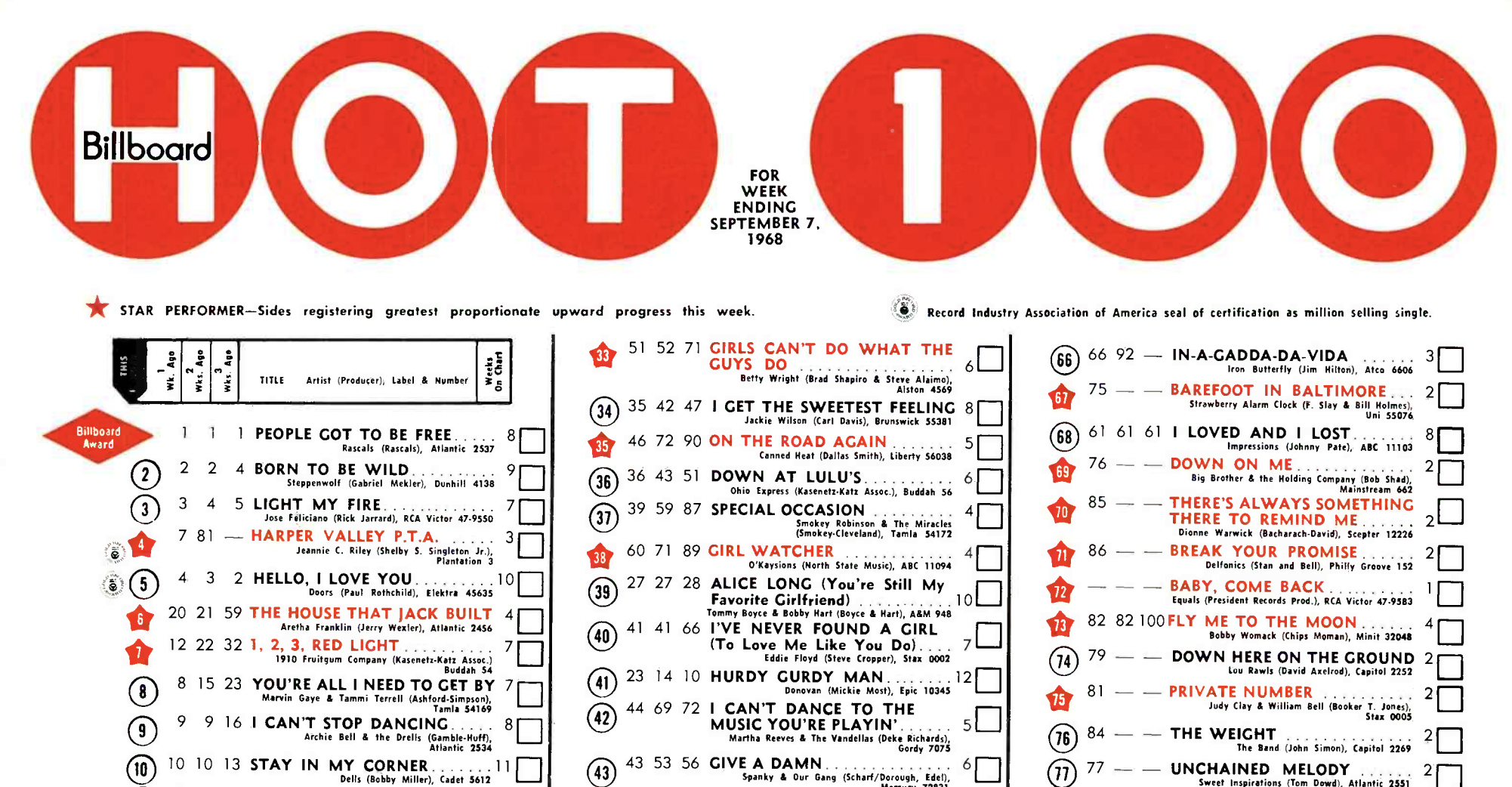
It wasn’t until Thursday, May 9, 1968, when “Born to Be Wild” hit the road, eventually declared a “National Breakout” by mid-July by Billboard and hitting the Hot 100 chart, then accelerating and reaching No. 2 on the Billboard Hot 100 chart in August, eventually becoming a gold record/million-seller.
“‘Born To Be Wild’ was the third single off our first album and the record company argued about which of the tunes that remained from the album that had not been released to date should be the next single,” stated Kay. “So management and band on one side and label on the other side had this tug of war and finally the compromise was to put “Born To Be Wild” on one side, put the other song that the record company preferred on the opposite side, send it to radio, and let them fight it out. Well, within a relatively short period of time (early summer of 1968) 9 out of 10 played “Born To Be Wild.”
Steppenwolf’s success began gaining speed, along with a larger fanbase. The band toured through the United States and Canada. Then a call from their management company came in saying that actors Peter Fonda and Dennis Hopper had invited them to a screening of an upcoming film called Easy Rider, for which they wanted to use the songs “Born to Be Wild” and “The Pusher.” The film tells the story of two bikers who ride through the American Southwest and South on their motorcycles with the goal of achieving freedom.
Kay recalled the person from his management company saying “‘You know Peter Fonda and Dennis Hopper have made this film, and it seems they’ve run out of funds, it’s kind of a low budget production and so they’re not going with the standard Hollywood scoring approach for the music content of this thing. They have invited a number of performers to come and view a private screening they’ve taken the liberty of placing certain songs in the film to illustrate what their intentions are, and they are hoping that the various artists like the film well enough to permit them to use songs and then work something out’. So we went to this private screening.”
“Little did I know that sitting in the screening room that I was witnessing, really, the launching of the key song,” said Kay.
When Easy Rider premiered at Cannes on May 12, 1969, and then opened in North American theatres on July 14, “Born to Be Wild” defined the opening scene and theme of the movie. The song plays for nearly two minutes right after Wyatt (Peter Fonda) tosses his wristwatch to the side of the road, rejecting time, as he and Billy (Dennis Hopper) ride their Harleys out of Los Angeles on the open road, mirroring the sense of freedom Mars Bonfire felt when he wrote the song.
The inclusion of the song in Easy Rider helped define biker culture and “gave ‘Born To Be Wild’ its second lease on life and spread it internationally.”
“After Easy Rider came out, and our music became known in other parts of the world, and we were making good money. You know, we were hitting on all cylinders,” recalled Kay. The band played 75 concerts in 1969 and continued touring heavily through 1970 across North America and Europe.
“When I went to see the movie Easy Rider, during intermission I went into the restroom and there was a guy peeing in a urinal and he was singing Born to Be Wild. I just thought boy, that sums it all up wordlessly, what it means every guy when they’re young just feels at some point they’re born to be wild,” said Bonfire.
Decades later, the song’s impact remains undeniable. “Born to Be Wild” was inducted into the Grammy Hall of Fame in 2002, the Rock & Roll Hall of Fame in 2018 (as a single), and the Canadian Songwriters Hall of Fame in 2003. Rolling Stone has listed it as one of the Greatest Songs of All Time. Steppenwolf was the first major rock band to use the phrase ‘heavy metal’ in a song. The lyrics ‘heavy metal thunder’ are widely credited with giving the heavy metal music genre its name.
“There was always this kind of division between that part of me that was very comfortable in one sense with the normal expectations that people have of life, but on the other hand there was this—there was the wolf part. And you know, sometimes people ask, ‘Well, “Born to Be Wild,” that’s like…’ No, you don’t understand. I mean, I get it that you saw Easy Rider and you think that “Born to Be Wild” is all about, you know, all that, and it is. But my focus is: how wild are you in here? The wolf part of you, in a sense, is that not what is really driving you? Is that not really where your passion is? You know, that says ‘there’s got to be more than this.’ There has to be something more powerful, more passionate, more exciting,” stated Kay.
Lyrically: Born To Be Wild
The lyrics of “Born to Be Wild” are synonymous with the open road, embracing adventure, and living life without limits.
Get your motor runnin’
Head out on the highway
Looking for adventure
In whatever comes our way
The image of starting your vehicle—regardless of its look, shape, or the type of motor—and heading out on the highway in any direction brings freedom. The lyrics also represent life as an open road, with every new adventure born out of the one before.
Yeah, darlin’ gonna make it happen
Take the world in a love embrace
Fire all of your guns at once
And explode into space
These lyrics, according to Bonfire, are straight from his experiences living in the psychedelic 1960s, noting it was “about peace, love, the hippie movement.”
The lyrics “Yeah, darlin’ gonna make it happen,” are a declaration to pursue your goals. “Take the world in a love embrace” suggests an open-hearted and open-minded approach to all experiences. The metaphor of “firing all of your guns at once” signifies full commitment, while “explode into space” captures the power and limitless growth possible on this adventure.
I like smoke and lightnin’
Heavy metal thunder
Racing with the wind
And the feeling that I’m under
The lyrics “I like smoke and lightnin'” capture much of what inspired Bonfire to write the song. The “smoke and lightnin'” evokes Bonfire’s experience during the thunderstorm that inspired the song. Or it could simply refer to lighting up a cigarette and starting your motor.
One of the most descriptive lines in the song, “heavy metal thunder,” stems from Bonfire’s recollection of the periodic table of elements during a rainstorm while driving in the San Bernardino mountains, and how “the sky was ominous, the colour of lead”.
“Eventually I travelled up into the mountains above L.A. and got trapped in a very strong thunder storm. The highway was now like a river, and I couldn’t drive on it so I pulled over to the side. I was watching it in awe, and the phrase, ‘Heavy Metal thunder’ came to me and I realized in high school, I was very enthusiastic about math and science and there was a table of the heavy metals, and I think that’s where I remember it from,” said Bonfire.
This term “heavy metal” took on a life of its own and helped popularize heavy metal music as a genre, which later influenced bands like Black Sabbath, Deep Purple, and Led Zeppelin.
Like a true nature’s child
We were born, born to be wild
We can climb so high
I never wanna die
“Like a true nature’s child” suggests a deep connection with the world and what it brings. The line “We were born, born to be wild” reinforces the idea of living an adventurous lifestyle, while “We can climb so high” embraces the idea of having limitless potential. “I never wanna die” captures a desire to live every moment.
Born to be wild
Born to be wild
The repetition of “Born to be wild” in the chorus is a constant reminder to choose to live a wild life. The remainder of the song repeats previous lyrics and serves as the overall message that it’s your nature to live wild. You were born to live wild.
“Every generation thinks they’re born to be wild, and they can identify with that song as their anthem,” said Kay.