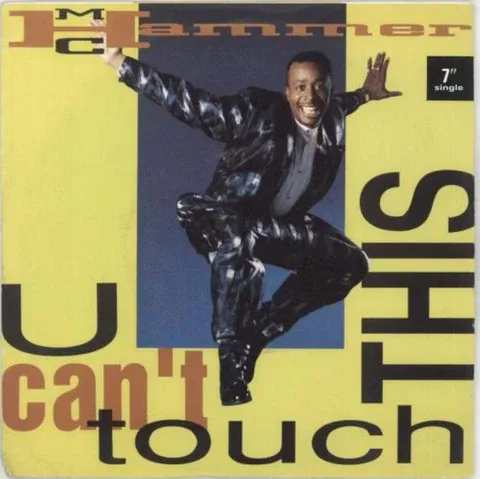
On Friday, January 13, 1990, 27-year-old MC Hammer released his new single “U Can’t Touch This” as part of his third studio album “Please Hammer, Don’t Hurt ‘Em.” This song would help define early rap, establish the pop-rap genre, and transform Stanley Kirk Burrell into a global phenomenon.
Burrell had aimed to create a mainstream sound that would showcase his high energy and showmanship by combining rap, hip-hop, R&B, pop, and dance.
“The Jackson 5 and The Temptations to Smokey Robinson, The Beatles, The Rolling Stones, and the great groups of the mid-’70s and ’80s. It’s so much—it’s a lot. Yeah, it was built around all of that, and those were all my influences… they inspired me to focus on a pretty eclectic approach to music, performance, and ideology,” said Burrell. “Being around innovative people like Oakland A’s owner Charles O. Finley, who invented the designated hitter and coloured uniforms in baseball, was also a huge influence. So I drew from all those places and became the artist MC Hammer.”
“When I became a rapper, I didn’t go the opposite way. I went deeper into the creativity of putting on a great show and embracing a flamboyant, artistic look. I had an idea and a concept that we would look good together on stage,” said Hammer.
Using a combined $40,000 loan from Oakland A’s players Mike Davis and Dwayne Murphy, Hammer launched his own label called Bustin’ Records. His debut album “Feel My Power,” produced by Felton Pilate of the funk-R&B band Con Funk Shun, was independently released in mid-August 1986. Rather than relying on major-label distribution, Hammer took the album directly to the streets of Oakland, selling copies from his basement and car trunk while he and his wife Stephanie pushed the record to local DJs. The strategy worked. The album sold over 60,000 copies and caught the attention of Capitol Records, EMI’s U.S. subsidiary, who offered him a multi-album deal with a $1.75 million advance.
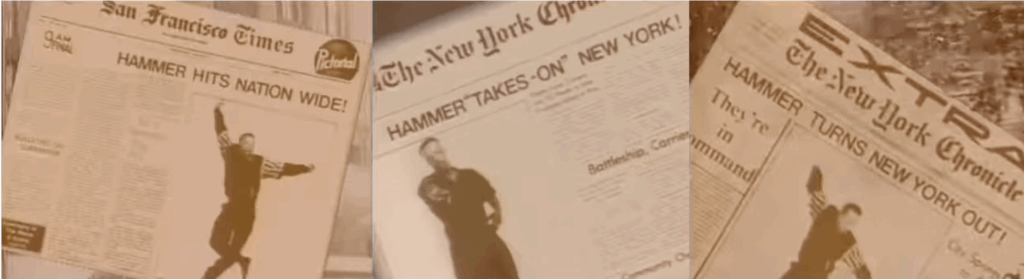
Hammer’s second album, “Let’s Get It Started,” was released on September 28, 1988, and was a reworked version of “Feel My Power” with four new songs, including “Pump It Up,” “Turn This Mutha Out,” “They Put Me in the Mix,” and “Let’s Get It Started,” which all charted. The album sold over two million copies and peaked at number 30 on the Billboard 200.
Billboard noted, “Oakland’s Hammer raps up a strong case for West Coast sock with rock-powered delivery on title track, ‘Ring ‘Em,’ ‘Cold Go,’ and ‘It’s Gone’ (an update of B.B. King’s ‘The Thrill Is Gone’) that shakes the roof and rattles the rafters. Rocking bass, pop arrangements should grip the charts.”
On the song “Let’s Get It Started,” Hammer name-dropped three of hip-hop’s biggest stars, saying his “beat is so complete” and “I’m second to none” when compared to “Doug E. Fresh to LL or DJ Run.”
But Hammer didn’t fit the typical mold. “I’m taking it in that direction. I’m tired of rap artists pacing the stages like caged tigers and lions and not putting on a show. So, the acts I am going to produce, along with myself, will be dance. Rap is changing, and each artist will have their distinctive style, but it will still be rap,” said Hammer in December of 1988.
Hammer “crossed over to radio” with “Turn This Mutha Out” at top stations, and his “outstanding dancing has made him a video favorite” on New York’s Video Music Box, MTV, BET, and late-night talk shows such as Arsenio Hall. More people were becoming aware of rap, and old-school word of mouth helped grow the genre to new audiences. He was performing live shows in front of tens of thousands of people while on tour with other artists, such as Guy, Tone Loc, Tony! Toni! Toné!, Kool Moe Dee, N.W.A., Heavy D. and the Boyz, Kid ‘n Play, Salt-N-Pepa, and De La Soul.
“Considering black radio’s continuing resistance to rap, this contradictory state of affairs is not unexpected or unusual. Rap singles don’t get played, but good rap albums still sell. But Hammer has more than an underground album. The man has an underground video. His ‘Pump It Up’ suggests that this super-nimble dancer, backed with a crew of female and male dancers, is bringing new ideas and energy to hip-hop performing. Hammer took the current catalog of ‘new jack’ moves and added some twists and turns,” wrote Billboard’s Nelson George. “In fact, Hammer gets so busy he may set new standards for dancing among hip-hoppers. At one point in the elaborately choreographed video, Hammer does a James Brown mashed potato step and then switches to some serious circa-1989 high stepping and twists. If Hammer can dance this well live, he’ll make rappers who just walk around and talk obsolete.”
“More rap videos are squeezing their way onto rotation on MTV, often by call-in request. For example, M.C. Hammer’s pulsating ‘Turn This Mutha Out’ won a recent ‘make it or break it’ segment. In short, where R&B failed, rap has made major inroads on MTV. Moreover, the nonrap acts who have broken through on MTV of late tend to be ‘new jack swing’ singers like Bobby Brown,” wrote George.
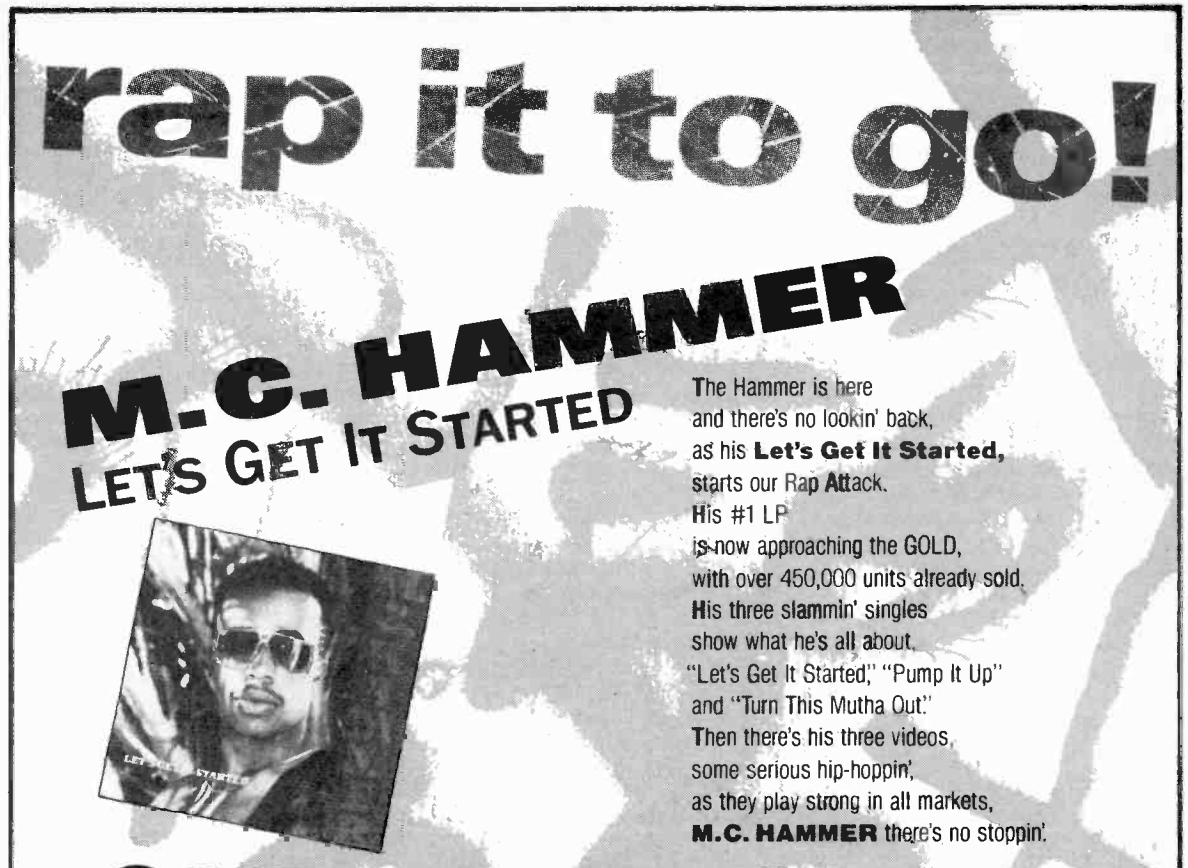
Step Johnson, VP/GM, black music division at Capitol, stated, “Hammer’s platinum success, for instance, represents the launch of the career of a real entertainer, an artist that transcends the categorization of rap.”
“The credit for the strategy for the success of this project goes to Hammer. He developed a concept that he calls ‘compounding single releases’,” recalled Earl Jordan, director of sales and marketing, black music at Capitol Records. “The plan calls for singles to be released close together, so that once the first single has been worked sufficiently from the street to radio, you begin to nurture the second single in the street. Then, by the time the first record begins to peak at radio, since rap has a relatively quick radio burnout factor, you are already prepared to present the second single. As a result, you keep radio and retail focused on your project.”
Hammer knew what he wanted to create next. Known for testing new material and dance moves during his live sets, he appeared on The Arsenio Hall Show shortly after his album went gold. The music playing to intro him was a song by MC Breeze called Superbaad, and it was during this moment that Hammer donned baggier pants while showing off some new choreography. The audience and Arsenio’s “Dog Pound” loved it. 2 Bigg MC, a core member of Hammer’s posse, was repeatedly chanting “Go Hammer!” during the “typewriter” dance move.
After Hammer performed “Turn This Mutha Out,” Arsenio interviewed him and asked, “A lot of the successful rappers come out of New York. Why is that, and how have you made the impact that you’re making?” Hammer responded, “Well, originally because rap began in New York and it kind of filtered its way out here… So now everybody can see that it doesn’t matter where you come from, just where you’re at.”
“I think radio is beginning to open its doors. But the door is only cracked open. Most rap is still only played in the evening and late at night. There are rap records that are good enough to fight the situation and should be played any time of the day,” said Hammer. “I see that changing in 1990. The market is flooded with hip-hop styled music. It can’t be stopped. The quality is going up and what is being said on the record is more positive.”
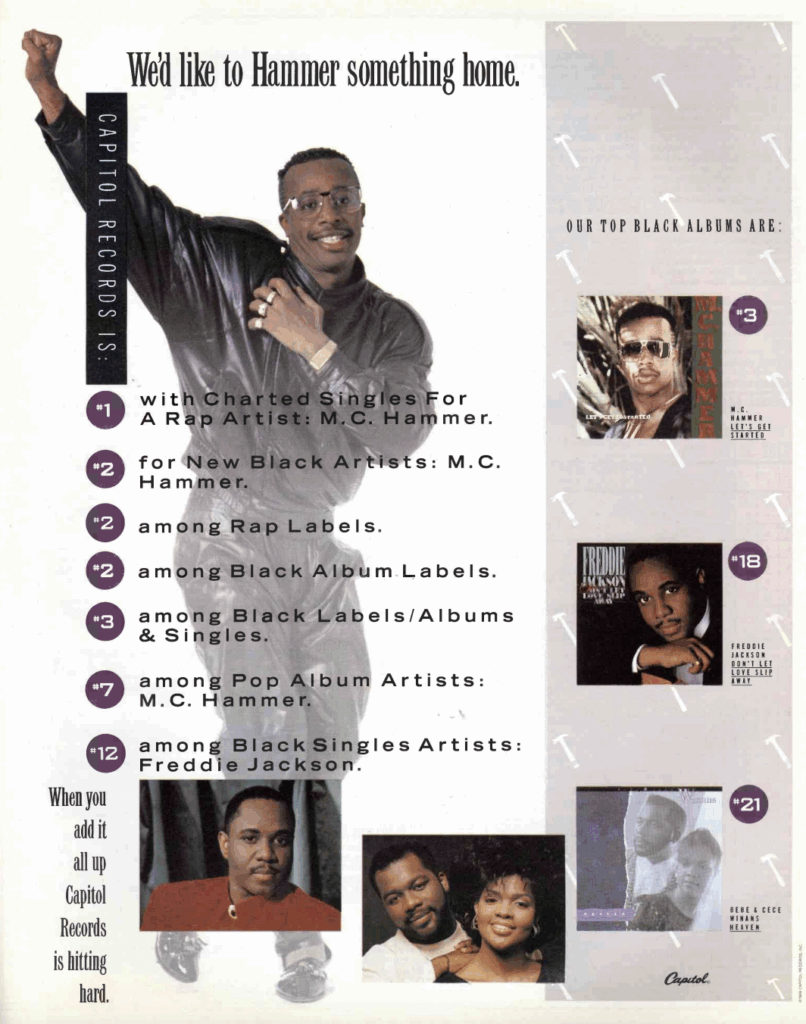
With momentum building from “Let’s Get It Started,” Hammer was ready to continue his strategy and release another album. With a $10,000 production budget, he took a resourceful approach with co-producers Felton Pilate and James Earley and decided to bypass expensive studio fees by modifying his tour bus with $50,000 in recording gear. This allowed him to record his new material between shows.
“It was intended to be the crew bus,” said Pilate. “We took out most of the beds and threw together a bunch of equipment in the rear lounge area with no real plan where everything was supposed to go.”
With new songs on his mind, inspiration struck at an untouchable level. Hammer recalled that “U Can’t Touch This” came to him “on the airplane one day, and we were on the plane and we were actually making a little bit too much noise, and I just say, ‘You can’t touch this!'”
Then, on November 27, 1989, appearing on the Arsenio Hall Show, Hammer tested a demo of an unreleased song and unleashed “U Can’t Touch This” to the masses. Hammer and his posse were high energy, and he presented an elevated version of himself that captivated people. When Hammer let the lyrics “Stop! Hammer time!” and “Please Hammer Don’t Hurt ‘Em” sink in with the masses, he knew his next move.
By the end of 1989, rap had started to flow into the mainstream. Billboard declared that “Self Destruction” by the Stop The Violence Movement was the year’s No. 1 rap single, followed by Hammer being “the No. 1 rap artist.” De La Soul finished second on both lists.
E=MC Hammer
“I was working with a lot of different entertainers… Jonathan [Moseley] and Louis Burrell, Hammer’s brother, came to my apartment in Burbank, and they said, ‘Listen, this album is about to be released. We need an image. What can you do for Hammer?’,” said designer Tamechi Toney Briggs. “And I said, ‘I know exactly what to do for Hammer. I already know. Trust me, it would be trendsetting.’ And the reason why I was so sure about this is because those same pants and the concept I had on the Soul Train dancers already—I had been testing it for years. And they said, ‘Well, if you can come up with something for him, we’re going to take you all the way with us.’ I said, ‘Okay.’ And I did an aqua kind of blue outfit, lamé, and it was the pants and the cropped jacket. Now, the cropped jacket is something that Myron used to wear on Soul Train a lot with the baggies, but they weren’t dropped like that. I made them way, way bigger, and the crotch was way lower than it was supposed to be, but we liked them. So anyway, I knew that the image would work, and when he put the pants on, it was over. That’s how that whole image thing kind of came about for MC Hammer.”
Hammer released the first single from his third studio album, “U Can’t Touch This,” on January 13, 1990, followed by the album “Please Hammer, Don’t Hurt ‘Em” on February 12.
“The first track here hits hard, with lots of bragging and a hammer-like beat… But by track three, we’re bathing in a soft rap ballad,” said Greg Sandow in his February 16 review in the very first issue of Entertainment Weekly magazine. “There’s one grossly sexist song, ‘She’s Soft and Wet’ (‘that’s how we like ’em’), for which no grade could be low enough. But—at least when Hammer’s not bragging—the rest of the album tells important truths.”
The song started to receive airplay on top radio stations and hit the charts in early March, with album sales reaching 450,000 units. By mid-April, shipments climbed to platinum level, with 1 million units.
“In the last few years, we’ve learned that rap acts can hold their own on the pop charts with higher-profile pop and rock superstars. This week, we learn that they can actually beat their better-known pop rivals. MC Hammer’s ‘U Can’t Touch This’ is the top new entry on the Hot 100 at a sizzling No. 27, ahead of new singles by Phil Collins and Richard Marx,” said Billboard. “MC Hammer’s hit is the highest-debuting single since USA For Africa’s ‘We Are The World.'”
A video was ordered to show off Hammer’s dancing and showmanship. Directed by Rupert Wainwright, who Hammer worked with on the “Feel My Power” video, “U Can’t Touch This” was filmed in Oakland, and the objective was to create something “as funny and as silly as possible… a video that like you had a smile on your face from beginning to end.”
“‘We’ve got to do another video. I want it to be pop this time. None of the musical stuff,'” Wainwright recalled. “And I said, okay, great, but I’m doing this television movie right now. And he goes, ‘Well, work it out.’ Click.”
“He would always call me at four in the morning and give me a whole bunch of instructions and then hang up,” Wainwright adds. “I used to go to bed with a pen and paper beside my phone, so I could just scribble it down, because I would wake up the next morning and go, ‘What the fuck did he say?'”
The video included Hammer wearing his signature “Hammer pants,” dancing the “running man,” the “bump,” and the iconic “Hammer Dance,” with his posse.
Capitol’s marketing strategy was to mail out free cassette singles with a letter signed by Hammer to 100,000 kids in 15 markets, asking them to phone MTV and request his video. It worked. Capitol Records sales VP Lou Mann stated, “It moved Hammer into a whole new arena. We didn’t want to lose this guy’s base.”
The letter read, “Tell your friends about it and let your local DJ’s and MTV’s Request Line know how you feel,” with the mention of an upcoming tour and the advice, “Nobody wins who quits on their future. Stay in school.”
“Rather than cross over (into the pop market), let’s say that I expanded,” Hammer stated. “My music caught on because the people are ready for it.”
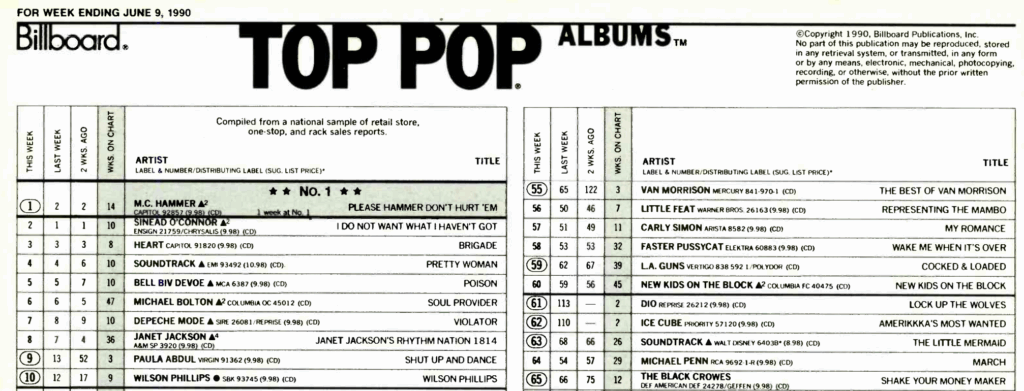
MC Hammer became the first rapper to reach the top five on the pop albums chart since Tone Loc did it a year earlier in April 1989 with “Lōc-ed After Dark.” “Hammer achieves the feat as his second album, ‘Please Hammer Don’t Hurt ‘Em,’ jumps from No. 6 to No. 4,” wrote Billboard.
It was at this time that Rick James heard his song “Super Freak” on the radio. MC Hammer sampled his song without permission.
“At the time, a lot of rap was going on that was really kind of offbeat, very derogatory towards women. And I really got pissed off because I certainly didn’t need the money. I told my accountant and lawyers that no more rappers allowed to use any of my stuff, nothing,” said James. “I was driving in LA and I hear the DJ say something about Rick James, and then he said this is number five in the country, pop record or something. And he played it on the… And I said, ‘oh, great, you know, I’m back!’ The record stopped and the guy said, ‘Can’t Touch This.’ What? And then he really pissed me off. He says this line, ‘my, my, my, my music hit me so hard.’ And I really got inflamed. His music!?! And I remember calling up my accountants and lawyers, I said, I really thought I told you guys not to let any more rappers use my stuff. I was yelling louder than them and then they said, you know, you’re gonna be making so many millions… And I said, okay, never mind.”
As a result, James sued Hammer for copyright infringement and later settled out of court by August. “MC Hammer managed to do a record without demeaning any race or any sexuality. ‘U Can’t Touch This’ was the largest selling rap record of all time, and I’m really happy to be part of that,” said James.
With the success of the song, Hammer was the target of negativity by rap fans, including those within the industry.
“Hammer is an explosive live performer, sweating holes in his shirtless Armani suits, but he must spend all his creativity onstage. In the studio he follows a lazy formula, interspersing concern with braggadocio, sexism with black pride. His message to gangs to leave the children alone is commendable, but when he repeats it in four numbers, you have to wonder if he ran out of midnight oil,” said Rolling Stone in its review of the album.
“My rapping is no less rhythmic than anybody else’s,” Hammer said. “There’s only two or three really great rappers, like Big Daddy Kane, Rakim, and Young M.C. But all rappers have one thing in common: the ability to adapt to many different styles. Those who do are rappers extraordinaire. I just choose to do my style of rap.”
“He can’t rap. He’s not a good rapper. He’s a great entertainer, but he can’t rap, you know what I’m saying? You take away the jumping around, take away the 50 people on the stage with him, and he’s not even doing the fake rap that he do. He got his homeboys screaming all his vocals, and he’s just jumping around, you know what I’m saying,” said Jam Master Jay of Run-DMC.
Tupac Shakur, stated in an interview, “I’m not getting on Hammer, and I’m not gonna say he didn’t sell 10 million records, but crack fiends bought 10 million rocks. That don’t mean crack is good; it don’t mean nothing. The reason I’m down with him is because he’s a brother and he’s making his mail. However, he’s diluting rap, you know what I’m saying? He’s playing that Sambo role, and the reason everybody’s buying his record is because he’s no threat, and everybody wants to see Sambo dance.”
Despite what others said, Hammer pursued his dream, noting, “people tend to try to dictate the narrative to a community they’re not a part of, so they may not experience the tremendous amount of pain and struggle, but want to support it by a consistent diet of negativity and darkness for entertainment. I won’t go deep into that, I’m just stating and so I wanted to balance that and always want to balance that.”
“Please Hammer Don’t Hurt ‘Em” reached number 1 on the pop charts in early June 1990, ousting Sinéad O’Connor’s “I Do Not Want What I Haven’t Got.” It dominated the top spot for 21 weeks, surpassing the Beastie Boys’ “Licensed To Ill” as the longest-running No. 1 rap album and marking the longest run by a male solo artist since Michael Jackson’s “Thriller” reigned for 37 weeks in 1983-84. His run was interrupted for just one week by New Kids On The Block’s “Step By Step” before Hammer reclaimed the top position, only to be overtaken by Vanilla Ice’s “To The Extreme.”
By December, with sales over 7 million units, the album’s dominance proved unprecedented for rap. “Please Hammer Don’t Hurt ‘Em” had logged 32 consecutive weeks at No. 1 or No. 2 on the pop albums chart, the longest uninterrupted run in the top two by any album since Billboard merged the separate stereo and mono charts in 1963.
Hammer secured partnerships with BET and British Knights athletic footwear. The British Knights deal included 200,000 copies of a special four-track cassette featuring a revised version of “U Can’t Touch This,” with “Hammer time” replaced by “British Knights time.” He also partnered with Pepsi, which sponsored his worldwide fall tour and featured him in radio and TV spots promoting a Pepsi-produced anti-drug, stay-in-school program. Hammer also released “Please Hammer Don’t Hurt ‘Em: The Movie” on VHS to expand his brand into living rooms.
“Rap is a very profitable situation,” said Step Johnson, Capitol Records’ senior VP/GM, black music. Our role is to make rap profitable and worldwide. We’re a music company, regardless of the kind of music. We’ve done it with Hammer, and Hammer has gone on and changed the whole concept… Placement comes by profitability. Two years ago rap wasn’t even placed; now it is.”
“The writer/dancer/choreographer/producer/record company chief has become the best-selling rap entertainer in history—in a record genre that barely existed 10 years ago, wrote Billboard. “His tantalizing singles, ‘Have You
Seen Her?,’ ‘U Can’t Touch This,’ and ‘Pray’ have been heard where no rap record has been heard before, especially since top 40 radio has embraced M.C. Hammer as a rap-transcending total entertainer.”
By the end of the year, Hammer swept award shows. He won Favorite Rap Artist and Favorite Rap Album at the American Music Awards, earned #1 Pop/Rap Artist and Album with Most Weeks at #1 at the inaugural Billboard Music Awards, and was named “Best Rap Artist” at the 23rd annual NAACP Image Awards.
At the 1991 Grammy Awards, Hammer won Best Rap Solo Performance, Best R&B Song, and Best Music Video: Long Form for Please Hammer Don’t Hurt ‘Em: The Movie. Please Hammer, Don’t Hurt ‘Em was the first hip-hop album ever nominated for Album of the Year, and “U Can’t Touch This” was the first rap song ever nominated for Record of the Year.
Hammer was untouchable for the year and his pop strategy worked. His album became 1990’s best-selling release. Initially released on vinyl while omitting cassettes, the album entered the chart in March, at which point four months of the eligibility period had already elapsed. “‘Please Hammer…’ is the only album in the year-end top 10 that wasn’t in release for the full eligibility period,” noted Billboard.
“Sixteen of my friends and I each taped the song off the radio and videotaped the video. So their little attempt to manipulate us into spending more money didn’t work. You can’t make us buy albums when we just don’t have the money. There’s more than one way to get it free: People hear a song and want to own it, so they tape it,” said Sheri Mills
of Bicknell, Indiana, which had a population of approximately 3,400 in 1990.
From small towns to global stages, wherever and however the people heard Hammer, his impact was untouchable.
Lyrically: U Can’t Touch This
When MC Hammer raps “U Can’t Touch This,” what exactly is it that he’s claiming is beyond reach, and what makes it so untouchable?
The repeated opening lyrics of “U Can’t Touch This” set the tone for the entire song with a bold declaration of being untouchable. It takes a certain personality to conduct yourself in this manner, globally. MC Hammer is informing others that his skills, style, and success are unparalleled and out of reach.
My, my, my, my
(You can’t touch this)
Music hits me so hard
Makes me say “Oh, my Lord”
Thank you for blessing me
With a mind to rhyme and two hyped feet
Before going solo, Hammer formed a Christian rap group called the Holy Ghost Boys in the late 1980s with singer and musician Jon Gibson and gospel singer Tramaine Hawkins. The band eventually disbanded, but Hammer’s Christian faith continued and is evident in the opening lyrics, where he expresses gratitude for his gift of being able to rhyme and dance. Hammer stated that he is “grateful for the opportunities music gave.”
It feels good when you know you′re down
A super dope homeboy from the Oaktown
And I′m known as such
And this is a beat, uh, you can’t touch
Hammer was born in Oakland, California, on March 30, 1962, and grew up in East Oakland with his mother, who was a secretary, and seven siblings in a small three-bedroom apartment in a housing project. It was where he built his foundation and work ethic. When describing his home while growing up, Hammer said, “This is the home that made me work hard to want to be more than just a nobody in life, or to be more than just another drug dealer or something like that.”
The term “Oaktown” was created by Hammer in reference to the growing music scene in Oakland. “Oakland is happening,” said Hammer. “We call it ‘Oaktown’ is the new Motown. Oakland is definitely a hotbed for music right now.”
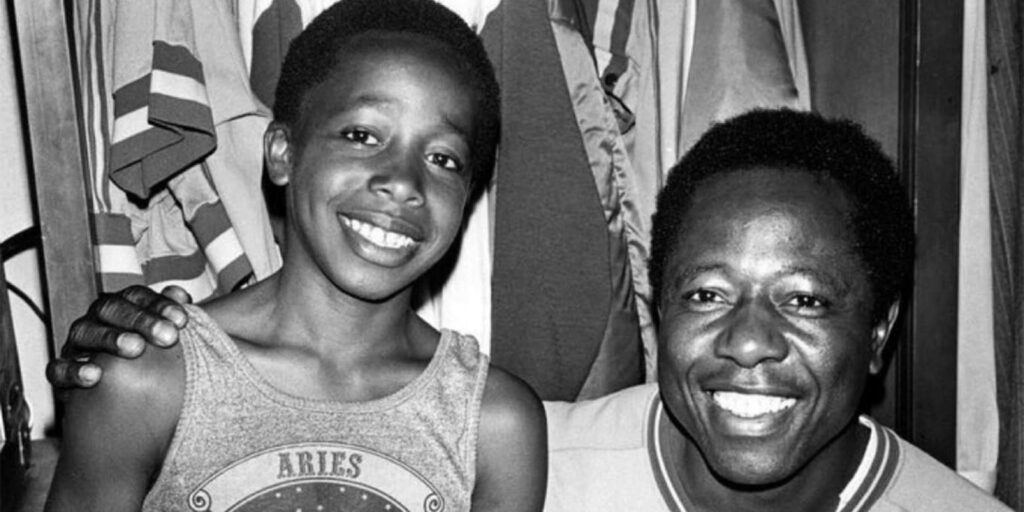
Before his music career, at the age of 9 or 10, Hammer was already dancing. He set himself up in the parking lot of the Oakland A’s baseball club, and some players recognized his ability and resemblance to Hall of Famer Hank “the Hammer” Aaron and gave him the nickname “Little Hammer.”
“Pedro Garcia was the first one to coin, ‘Oh, you look like the Hammer,’ and then Reggie Jackson picked it up and all the A’s started calling me, you know, ‘the Little Hammer’ based on what Reggie Jackson said,” recalled Hammer.
Then Charlie Finley, the owner of the Oakland A’s, saw “Little Hammer” in the parking lot. “I caught the attention of the owner of the Oakland A’s because when he was coming by, there was a James Brown record playing on the radio that Vida Blue had given to me, and I was dancing because I love James Brown. And he walked over to me and he asked me, he said, ‘Hey, little kid, you know, you dance like a grown man. So who are you?’ And I told him that, you know, Reggie Jackson and all the players say I look like, you know, ‘Hammerin’ Hank’ Aaron, and they call me ‘the Little Hammer.’ And so, you know, my dance skills, even at that point, they were on point, to say the least,” said Hammer.
“After completing his dance, he recognized me as the owner of the ball club and walked over to me and he said, ‘Mr. Finley, could you take me into the game as your guest?’ And I said, ‘Yes, I’d be glad to.’ And I got pretty well acquainted with the Hammer,” said Finley.
Hammer became engrained in the organization, becoming a “super dope homeboy” and worked as a batboy and in other roles.
“He told me that he was an absentee owner and that he would use my skill set to make sure that he could hear the game back in Chicago. And so he let me have access to the owner’s box, and I would do the play-by-play from the owner’s box back to Chicago every day, and that was kind of like my job. And probably about five years later, when I was 14 or 15, I went on ABC’s ‘Kids Are People Too’ as the youngest executive vice president in Major League Baseball because, you know, by then Mr. Finley had me doing all kinds of other things as well. And so, yeah, I did that from all the way until I was 18 years old. I traveled around the country with the team, you know, visited everywhere I could ever think of—New York, Chicago, Detroit, you name it, Minnesota. And so, yeah, I did that for quite a while,” said Hammer.
Fresh new kicks and pants
You got it like that
Now you know you wanna dance
So, move outta your seat
And get a fly girl
And catch this beat
While it’s rolling
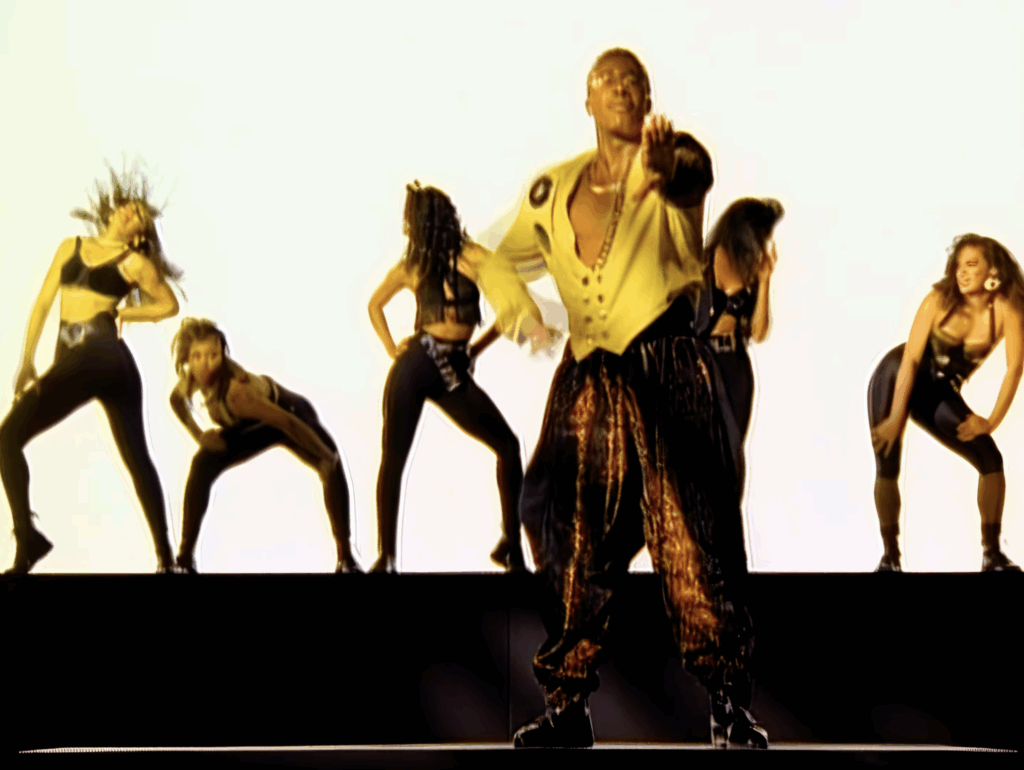
MC Hammer introduced the world to his “Hammer pants” and the “Hammer Dance” when he performed “U Can’t Touch This.” The dance, known for its side-to-side steps resembling a typewriter, became his signature. This trio—the person, the pants, and the dance—became a cultural phenomenon and helped define his live performances and music videos.
“You can make a fashion statement,” said Hammer. “You can move in ’em. You can dance in ’em … and it gives you freedom of movement. It’s a slight delay. You move, and then the pants move, so it brings a nice little flair.”
“Every move that I do is not always original,” said Hammer. “Whereas the move may have been very, very basic in its form, once I put the Hammer Touch to it, it’s a different move and it becomes an original.”
Hold on
Pump a little bit and let ′em know it′s going on
Like that, like that
Cold on a mission, so fall on back
Let ’em know that you′re too much
And this is a beat, uh, they can’t touch
Lines like “Pump a little bit and let ’em know it’s going on” hype those who listen, while the lyric “Cold on a mission, so fall on back” portrays him as being calm and focused on his dreams, suggesting he is serious about his success and won’t tolerate competition or distractions. Those who attempt to compete should just “fall on back,” implying that others should step aside and recognize his superiority.
What it’s gonna take in the 90’s to burn
The chart’s legit
Either work hard or you might as well quit
The discipline Hammer honed from baseball, and three years in the Navy where he started creating music, gave him the focus and work ethic he needed on stage. He and his posse had curfews, practiced routines for eight hours a day, and ran four miles daily. “When I was out there running, I was thinking a lot of times about all my competitors. Their records would be going through my mind, and I would say to myself, ‘got to go further, got to run further, so I can do a better show,'” said Hammer.
Stop, Hammer time!
The lyric “Stop, Hammer time!” is a cultural catchphrase that comes in around the halfway point of the song and commands all to stop and put the attention on his showmanship. “Hammer Time” is a transition point that elevates the energy into a dance break to focus on his moves, the beat, and his “Hammer Pants.”
“When I came along, I already seen Grand Master Flash and Melle Mel. I flew to New York myself and literally walked the streets with Melle Mel. He saw me at the Latin Quarters and yelled out to me in The Marriott, ‘Go Hammer, go Hammer, go!’ I went over to him and said, ‘What’s up, Mel,’ and he said, ‘Man, I was Latin Quarters last night, and that thing you were doing—that ‘Go Hammer, go Hammer.’ Man, if that market that right, you can be big, man.’ I was so gassed up behind that,” said Hammer.
Every time you see me
That Hammer’s just so hype
I′m dope on the floor
And I’m magic on the mic
Now, why would I ever
Stop doing this
With others making records
That just don′t hit?
I toured around the world
From London to The Bay
It’s “Hammer! Go, Hammer! MC Hammer! Yo, Hammer!”
And the rest can go and play
‘U Can’t Touch This’
With the Oakland A’s, Hammer travelled around the country with the team, and when his career in music took off, the world welcomed him. With “U Can’t Touch This,” Hammer forecasted his global success. The lines “It’s ‘Hammer! Go, Hammer! MC Hammer! Yo, Hammer!'” reveal being recognized wherever he goes.
Every new year and decade brings longevity for “U Can’t Touch This” and success for “Please Hammer, Don’t Hurt ‘Em.” The song has reached the untouchable level of being timeless. “I think what makes the song timeless is the melody, the energy, fun lyrics, the tones, and the bass line—obviously, the great Rick James, rest in peace. That combination is tied to fun memories, good memories, and good times, and I think that makes it very memorable,” said Hammer.
MC Hammer is a gift to the world, and the world could use the “Hammerman.”