Sunday, August 27, 1967. Normal College, Bangor, North Wales.
The Beatles are three days into a meditation retreat with Maharishi Mahesh Yogi, an Indian spiritual teacher they have begun studying with. Earlier that morning they completed their initiation into Transcendental Meditation.
On the college grounds following a late lunch, the pay phone in their dormitory rings. Jane Asher, Paul McCartney’s partner, answers it. On the other end is Peter Brown, the personal assistant of Brian Epstein, manager of the band, calling from London, asking to speak to McCartney immediately. “I’m afraid I’ve got bad news,” Brown told him. “Brian has died.”
Epstein was found that morning in his bedroom at 24 Chapel Street, Belgravia, one of London’s most prestigious addresses, minutes from Buckingham Palace. He is 32 years old.
McCartney leaves for London. John Lennon, George Harrison, and Ringo Starr follow shortly after. Reporters gather. Visibly shaken and still processing the news, Lennon and Harrison step forward to speak to the press. Starr stands nearby.
“He was a warm fellow,” Lennon tells them. “And it’s terrible.”
A reporter asks, “John, where would you be today without Mr. Epstein?”
Lennon pauses. “I don’t know.” He speaks plainly. “We loved him and he was one of us.”
The Fifth Beatle
Brian Epstein, often referred to as the “fifth Beatle,” was born in Liverpool, the son of a successful furniture retailer. He left school at 16 in 1950 and began working in the family business, Epstein and Sons. In 1956 he enrolled at the Royal Academy of Dramatic Art to pursue acting, leaving after a year and returning to work. By 1959 he had taken charge of the record department, known as NEMS (North End Music Stores), building it from one assistant to 30 staff in two years, with two Liverpool locations.
At about three o’clock on Saturday, October 28, 1961, an eighteen-year-old boy named Raymond Jones, wearing jeans and a black leather jacket, walked into NEMS in Liverpool. “There’s a record I want,” Jones said. “It’s ‘My Bonnie’ and it was made in Germany. Have you got it?” Behind the counter was Brian Epstein, twenty-seven, director of the store. He shook his head. “Who is the record by?” he asked. “You won’t have heard of them,” said Jones. “It’s by a group called The Beatles.”
Epstein wrote on a pad: “‘My Bonnie.’ The Beatles. Check on Monday.” Two more customers asked for the same record before Monday arrived. He began making calls. Nobody had heard of it. A girl he knew told him: “The Beatles? They’re the greatest. They’re at the Cavern this week.”
On November 9, 1961, Epstein went down the greasy steps of the Cavern Club. He described it as “black as a deep grave, dank and damp and smelly.” There were 200 young people there, jiving, chatting. A girl nudged him. “Hey,” she hissed. “The Beatles’re going on now.”
He worked himself toward the stage, past the crowd. “They were not very tidy and not very clean,” Epstein wrote. “I had never seen anything like the Beatles on any stage. They smoked as they played and they ate and talked and pretended to hit each other. They turned their backs on the audience and shouted at them and laughed at private jokes. But they gave a captivating and honest show and they had very considerable magnetism.”
When the set ended, Bob Wooler, the Cavern’s disc jockey, announced over the loudspeaker that Mr. Epstein of NEMS was present. Embarrassed, Epstein made his way to the stage. George Harrison was the first to speak. “Hello there,” he said. “What brings Mr. Epstein here?”
Epstein explained he had enquiries about “My Bonnie.” Harrison called the others over, who at the time were John, Paul, and Pete Best, the band’s drummer. Paul went into the band-room next to the stage to get it played. “I thought it was good, but nothing very special,” Epstein wrote. “I stayed in the Cavern and heard the second half and found myself liking the Beatles more and more. There was some indefinable charm there.”
“Never in my life had I thought of managing an artiste,” Epstein wrote. But in the days after the Cavern visit, he sold over 100 copies of “My Bonnie.” Something was happening. He arranged a meeting at the Whitechapel store with John, Paul, George, and Pete for 4:30 p.m. on December 3, 1961, “just for a chat.”
Paul arrived an hour late. He had been in the bath. George’s response when asked: “And very clean.” They went to a milk bar for coffee. Epstein found they had no management beyond their instincts.
Through his Liverpool connections, Epstein convinced Mike Smith, an A&R manager at Decca, to come to the Cavern Club in December 1961 to see the Beatles perform. Epstein described it as “a tremendous stir. What an occasion! An A&R manager at the Cavern!” Smith was knocked out. An audition was arranged in London for New Year’s Day 1962.
They arrived at Decca at 11:00 a.m. Smith was late. The Beatles recorded 15 songs in under an hour and returned to Liverpool to wait for Decca’s decision. In the meantime, on January 24, every Beatle signed a management contract with Epstein.
In March, Dick Rowe, head of A&R at Decca Records, delivered the verdict over lunch. “Not to mince words, Mr. Epstein, we don’t like your boys’ sound. Groups of guitarists are on the way out.”
“You must be out of your mind,” Epstein told them. “These boys are going to explode. I am completely confident that one day they will be bigger than Elvis Presley.”
Disappointed but undeterred, he took the tapes to HMV’s record centre on Oxford Street in London, where he could have them pressed into acetate discs, which were easier to carry and play than tape reels. A technician making the acetates told him: “I don’t think these are at all bad.” That comment reached a music publisher named Syd Coleman, who called a friend at Parlophone, a smaller EMI label known for comedy and classical recordings. His friend’s name was George Martin, the label’s head of A&R and the man who decided what Parlophone recorded.
Epstein met Martin at EMI’s offices in London. “I know very little about groups, Brian,” Martin said, “but I believe you have something very good here.” They shook hands. Epstein described Martin as “a painstaking man with a magnificent ear for music and a great sense of style. I do not think he could produce a bad disc.”
He phoned ahead and took the train back to Liverpool. When he arrived at the station, all four Beatles were waiting on the platform. “An unusual event,” Epstein wrote, “for they are not sentimental people given to waving people off or to welcoming them back.” Harrison spoke first. “Well?”
“You have a recording session at EMI as soon as you like.”
They celebrated at the National Milk Bar with Coca-Cola and four packets of biscuits.
In July 1962, the Parlophone contract was signed.
One month later, on August 16, Epstein called Pete Best to his NEMS office. After a few minutes he turned and said: “Pete, I’ve got bad news for you. The boys want you out and they want Ringo Starr.”
Ringo Starr, born Richard Starkey in a working-class neighbourhood in Liverpool, had been drumming for Rory Storm and the Hurricanes. He replaced Best two days later, making his first appearance with the Beatles at the Cavern Club on August 18, 1962.
The transition was not smooth. Chanting crowds carried signs reading “Pete for Ever, Ringo Never.” George Harrison got a black eye at the Cavern and took it with him to the recording session as, Epstein wrote, “a proud symbol of his support of the new fourth Beatle.”
Ringo settled in quickly. He shaved his beard, combed his hair down and became, in Epstein’s words, “pure Beatle.” By late 1962 Epstein described the four of them wearing “black velvet waistcoats and trousers, white shirts and black silk knitted ties.” They looked, he wrote, “pretty splendid.”
On October 4, 1962, “Love Me Do” was released on Parlophone. It entered the charts at number 49 and climbed to number 17. “Please Please Me” followed and by early spring 1963 was the clear leader of every disc chart in Britain.
What followed was unlike anything the music industry had seen. Beatlemania had arrived.
“I can think of no warmer experience,” Epstein wrote, “than to be in a vast audience at a Beatle concert. I hope Beatle crowds continue to scream themselves hoarse in a frenzy of exultation. For this — and only this — is what the Beatles are all about.”
On November 11, 1963, Epstein met Ed Sullivan at the Delmonico Hotel in New York and agreed a deal on a handshake. Three appearances for $10,000, with the Beatles performing as headliners.
Meanwhile, early in 1964, Epstein nearly walked away. The pressures had become too much. He received a cash offer of £150,000 for a 50 percent interest in his artistes. He met the Beatles in his flat and asked them how they would feel if someone else took over. George did not look up. “You’re joking,” he said. John said: “Get stuffed.” Paul said something similar, though less polite. Then Paul said: “Sell us and we’ll pack it up completely. We’ll throw the whole lot up tomorrow.”
Epstein turned the offer down. “I don’t think all the money in the world would be enough,” he told the financier.
Before the performance on February 9, 1964, Sullivan addressed the audience. “Something very nice happened, and the Beatles got a great kick out of it,” he told the crowd. “They just received a wire from Elvis Presley and Colonel Tom Parker, wishing them a tremendous success in our country. I think that was very, very nice.”
On this night, 73 million Americans watched the Beatles perform live for the first time. What Epstein had predicted to Dick Rowe came true.
By August 26, 1967, the numbers told the story. In six years, the Beatles had released eight studio albums. Their latest, Sgt. Pepper’s Lonely Hearts Club Band, sat at number 1 on the American album chart, gold certified on the day of its release. Total worldwide sales had surpassed 200 million records. Billboard confirmed 23 number one singles, more than any act in the history of American music.
“I don’t believe anything like them will happen again,” Epstein wrote. “And I believe that happen is the word, since no one could have created anything in show-business with such appeal and magnetism.”
The following day, Epstein died.
Without Brian
Four days after Brian Epstein’s death, NEMS Enterprises issued an official statement. “There is no question of a replacement for Mr. Brian Epstein as personal manager of the Beatles,” it read. “However, the directors and staff of Nems will continue to give them every possible assistance in the conduct of their affairs.”
The Beatles decided to manage themselves. McCartney was direct: “No one could possibly replace Brian.”
In the months that followed Epstein’s death, the world was not making it easier. In China, Chairman Mao’s Red Guards flooded the streets to physically attack, publicly shame, and remove anyone who disagreed with his ideas. Vietnam was burning. On April 4, 1968, Martin Luther King Jr. was assassinated on the balcony of the Lorraine Motel in Memphis. Just two months later, Robert F. Kennedy was fatally shot right after his California primary victory speech. In August, police beat protesters outside the Democratic National Convention in Chicago. The world that Epstein had navigated so carefully was unpredictable.
Back in London, the structure Epstein had built was coming apart. Cash Box, the American music industry trade paper, documented the dissolution week by week. Robert Stigwood, a music promoter Epstein had brought into NEMS as Managing Director, departed by November 1967. Tony Barrow, who had handled Beatles press since 1962, left to form his own firm. By April 1968, NEMS had closed its press division entirely.
Meanwhile, the Beatles did not even own their own music, and they had not known it for years. In February 1963, George Martin had recommended a music publisher named Dick James to Epstein after the success of “Please Please Me.” James proposed a new publishing company. Lennon and McCartney, aged 20 and 22, signed the contracts at a small Liverpool house without reading them. “We just signed this thing, not really knowing what it was at all about,” McCartney recalled. “John and I didn’t know you could own songs. We thought they just existed in the air.” Dick James and his accountant Charles Silver held 50% of Northern Songs between them. Lennon and McCartney held 20% each. Brian Epstein held the remaining 10%. When Epstein died, his shares passed to his estate. The Beatles did not inherit them. Cash Box confirmed Northern Songs was generating £920,000 annually before tax, the equivalent of roughly $20 million today, paying 56% dividends to shareholders.
The Beatles began building Apple Corps, a London-based company they owned and controlled, covering music, films, electronics, and merchandising, to replace what was lost. But there was one thing Apple could not replace. Their own music director, Ron Kass, confirmed the core trap of Northern Songs on the record in Cash Box: “It’s a public company with Lennon and McCartney signed as writers for the next few years. Actually, they own part of Northern, but it can’t be brought into Apple.”
In February 1968, the Beatles flew to Rishikesh, India, to study at the ashram of Maharishi Mahesh Yogi. What the trade press did not report was that Maharishi had already been packaged and marketed as a product. World Pacific Records had pressed his teachings onto a record and was promoting it to Top 40 radio stations, citing the Beatles by name as a selling point without their permission or endorsement.
Lennon arrived distracted. His marriage to Cynthia was quietly coming apart. He had met a Japanese artist named Yoko Ono in London in 1966 and had not stopped thinking about her since. “I was thinking about her all the time in India,” Lennon recalled.
Their days at the ashram were structured around twice-daily meditation sessions, Maharishi’s spiritual lectures, vegetarian meals, and nature walks. In the hours between, the music came. Between the four of them, the Beatles wrote approximately thirty new songs. McCartney wrote about a dozen. Harrison wrote six. Lennon wrote fifteen. One of them was “Revolution.”
Ringo Starr and his wife Maureen left after ten days, citing the spicy food. McCartney and Jane Asher followed five weeks in. Lennon and Harrison stayed the longest, approximately eight weeks, until allegations surfaced that Maharishi had made sexual advances toward female attendees at the ashram. Lennon confronted him directly. When Maharishi asked why he was leaving, Lennon’s reply was blunt: “If you’re so cosmic, you’ll know why.”
They got into a car for Delhi, returning to England. “Revolution” had been forming in Lennon’s head throughout his weeks in the hills.
A Revolution Trio
The word “revolution” carries three distinct meanings, all of which were present in what Lennon was living through in 1968. A revolution is a political act, the overthrow of a system. It is also a personal one, a complete transformation of self. And astronomically, it is a full rotation, a return to the starting point.
There are three versions of “Revolution” by the Beatles.
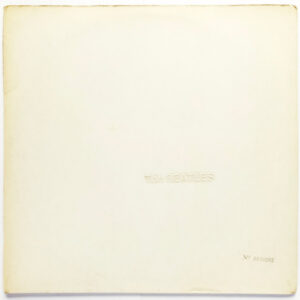
The first was recorded on May 30, 1968, at Abbey Road. Lennon brought it in from Rishikesh. The band recorded it slow, bluesy, and long, over ten minutes. During the recording, Lennon sang two words in quick succession that would define the song’s argument: “count me out” followed immediately by “in,” barely audible. He left both on the tape. It became “Revolution 1” on The Beatles, the double album released November 22, 1968, known as the White Album.
The other Beatles said it was not fast enough for a single.
Lennon disagreed. “I wanted to put out what I felt about revolution,” he later told Rolling Stone. “I thought it was about time we spoke about it, the same as I thought it was about time we stopped not answering about the Vietnamese war.”
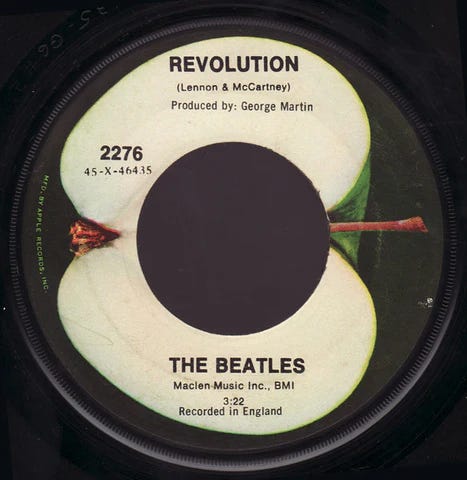
He recorded it again. The second version was tracked at EMI Studios between July 9 and 13, 1968. Louder, faster, harder. Lennon had fought to have “Revolution” on the A-side of Apple’s first Beatles single. McCartney won with “Hey Jude.” The song Lennon considered his most important political statement shipped as the B-side, released August 26, 1968 in North America.
The third version, “Revolution 9,” was built from tape loops, studio experimentation, and the extended recording sessions that produced “Revolution 1.” Eight minutes and twenty-two seconds of voices, orchestral fragments, and crowd noise. Melody Maker‘s Alan Walsh called it “noisy, boring and meaningless which can only be some private joke for the Beatles’ inner circle.” It appeared on the White Album alongside “Revolution 1.”
Lennon explained the distinction on The Dick Cavett Show in 1971. “There’s three versions,” he said. “Number one, the slow one; number nine is an abstract picture of revolution. Number two was the single because the other boys didn’t like number one. They said it wasn’t fast enough, so I made it fast.”
Lyrically: “Revolution” by The Beatles
“A long time ago, I said that I didn’t want to be singing ‘She Loves You’ when I’m 30,” Lennon told Dick Cavett. “I said that when I was about 25 or something, which in a roundabout way meant that I wouldn’t be doing whatever I was doing then, at 30. Well, I was 30 last October, and that’s about when my life changed, really.”
He was 27 when he wrote “Revolution.” By then he had toured every continent, performed for royalty, met world leaders, and watched Vietnam escalate from hotel rooms in a dozen countries. He had studied meditation in India, lost the man who built everything around him, and fallen in love with an artist who had reframed how he saw the world. The song did not come from nowhere. It came from everywhere he had been.
“Revolution,” the fast version, begins with a distorted guitar riff. Cash Box described it as fifties-rock instrumentation. Melody Maker called it a fuzzy mess. Both were right. Lennon then overdubbed a double-tracked scream over it.
Before a word is sung, the listener knows this is not the same Beatles of the past. Not the band that arrived in America with “I Want to Hold Your Hand.” Not the band that started it all with “Love Me Do.” This Beatles song is personal and political.
You say you want a revolution
Well, you know
We all want to change the world
You tell me that it’s evolution
Well, you know
By 1968, anti-Vietnam War protesters had clashed with police outside the American Embassy in London. Students had seized the streets of Paris. Political groups across Britain and America were demanding that Lennon publicly take a side. The reasoning was simple. The Beatles had sold 200 million records. They had performed for 73 million Americans in a single night. If Lennon endorsed a cause, the world heard about it. The talk was of revolution, and the most listened-to man in the world had not yet said where he stood.
“Revolution” was his first public answer. Not a march, not a statement, not a press conference. A song.
His answer was direct. “I wanted to say my piece about revolution,” he later told Rolling Stone. “I wanted to tell you, or whoever listens, to communicate, to say ‘What do you say? This is what I say.'”
The song then introduces the contrast between revolution and evolution. One is forced. The other is organic. Lennon does not choose between them. He names both and holds the tension open.
We all want to change the world
But when you talk about destruction
Don’t you know that you can count me out
Don’t you know it’s going to be alright
Alright, alright
Lennon repeats the premise before drawing his line. The agreement of changing the world is not in question. The method is. He later said it simply: “Count me out if it’s for violence. Don’t expect me on the barricades unless it’s with flowers.”
“I had been thinking about it up in the hills in India. I still had this ‘God will save us’ feeling about it, that it’s going to be all right — even now I’m saying ‘Hold on, John, it’s going to be all right,’ otherwise, I won’t hold on — but that’s why I did it, I wanted to talk, I wanted to say my piece about revolution,” Lennon said.
You say you want a real solution
Well, you know
We’d all love to see the plan
You ask me for a contribution
Well, you know
We’re doing what we can
But if you want money for people with minds that hate
All I can tell you is brother you have to wait
Don’t you know it’s going to be alright
Alright, alright
The second verse asks to see the plan. Lennon is not dismissing the idea of change. He is open but asking for evidence that the people demanding it have thought it through. He will contribute, within limits. The limit is hatred and he will not fund these movements.
Yoko Ono described Lennon’s position: “John’s idea of revolution was that he did not want to create the situation where when you destroy statues, you become a statue. And also what he means is that there’s too much repercussion in the usual form of revolution. He preferred evolution. So you have to take a peaceful method to get peace rather than you don’t care what method you take to get peace, and he was very, very adamant about that.”
The hook returns. Everything is going to be alright.
You say you’ll change the Constitution
Well, you know
We all want to change your head
You tell me it’s the institution
Well, you know
You better free your mind instead
The first two verses addressed the world outside with movements, plans, and demands. The third verse turns inward. Lennon stops talking to the crowd and starts talking to the individual. Changing the constitution or the institution is not enough. Laws can be rewritten and systems can shift, but if the people directing them carry the same hatred, the same thinking, the same impulse toward destruction, nothing changes. The inner transformation comes first. Free your mind instead.
“I think all our society is run by insane people for insane objectives,” Lennon said. “If anybody can put on paper what our government, the American government, the Russian, Chinese — what they are actually trying to do, I’d be very pleased to know what they think they’re doing.”
But if you carrying pictures of Chairman Mao
You ain’t going to make it with me anyhow
Don’t you know it’s going to be alright
Alright, alright
Alright, alright…
In 1968, Chairman Mao Zedong’s Cultural Revolution was sending Red Guards into the streets to publicly humiliate, persecute, and remove anyone linked to capitalist or traditional values. Intellectuals were primary targets. The National Archives estimates the movement caused between 500,000 and 2 million deaths and deeply impacted China and its people.
“I regret making a reference to Chairman Mao, which might spoil any chances I have of visiting China,” Lennon told The Dick Cavett Show in 1971. “I wrote the Chairman Mao line in the studio because I didn’t have any words. What I was trying to say to the Maoists or anybody that wanted to change the world was: why go and stand in front of a policeman with a red Communist flag in your hand and then get hit? I thought it was unsubtle. If you really want to change the thing, do it subtly, in a way that the establishment can’t attack — theatre in court, bed events, things like that, things that the establishment don’t understand, therefore they can’t kill it.”
“It was a great song, basically John’s,” McCartney reflected. “He doesn’t really get off the fence in it. He says you can count me out, in, so you’re not actually sure. They were very political times, obviously, with the Vietnam War going on, Chairman Mao and the Little Red Book, and all the demonstrations with people going through the streets shouting ‘Ho, Ho, Ho Chi Minh!’ I think he wanted to say you can count me in for a revolution, but if you go carrying pictures of Chairman Mao, ‘you ain’t gonna make it with anyone anyhow.’ By saying that I think he meant we all want to change the world Maharishi-style. I don’t think he was sure which way he felt about it at the time, but it was an overtly political song about revolution and a great one. I think John later ascribed more political intent to it than he actually felt when he wrote it.”
The hook returns one final time, not as a fadeout but as an accumulation. Each repetition adds weight. “I still had this ‘God will save us’ feeling about it,” Lennon told Rolling Stone. “That it’s going to be all right.”
“Revolution” was never performed live by the Beatles. The band had stopped touring in 1966. On September 4, 1968, they filmed a promotional video at Twickenham Film Studios in London, one of the most significant early promotional films in rock history. Since they had stopped touring, it gave fans a glimpse of them performing together.
“Those who attacked the Beatles for singing ‘Revolution’ should be set down with a good pair of earphones,” Jann Wenner wrote in Rolling Stone. “To say the Beatles are guilty of some kind of revolutionary heresy is absurd; they are being absolutely true to their identity as it has evolved through the last six years.”
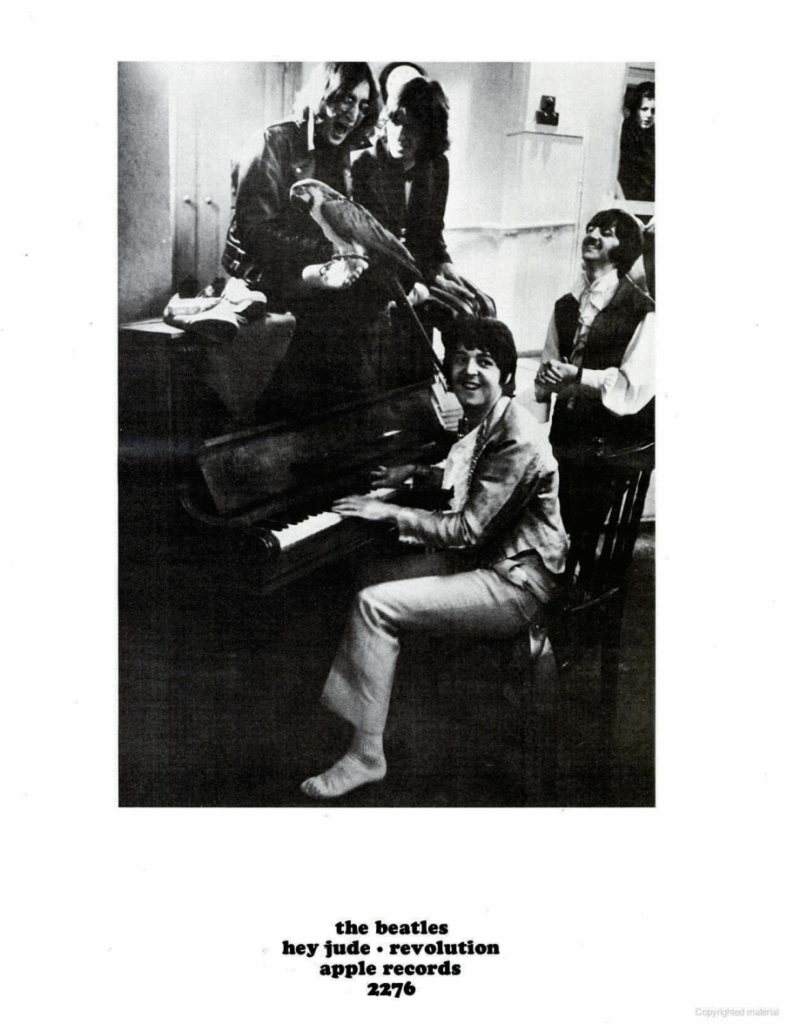
When “Hey Jude” backed with “Revolution” was released on Apple Records, Billboard called it “a potent two-sided winner — a solid rocker with another fascinating lyric.” Cash Box agreed. Melody Maker called it “a fuzzy mess, and best forgotten.”
“Revolution” debuted at number 69 on the Cash Box Top 100. Within one week it carried the Billboard Star Performer designation, the fastest-climbing record in America. “Hey Jude” spent nine weeks at number 1 on the Billboard Hot 100. “Revolution” reached number 12 as the B-side. The RIAA certified it as the Beatles’ 16th consecutive gold single, an unbroken run that began when Epstein brought them to Capitol in 1964. By December 1968, Billboard confirmed 3.5 million copies sold. One year after Brian Epstein died, it shipped with 1,400,000 advance orders.
Five months after “Revolution” shipped, and seventeen since Epstein died, McCartney spoke candidly at the sessions that would become Let It Be. “It’s never been the same,” he said. “Daddy’s gone away now. And we’re on our own. And we either go home or we do it.”
In A Cellarful of Noise, written in 1964, Epstein wrote: “I believe, and I must say it, that they are quite magnificent human beings. Utterly honest, often irritating but splendid citizens shining in a fairly ordinary, not very pleasing world.”
In the book’s final pages he wrote: “And best of all, and far beyond anything money can buy, I love to lean on my elbows at the back of the stalls and watch the curtain rise on John, Paul, George and Ringo. I think the sun will shine tomorrow.”


What does this song mean to you?
Share your thoughts on this song.