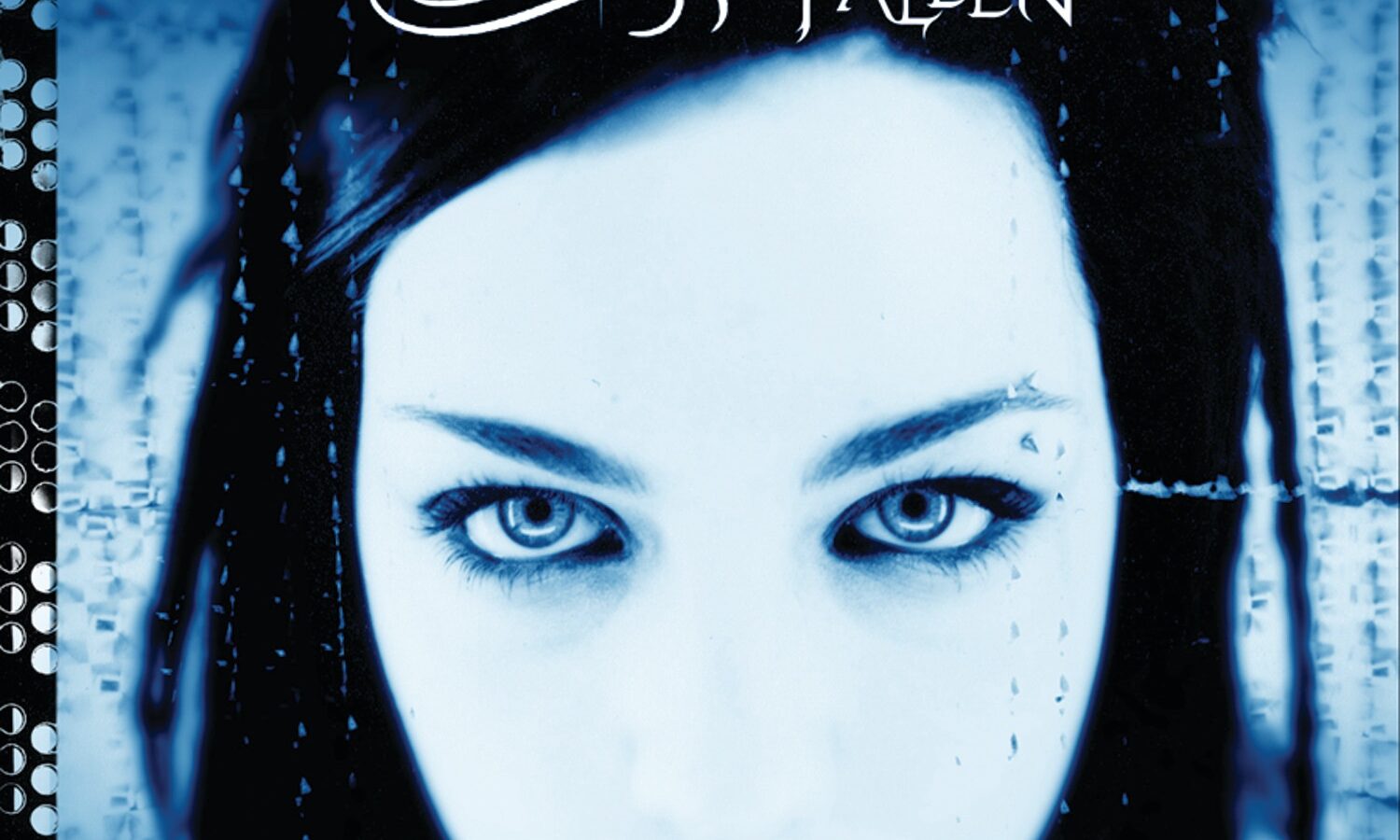
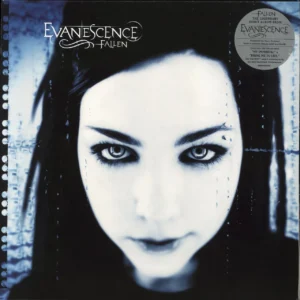
“My Immortal” by Evanescence sounds like grief that refuses to leave. It opens on a piano, slow and deliberate. Then a voice arrives that makes you feel like you’re overhearing something you were never supposed to hear. More like a confession.
It was written by Ben Moody in 1996 when he was still a teenager. Years later, Moody would describe his own life in words that could have been the song’s liner notes: surviving abuse, losing himself in addiction, watching his hope disappear. The lyrics continue to linger. He had been living the song all along.
The tension within “My Immortal” is carried by lead singer Amy Lee, whose voice made it one of the most recognizable songs of the 2000s.
Evanescence formed in 1995 in Little Rock, Arkansas, by Lee and guitarist Ben Moody. Their story began in the summer of 1994 when they met at a Christian camp. She was 13 and he was 14. Lee was playing piano across the room, working through the intro to Meat Loaf’s “I’d Do Anything for Love,” when Moody noticed. A friendship formed that quickly became a creative partnership.
Lee and Moody spent hours together at Lee’s parents’ home in Little Rock. “That’s all they ever did; they never left the house,” said Lee’s father John. “One day I said, ‘Look, you guys are getting nowhere with this. You’ve got to learn some Skynyrd, you’ve got to learn some Eric Clapton, and you’ve got to learn some Bob Seger, and you’ve got to get out there and play some weddings and make some money. And they looked at me and they went, ‘Dad, this is art’… They looked at me like I was a total idiot.”
They were not interested in playing weddings. They were creating something new. It just needed an identity.
“It’s funny because the way our band was wasn’t like a band, it was like a duo thing – we were recording artists first, which is weird and backward,” stated Lee. “It wasn’t like we were out playing gigs, we were just finding ways to create and record music, however. So I remember having a 16-track recorder and bouncing down tracks, and learning all that stuff when Ben [Moody] and I were young teenagers.”

Even the band name arrived in an unusual manner. Moody showed up at Lee’s house one day with a dictionary in hand, determined to find the right word that described them.
“Ben then came over to my house, I guess I was in high school, with a dictionary, and he was like, OK, we’ve got to get a name. And we actually really did look in the dictionary, and we wanted a word that was kind of unusual. Obviously, I don’t think most people have heard the word Evanescence, though it is an English word. It means to dissipate, like vapour, sort of like to disappear. We wanted something unusual and kind of mysterious like that, because we have just as hard a time describing our music and putting a label on it,” said Lee. “I think it’s just beautiful. Honestly, the name to me, just when it rings in my ears, is just sort of strange and beautiful, and I think that does describe our music.”
Moody had to do some convincing.
“The name for me, I was actually more of an advocate for it at first than Amy was. I had to actually convince her, because it was originally a different part of speech. It was the first word we mulled over was Evanescent, and it was after we changed it to Evanescence that she agreed to it,” recalled Moody. “So, I don’t know, I can’t tell you what it was, to be honest with you, it just sort of stuck. And I read the meaning, and I read the word, I loved the way it sounded, I loved the mental picture you got when you heard it. And it’s just something about it, it just hit me right off the bat, it stuck with me. And I wanted it from the first time I saw it, I was like, that’s it, that’s got to be it.”
For all the creative friction, the partnership worked. “We have a great chemistry, like brother and sister. We fight like crazy, but we love each other, too. We don’t go through a lot of stress and compromise when we’re writing like a lot of bands do. We have a similar vision, because we love our music so much,” said Moody.
By late 1998, they had something worth recording. Moody’s apartment and Lee’s father’s attic became the studio. Seven songs pressed onto 100 CD-R copies through a small local outfit called Bigwig Enterprises, released as the Evanescence EP. There were also four outtakes not included on the CD, among them the first recording of a song called “My Immortal.” They sold every one of them at a show at Vino’s Pizza Pub & Brewery on January 2, 1999.
Eight months later they pressed a six-song limited edition CD called Sound Asleep with a run of 50 copies. Those went just as fast. Both runs sold out in under an hour.

They were building something. The duo had been writing together for years. A third person was about to change the equation. By December 1999, David Hodges, Moody’s friend and roommate, had joined as keyboardist and co-writer, and Evanescence, at least in Moody’s mind, was finally complete.
“I think it’s safe to say that Evanescence is finally complete. The lineup is Amy Lee, Ben Moody (myself), and David Hodges. I don’t think it would ever work any other way,” stated Moody. “David is probably the only other person besides Amy that I could work with musically in this band. Amy and I have always been so protective of Evanescence because it is our baby, but things just seem to naturally work with David. He is an incredible pianist and vocalist, and brings a lot to the table as far as production is concerned. Not to mention the fact that his mom bakes brownies like once a day.”
The cost of getting there was real. Moody maxed out credit cards buying gear. When he couldn’t pay the bills, he and Hodges lost their apartment. Many nights, Moody slept in the bed of a pickup truck. “None of it mattered to me. I’d give up anything,” he said.
A self-funded, self-released demo CD called Origins was released on November 4, 2000. It featured 11 songs, including “My Immortal,” “Whisper,” “Imaginary,” and “Where Will You Go.”
Origins had an initial pressing of 500 units, eventually growing to 2,000 copies, sold through local shows, mail order, and online through Bigwig for $15 each. It was designed to build a fanbase and attract record labels. What happened next was not by design.
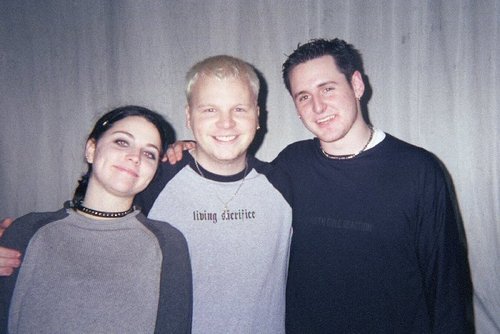
“We spent about nine months making what we thought was our magnum opus and it turned out to be a demo CD… I feel like everybody’s story has some at least one super weird moment to it and ours is we make this demo CD,” said Hodges. “I mean, truly the whole thing was made by me and Ben in our living room, and Amy would come over after school to sing, and then he and I would stay up until 4:00 in the morning working on it, not knowing what we were doing at all, just following our own muse.”
Origins generated real momentum. “The release was heralded by massive airplay on KLEC ‘Lick’ 106.3 FM where the lead single ‘Whisper’ was the #1 requested new single for more than two weeks, bringing attention from labels and radio stations nationwide. Approximately 1,000 fans attended the CD release party and lined up to be the first to own the album,” stated a press release.
The band decided to have Origins professionally mastered. The nearest studio was Ardent in Memphis, two hours away. They drove down one Saturday afternoon, handed over the CD, and went to lunch.
“The closest like proper studio was a studio called Arden in Memphis that was two hours away and there was a guy mastering records there and there was a guy named Brad Blackwood,” said Hodges. “So we drove one Saturday afternoon… so we give him the CD and he said give me two or three hours you guys go get lunch or whatever and then come back at two o’clock.”
What happened while they were eating lunch changed everything.
“This is the magic moment that Ben and Amy and I could have never planned on, could have never anticipated. While we were gone, there was a band in the studio called Dust for Life, and they were signed to Wind-Up Records. Wind-Up Records started with Creed, Creed sold 30 million copies, and so they had a lot of money to spend on a lot of bands. One of the bands they signed was this band called Dust for Life. The lead singer, named Chris Gavin, had two bottles of water that morning and had to pee, and the bathroom was on the other side of the mastering room. Brad happened to have the door open to the mastering room and happened to have music playing when Chris walked by, and in the second and a half that he walked by, he heard something that caught his ear. He poked his head in the room and said, ‘Hey, what’s this?’ And Brad said, ‘Oh, these kids from Little Rock have a record, an independent record that I’m mastering.’ He’s like, ‘Oh, is it any good?’ ‘It’s like, yeah, it’s kind of cool.’ And he asked for a copy of it, and three months later we were signed to Wind-Up Records,” recalled Hodges.
A full bladder and an open door. That is how Evanescence got signed.
Evanescence’s contract with Bigwig Enterprises ended in 2001 when the band signed with New York-based Wind-Up Records, distributed by BMG, in February 2001.
“Evanescence chose that label for its commitment to artistic freedom and support after fielding offers from many major record labels. The group has already begun recording their first work for the label. Initial pre-production was done at the prestigious Ardent Studios in Memphis with producer Pete Matthews and the recording will take place in Los Angeles. The album is tentatively set for an early 2003 release,” stated a press release by Bigwig.
Wind-Up president Steve Lerner understood what he had. “The industry was not ready for an act like this when we signed them,” he said. “We gave them the opportunity to grow, both as people and as performers. We knew we had found incredible talent.”
Diana Meltzer, head of A&R at Wind-Up, had believed in “My Immortal” from the beginning. “I was hanging out with a producer friend in my office. We listened to music for seven hours that day. At one point, he told me he wanted me to listen to a band he had been working with on some demos. When I heard ‘My Immortal,’ I knew it was a hit,” she said.
At the time of signing, the band had yet to write “Bring Me to Life” or “Going Under.” What convinced Meltzer was simpler. “Amy had a tremendous voice. Her voice, the band’s gothic sound and the lyrics were nothing less than amazing and unlike anything out there.”
After Lee graduated, “we could all move away to follow our dreams,” said Moody. “We found ourselves signed, living in L.A., writing Fallen.”
The label relocated the band from Little Rock to Los Angeles. “We enrolled them in a gym, got them a rehearsal space and an apartment, and arranged for acting and vocal classes for Amy,” said Meltzer. “We remained patient throughout, and after nearly two years we brought in Dave Fortman to produce the record.”
Lee later clarified the arrangement. Her vocal coach was Seth Riggs, who had also worked with Michael Jackson. The acting sessions involved performing alone to an empty room to overcome severe stage fright, making eye contact with a single coach until something broke through. “One day I finally broke through and he was like, there you go, you did it,” Lee recalled.
It was during this period that “Bring Me to Life” took its final shape, though not without a fight. The label’s original demand was larger than a single feature. According to Lee, Wind-Up initially refused to release Fallen unless Evanescence agreed to add a full-time male co-vocalist. The band would not agree. “We had to leave that place in California, say never mind I guess we’re dropped, and drive all the way back to Arkansas with tears in our eyes,” Lee recalled. Hodges corroborated the account, describing the band packing up and driving home over Memorial Day weekend. When the label called back, the band held their position. A list of names followed for a feature on a single song: Mike Shinoda from Linkin Park, Sonny from P.O.D., Jacoby Shaddix from Papa Roach. All said no. The label then proposed Paul McCoy from their own roster, 12 Stones. “We called their bluff enough that they were like okay, we have a movie opportunity, and we’re gonna let you do your thing, but you do have to have the rapper on the one song,” Lee said. The band agreed.
Meltzer remembered the moment differently. “Before going into the studio, I remember sitting in Alan’s office listening to ‘Bring Me to Life’ when he turned to me and suggested that as powerful as the song was, there was something that he was hearing that wasn’t there yet, a rapper. We discussed it with the band, put together a rough version with the rap inserted and the results were almost magical. The dynamic of Amy’s vocals with Paul McCoy’s rap/vocals put the song into a category of its own,” she recalled.
Hodges was more measured. “I just feel like it would have lost some of what we were as a band if they all had that thing on it,” he said.
Getting it to radio was another matter. “I knew that a ballad had little chance of being programmed on rock radio, but I felt that it was an amazing song that would show the range of the band. It seemed ideal for a soundtrack and, when we acquired the rights to the motion picture ‘Daredevil’, the track found a home. Now that Evanescence have broken as big as they have, ‘My Immortal’ may still emerge as a future single down the road,” said Meltzer.
The first official singles by Evanescence were “Bring Me to Life” and “My Immortal,” on February 4, 2003, included on the soundtrack for the Ben Affleck film “Daredevil.” The band was originally only slated for one track. “We were originally supposed to have one song on the soundtrack, but then Fox heard one of our demos and liked it so much that they asked for a second song,” said Moody. That second song, “My Immortal,” was placed during a funeral scene in the film.
The reaction overseas was immediate. Sony Music UK chairman Rob Stringer later admitted, “When we heard the track on the ‘Daredevil’ soundtrack, there was a big buzz. But we had no idea of what they looked like, and I don’t think they had ever played live.”
A month after the Daredevil soundtrack release, on Tuesday, March 4, 2003, the band officially launched its debut studio album Fallen, and the world cracked open.
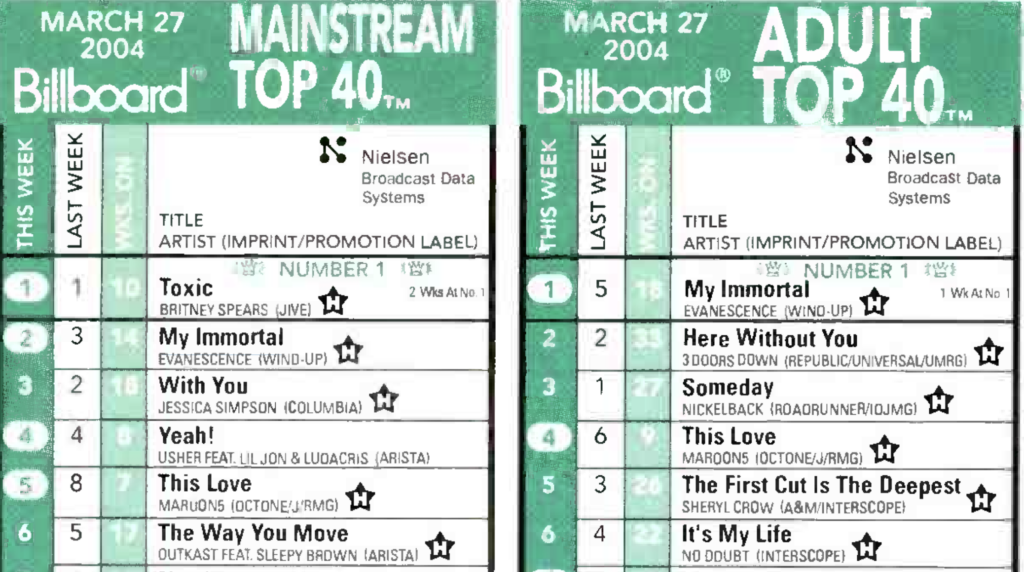
The first single, “Bring Me to Life,” was released on April 22, 2003, peaking at number 5 on the Billboard Hot 100, followed by “Going Under” on September 9, and “My Immortal” as the third single on December 8, 2003, which peaked at number 7.
The album Fallen debuted at number 7 on the Billboard 200 and didn’t let go. It lingered for 106 weeks on the chart, peaked at number 3, and sold over 17 million copies worldwide. In Japan, Fallen entered at number 1, something Daniel Levy, VP of marketing at Sony Music International, called “unheard of for a brand new international artist.” Five Grammy nominations followed in 2004, winning Best New Artist and Best Hard Rock Performance.
Three kids who had been recording demos in a living room and an attic were now the biggest rock act in the world.
Part of what set the record apart was the orchestra. Fallen featured a full 28-piece string section on 10 of its songs, arranged by David Campbell, at a cost of roughly $100,000, a huge amount of money for a debut album on an independent label.
Lerner put it simply. “Evanescence is the big breakthrough act this year because they strike an emotional nerve. Their music really speaks to the people.”
“The first week that album came out, it sold something like a hundred and seventy thousand units, and it stayed in the top ten for I think like a year and a half, or maybe even longer,” stated Hodges. “Almost two solid years we had been living in the same place together, all three of us, and again the Oakwoods is just weird. I bumped into the A&R guy for our record a year and a half or so after the album came out and had been successful and things were going well, and he admitted to me, he was like, ‘Yeah, when we met you guys, you were three really young kids from Arkansas. When you left that first meeting, I was talking to the head of the label and we said, I think we should sign these kids, but I think we should make the A&R process of this record as miserable and as hard as possible on them because we think we’ll get better art from it.’ These were words out of his mouth that he said to me.”
The numbers explain the reach. The lyrics explain why it stayed.
The songwriters for “My Immortal” are Moody, Lee, and Hodges, each contributing in distinct ways. Moody wrote the lyrics in 1996, built around what Lee later described as “a droning note thing on the piano” that was “really beautiful.” “It wasn’t completely finished, but it was the song,” Lee told Kerrang! in 2023. “I was like, ‘Let me take this, think about it, and make a real piano part.’ I worked really hard, arranged the part, and then realised later it was in the wrong key. The piano was way out of tune, but we liked it.” Hodges contributed through his work on the additional arrangements and keyboards. The three rarely wrote together in the same room. Hodges later described the process: he and Moody would spend weeks building tracks, then send them to Lee, who would listen and return with lyrics. “Amy and I actually never sat in a room together to write,” Hodges recalled. “It’s all her journal, it’s all her story pouring out on that record.”
The recording of the album version was itself an act of improvisation. Hodges later revealed that “My Immortal” was recorded at ARCA Studios, a voiceover studio on Markham Street in Little Rock where Moody worked. The three of them would sneak in at 11pm and work until 4am, night after night for three to four months, without permission. Lee sang the vocal in the studio’s vocal booth. Moody played keyboards. It ended when Hodges accidentally left his backpack behind and the owner found it. Moody was fired. The version of the song that would go on to sell 18 million copies was recorded in a studio they had no right to be in.

The song was playing on radio and TV when the band began to fracture.
Hodges was fired from the band on December 11, 2002, just before Fallen was released.
Hodges described arriving in New York for final meetings, mastering, and photo sessions, only to be told he was being kicked out midway through a routine interview with the label’s PR team. He recalled walking down six flights of stairs, staring at his tattooed hands, wandering Manhattan alone, and eventually watching a project he helped shape become a global success while he sat back home in Arkansas.
“And then I went back home, and then my band became the biggest band in the world for about a year or so. And these songs that we had written, that I really wanted to be able to be performing or celebrate, had this kind of weird cloud over them, like, ‘Oh, yeah, Ben and Amy are in Europe touring the record now, or they’re on The Tonight Show with Jay Leno now, or whatever?’ And I’m sitting back at home in Arkansas,” said Hodges.
Less than a year later, on October 22, 2003, Moody left Evanescence due to creative and personal differences with Lee. The two had been friends, romantic partners, and business partners for almost a decade. Lee later described Moody as controlling and impossible to be around or to work with. The one who wrote “My Immortal,” a song about a presence that refuses to leave, had become exactly that. “When he left,” she said, “I felt like I could become a new person.”
Moody’s account was different. That night, after a Berlin concert, Lee sent him a message, stating, “Get on a plane, and never come back.” Sitting on the tour bus in what he described as absolute shame and defeat, Moody faced a choice. He owned 50 percent of the Evanescence trademark. He asked for nothing. No buyout. No negotiation. Just a clean break. “Either I leave or Evanescence dies,” said Moody. “It broke me in a way I could never truly describe.”
“I think it shows the artistic clash between us where he wanted to pull the music into something commercial and I wanted to be more innovative and try something more artistic,” said Lee.
Lee later described that year as a sharp contrast. “Things were amazing on one level and things were really difficult on another level,” she said.
Lyrically: My Immortal
Lyrically, Moody said that “My Immortal” tells a fictional story of “a spirit staying with you after its death and haunting you until you actually wish that the spirit were gone because it won’t leave you alone.”
“My Immortal” exists in two distinct versions, and the reason comes down to another label fight. The original demo was recorded on a MIDI keyboard at the radio station Lee’s father worked at in Little Rock. Wind-Up insisted on using that rough recording for both the Daredevil soundtrack and the initial pressing of Fallen. Lee despised it. “I’ve always hated it!” said Lee. “I sound like a little kid, the piano’s crappy. When you hear me, it’s my 19 year old voice, and that’s always bugged me.” “The label was stuck on the demo and wouldn’t let us use the version we really wanted,” she told MTV in 2003. “We fought back and forth about it and finally we gave in, but we were all so angry about it.” When it came time to release the song as a single in December 2003, Lee and Moody held their ground. The version released to radio was a full-band recording made during the Fallen sessions, featuring the string arrangements of David Campbell, father of artist Beck.
The original version of “My Immortal” contained different lyrics that were later changed for the Fallen album release. After “Suppressed by all my childish fears” came two more lines: “I would give every breath from my chest / To give you all the things that my mind could bear.”
And, instead of “I’ve tried so hard to tell myself that you’re gone, but though you’re still with me, I’ve been alone all along,” the lyrics were originally “I love to walk away by myself out of the rain, but I can’t leave without you. I love to live without the constant fear and endless doubt, but I can’t live without you.”
Lee reflected on her own voice on the record. She heard herself making safe choices, holding back, focused entirely on not making mistakes. “I really was just like learning how to do what I do and just sing it strong and don’t mess up,” she said. On “My Immortal,” that restraint became the instrument.
The musical world she was drawing from was wide. Lee later described her influences as ranging from Garbage, Björk, Smashing Pumpkins, Soundgarden, and Nirvana to Pantera and Metallica, along with film scores like Sleepy Hollow. Her goal from the beginning was “combining really contrasting styles, bringing something from the cinematic and classical symphonic world and marrying it to metal and hard rock.” “My Immortal” is where those two worlds meet most completely.
“My Immortal” is a song that should not be started halfway. The music does what the words say. It lingers. Lee’s voice never breaks. It just gets heavier. It’s dark. It’s ever-present.
I’m so tired of being here
Suppressed by all my childish fears
And if you have to leave
I wish that you would just leave
‘Cause your presence still lingers here
And it won’t leave me alone
The word “childish” does the work here. The narrator knows these fears are irrational. They cannot shake them anyway. The presence lingers. The plea is almost polite: if you have to leave, just leave. The cruelty is that it does not.
When you cried, I’d wipe away all of your tears
When you’d scream, I’d fight away all of your fears
And I held your hand through all of these years
But you still have all of me
The second verse does not pull back. These are physical acts of care described in the past tense. Wiping tears. Fighting fears. Holding hands. The commitment was total. And it is gone. That gap is the wound.
You used to captivate me by your resonating light
Now, I’m bound by the life you left behind
Your face it haunts my once pleasant dreams
Your voice it chased away all the sanity in me
The song shifts here. The first verse is exhaustion. The second is support. This one is haunting. “You used to captivate me by your resonating light” establishes that what is gone was not just a person but a force. What is “left behind” is a face that haunts dreams and a voice that consumed whatever sanity remained. Moody described the song as a ghost that would not leave. This verse is where the ghost takes shape.
A 2022 GoFundMe created by Moody revealed, “After surviving a lifetime of sexual physical and psychological abuse alongside decades of medical, abandonment and betrayal trauma. I always did everything I could to help the people in my life in need. I wanted to be the person for them that I had always wished and prayed for in my times of need. I also wanted to make sure my children never endured the tragedies of my childhood.”
Those words make it impossible to hear the song the same way again.
The chorus builds. Lee’s voice carries the weight of everything that came before it.
I’ve tried so hard to tell myself that you’re gone
But though you’re still with me, I’ve been alone all along.
The chorus does not resolve the tension. It confesses. The loneliness didn’t begin with the leaving. The wound was there before the ghost arrived.
When you cried, I’d wipe away all of your tears
When you’d scream, I’d fight away all of your fears
I held your hand through all of these years
You still have all of me ah, me ah, me ah
The song returns to the second verse to close. The support is still there. The presence still lingers. Lee holds on the final words: “You still have all of me.”
Lee later reflected on singing words that were never hers, saying, “That’s the one song I didn’t write the lyrics to. I helped a little bit, but they aren’t my words. Those are Ben’s words. I didn’t want to sing it, but also, I just felt like they didn’t mean a ton to me.”
“On our first-ever trip to Europe, we played to a huge field of people singing it so loudly I couldn’t hear myself. I just let them do it,” said Lee.
The song belonged to Moody. He wrote it as fiction about a ghost that would not leave. In describing his own life, he used the same words the song had always used. He had been living it all along.


What does this song mean to you?
Share your thoughts on this song.