By the time Lynyrd Skynyrd had their first write-up in Billboard on December 1, 1973, the band had been honing their sound for almost a decade. In the “Talent in Action” section, reporter Philip Gelormine described the band as, “Lynyrd Skynrd, a surprisingly powerful seven man, southern band, discovered and produced by Al Kooper on MCA’s Sounds of the South label, dispensed a ripe program of ingratiating, bluesy rock. Group spotlights three guitarists who change leads and rhythm riffs, keeping the music varied and creating a rich, full-bodied sound topped off by the raunchy vocals of Ronni Van Zant. Skynard received headliner response.”
The band formed in 1964 when singer Ronnie Van Zant, guitarist Gary Rossington, and drummer Bob Burns met while playing on rival baseball teams in Jacksonville, Florida. A jam session after a game brought them together, and over the next few years they cycled through various names: My Backyard, The Noble Five (after adding guitarist Allen Collins and bassist Larry Junstrom), The Wildcats, The Sons of Satan, and The Conqueror Worm. By 1967, they had settled on The One Percent and started playing small local gigs.
In the mid-1960s, Duval County schools enforced a strict dress code during the tenure of school superintendent Ishmael “Ish” Brant. For girls, skirts had to remain a modest length above the knees. For boys, socks and tucked-in shirts were required, sideburns had to stay above the earlobe, and hair couldn’t touch the shirt collar or cover the eyebrows or ears.
At Robert E. Lee High School in Jacksonville, it was gym teacher Leonard Skinner, an Army veteran, who strictly enforced this mandate and carried around a ruler to measure hair length. “It was against the school rules. I don’t particularly like long hair on men, but again, it wasn’t my rule,” recalled Skinner. “The philosophy behind that was, if students were dressed better and looked neater, they’d behave better and study better. It didn’t work.”
“Students had to wear socks. They had to have their shirt tails in. They had to wear belts. Sideburns couldn’t be below the ears. The back of the hair couldn’t touch the collar,” said Skinner. “We were asked by the administration to enforce these rules and send people who didn’t conform to those rules to the office. Unfortunately—or fortunately, whichever the case may be—one of the ones I sent down was in a band. Certainly at that time, if you’d have called out their name, no way I would have known them.”
Rossington had had enough of the rules and wanted to “be like The Beatles and have long hair.” When he turned sixteen in 1968, he dropped out of high school, following Van Zant’s earlier exit. Just before leaving, after yet another suspension, he reportedly looked Skinner in the eye and said, “Fuck you.”
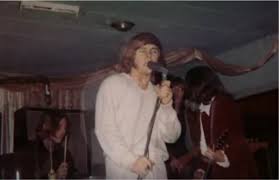
“And then finally we were playing a little teen dance and all the people there were from the same school, so we said, ‘We’re not gonna be The One Percent anymore, we’re calling the band Leonard Skinner!’ And everybody laughed and clapped and thought it was cool. So we kept it. Just spelled it differently,” said Rossington.
“Leonard Skinner was our gym coach and it was actually just me who was taught by him. The other guys in the band weren’t in his class but they knew of him because he always kicked guys out of school for having their hair too long – if it touched your eyebrows or your ears. He kicked us out a lot. I say ‘us’ – it was really just me,” said Rossington. “Back in the day we had little bangs like Beatle cuts. The band was playing school dances and parties and stuff, so we tried to have a little long hair.”
“Coach Skinner had such a profound impact on our youth that ultimately led us to naming the band… I cannot imagine it any other way,” said Rossington.
The name of the band became “Lynard Skynard” in mid-1969.
“At first I wanted to slap him [Rossington] and send him home crying to his mom or Ronnie,” stated Skinner. “I just went along with the flow… There was not much I could do about it.”
Inspired by British bands such as Free, The Rolling Stones, The Beatles, Jeff Beck, Led Zeppelin, The Yardbirds, Cream, and another Jacksonville-based group called The Allman Brothers Band, the group practiced relentlessly, up to 12 hours a day.
When Free came to play Jacksonville in the spring of 1969 at the local ice rink Skateland on its first US tour, Van Zant, Collins, and Rossington went to experience them live. “We didn’t even know their songs. But we watched them set up with their beat-up old Marshalls, and we thought they were cool ‘cos they had long hair. And, boy, when they played, we were just floored. It freaked us out,” said Rossington. “Free were the first guys that really made us get serious. After we saw them we started rehearsing a lot harder.”
“We heard a band called Free,” said Bob Burns. “We heard them at a skating rink and I’m telling you what, right there I think Free changed our band more than any band in this world.”
In May 1969, David Griffin, the manager of Marvin Kay’s Music Center in Jacksonville, heard rumblings of a new local band called Lynyrd Skynyrd and arranged a recording session at a local studio called Shade Tree Records, which financed the session. The band recorded two songs, “Need All My Friends” and “Michelle,” at Norm Vincent Studios in less than an hour. A total of 300 copies were pressed. The single “Need All My Friends,” a song about leaving love and searching for love with the freedom to “play my music, do the things I love,” made it to the airwaves of Jacksonville’s top radio station, the BIG APE (AM 690 WAPE), but ultimately fizzled out.

Early in 1970, Shade Tree Records brought the band back into the studio for another session. They recorded two ballads, “No One Can Take Your Place” and “If I’m Wrong,” both cowritten by Van Zant, Collins, and Rossington. With time remaining in the session, the band recorded a song that Collins and Van Zant had been working on about love and freedom called “Free Bird.” Shade Tree put the recordings aside and never released them, including the seven-and-a-half-minute version of “Free Bird.”
The band continued to rehearse and perform, hiring manager Pat Armstrong, and they became a top band in the Jacksonville area. During a free outdoor concert at Friendship Park in Jacksonville, Armstrong stated, “What I saw that was different was that there was a crowd of about 2,000 kids that came to see them, and the band that had played before them had about 200 kids in attendance. And after they left, all of a sudden, they were down to 200 again. It’s obvious to me that they had a name and a reputation in Jacksonville that needed to be shared with the rest of the world.”
Armstrong organized a warehouse audition session in Jacksonville and invited Alan Walden to come check it out. Walden, who had just started the management company Hustler’s Inc. after separating from his brother Phil Walden’s Capricorn Records label, was actively looking to sign new talent.
“My brother and I had separated and I had gone out and I auditioned 187 bands in one year. I was invited to come down to Jacksonville, Florida, and audition bands. A guy named Pat Armstrong, he had 13 bands lined up and Lynyrd Skynyrd was the last band that played that day. By the time they finished with ‘Free Bird,’ man, I was blown away. I signed them to management, production, publishing, recording, all of it,” said Walden.
During the first week of October 1970, Lynyrd Skynyrd signed to Alan Walden’s Hustler’s Inc. and immediately went to Quinvy Studios in Sheffield, Alabama, in the Muscle Shoals region to record demos.
“I did sign them and I took them to Muscle Shoals, Alabama, and we recorded an album and a half there in Muscle Shoals. It’s some good stuff on that. You know, they were tight and they were rehearsed even back then in the very beginning. You know, when they came in the studio they hit the same note every recording. I mean, they were the most rehearsed band in the history of southern rock and roll. I mean, they rehearsed. These guys went to what they call the Swamp House, and they call it the Hell House now, but they went there five days a week from nine to five every day, like going to a job,” said Walden.
Lynyrd Skynyrd recorded eight songs at Quinvy Studios, produced by Quin Ivy with studio manager David Johnson engineering. Totalling approximately 43 minutes, the session included “Need All My Friends,” “He’s Alive,” “Junkie,” “Blues Medley,” “Michelle,” “Hide Your Face,” “Bad Boy Blues,” and a 4:07 version of “Free Bird.”
The Quinvy demos were never manufactured onto vinyl and only existed as a master tape. David Johnson shopped the demos to record labels, but they were rejected. Johnson stated that he “produced the band for Quin (at Quinvy) and then ‘shopped’ their recordings around for some months. It was only after I (was unable) to get them a deal that Alan Walden finally played the Skynyrd demos to Jimmy Johnson and only then that Muscle Shoals Sound got involved.”
Muscle Shoals Sound Studio was co-founded by four musicians: Barry Beckett, Jimmy Johnson, Roger Hawkins, and David Hood, who were also known by their nickname “The Swampers.”
“Barry Beckett had got sent the tape from Alan Walden. He was their manager at the time and Alan was just totally blown away with this band. And he’s quite a salesman, so he had been hyping us up big time on how great they were,” said Johnson. “And the deal was, if we signed the band, we’d pay for the studio time. They spent a couple of days. I think the bill was about $3,500 or something like that. We paid them.”
“I owned the first recording contract on Skynyrd and subsequently sold my rights to Jimmy Johnson for about $3,500 of studio time we had on the books,” stated Ivy.
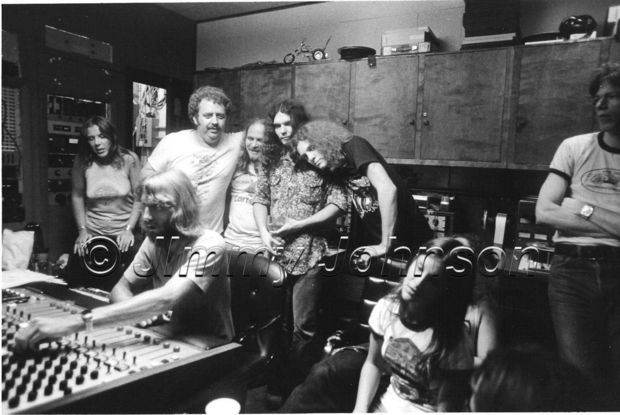
Lynyrd Skynyrd stepped into the Muscle Shoals recording studio and got to work.
“Ronnie would come down here and watch Jimmy work during the day. We did all of our sessions, we would own the midnight shift. We started at midnight and went all night long, but he would come down during the day and watch Jimmy work,” said Walden. “For the Lynyrd Skynyrd guys, they were in heaven. This was where they really got their real start right here. They were so well rehearsed there was not a lot to do except to get a pristine performance and pristine solo performances.”
“They were really good at following, so now they were a real pleasure to work with because they could do what we asked and they were willing to, you know,” said Jimmy Johnson. “And we believed in that group.”
Between 1970 and 1972, the band worked the midnight shift at Muscle Shoals, recording 17 complete songs while continuing to tour and test new material in Atlanta, Jacksonville, and Gainesville.
“We had to work on the night hours and the weekends and night hours and so it took us a lot longer time to get all of our songs cut. Matter of fact, I mean, it took us probably the better part of a year to do our first 11 cuts because they would have a lot of bookings planned, and so it was a matter of getting it together,” stated Jimmy Johnson. “And the boys had not a lot of money and they agreed to pay their own travel expenses. We would pay all the studio, engineer, tape, producer fees, all that, and if they would come up and get their way here and pay their bills. And they wound up eating peanut butter sandwiches, they’d go to warehouse groceries and buy these gigantic jugs of peanut butter that was a real reduced price.”
When the demos were completed, Walden pitched the recordings to nine record labels, but was rejected every time, unknowingly playing a backwards tape that made the band sound terrible.
“Nine record companies had turned us down! I don’t mean ‘We like you but you need better material.’ I mean ‘Not interested! No need to contact us again.’ Atlantic, Columbia, Warners, A&M, RCA, Epic, Elektra, Polydor, and even Capricorn all passed after hearing ‘Free Bird,’ ‘Gimme Three Steps,’ ‘Simple Man,’ ‘I Ain’t The One,’ and about twelve other originals. Their comments were ‘They sound too much like The Allman Brothers!’ Now I ask you, put them on back to back and tell me they sound alike? We all came from the South, played hard, had long hair, drank and chased women. But we did not sound alike! The Allmans had their jazz influences and we were a straight ahead juking band! I remember one executive telling me to turn that noise off while I was playing him ‘Free Bird,'” said Walden.
“It took us two years to do it and we had a total of 17 songs that we recorded. And when we started pitching it around, we pitched, I think the original thing, we was full 16 or 17 cuts. All the labels couldn’t handle the length. Three, three and a half minutes was the longest for a single they would tolerate,” stated Jimmy Johnson. “Alan got the tape turned around. He was playing on the back, twisted. So when he was carrying it in to play it to the A&R people, he was playing the backside of the tape, and you know that sounds awful if you’ve ever heard a tape backwards. Well, of course, they got turned down every time… They loved ‘Free Bird’ and they said, ‘Would I edit “Free Bird” down to under three minutes?’ And I refused because it was like a nine-minute song and I said there’s no way, that would totally disrupt the whole thing of Lynyrd Skynyrd if you cut that song down.”
“I had gotten a call from Ronnie cussing me out because he heard it too and he thought, of course, it was the worst sound he ever had, and he was right,” recalled Jimmy Johnson. “And I didn’t know what had happened. And so I told him, I said, ‘If you don’t like that mix, you don’t like Lynyrd Skynyrd.’ And I slammed the phone.”
The rejections didn’t stop the band from playing. Walden kept them on the road, and Lynyrd Skynyrd played live shows.
“We picked out Atlanta and, of course, Jacksonville and Gainesville. We used those three cities as a test on our new material. We would go down there and play, see what the response was, and go back home and maybe rewrite part of the song or change, make some changes and everything, come back, play it again. Those were all test cities where we tested to play,” said Walden. “Well, they fell in love with us in both of them, but the biggest one was Atlanta. We played Atlanta quite a bit and we played some hellholes. I mean, we played a place called Funochio’s. Mostly junkies and hardcore alcoholics went to Funochio’s, and I told Ronnie, I said, ‘If you can entertain these fuckers, you can entertain the world.'”
“At Funochio’s, there was a shooting once a week and a fight at least twice a night,” recalled Van Zant. “We weren’t really into brawling, but you had to get into fighting just to get out of there alive. We’d play Funochio’s and go back home to Florida to write a whole new show for the next time until they booked us back again. Some of the guys were doing part-time jobs like delivering flowers in order to keep going.”
Walden booked Lynyrd Skynyrd for a six-night gig from July 17-22, 1972, at Funochio’s House of Rock. Present in the audience was producer Al Kooper, famous for his organ on Bob Dylan’s Highway 61 Revisited and Blonde on Blonde, including “Like a Rolling Stone,” and founder of Blood, Sweat & Tears. He was launching his Sounds of the South label with MCA distribution.
“It was one of those really dangerous type bars where everybody carries guns and there’s about three shootings a night,” said Kooper. “Skynyrd were playing, and they just blew me out of my seat… to find that they weren’t signed to anybody was marvellous.”
“Just sounded great. They just had a great sound. The thing we had in common was that we were both gigantic fans of the band Free, and that’s what really made it work because they understood what was great about Free, and I understood that. I heard the Free in them,” said Kooper.
“The first night I dug ‘I Ain’t The One.’ The second night I dug ‘Gimme Three Steps,’ and by the fourth night I was up onstage, jamming with them. The fifth night I offered them a record deal,” said Kooper.
“He came in one night and said, ‘Hi, I’m Al Kooper.’ And we all flipped out,” said Van Zant. “We’d never seen anybody who was a real rock star or anything. And he asked us if he could jam with us and we said, ‘Well, yeah, get on up here!’ And we got to be real good friends and he hung around a lot, then he told us about Sounds Of The South, and we didn’t have nothin’ better to do so we said yeah.”
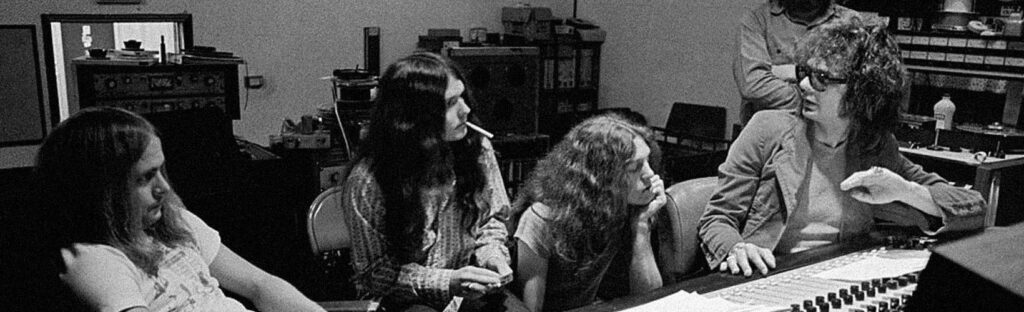
“It took me three months of hounding their manager to sign them,” said Kooper. “Toward the end of the three months, Ronnie called me at home late one night. ‘Al, I’m sorry to call so late, but we are in deep trouble here. Someone broke into our van tonight and stole all our instruments and amps. Without those, we cannot put food on our families’ tables or pay our rents or get any gigs. I was hoping you could lend us $5,000…’ I quickly replied, ‘All I need is the address you want me to send it to, Ronnie, and you’ll have it in two days…’ After a moment of silence he said, ‘Al, you just bought yourself a band for $5,000. Thanks from all of us!'”
“Al Kooper was a last resort. When nobody, when I knew that Lynyrd Skynyrd could not take another year of starving to death, when I knew that I was ready to sign a deal with almost anybody at that point because it was going to mean the salvation of the band,” said Walden. “If I’d have told them they were going to play bars for another year and a half, two years, the band probably would have broke up.”
“When they got ready to sign their record deal with Sounds of the South, which was Al Kooper’s label, I had the recording contract laid out on the hood of my Ford pickup truck in the parking lot of the Macon Coliseum,” said Walden. “I laid out all the contracts for them to sign. He [Van Zant] looks at me and says, ‘Alan, what do you think of our record deal?’ My reply was, ‘This is the worst piece of shit I’ve ever seen in my life. It’s worse than the R&B contracts that we had.’ He says, ‘What else we got?’ And I said, ‘Nothing.’ He said, ‘Give me that goddamn pen.'”
Lynyrd Skynyrd signed a recording contract with Sounds Of The South Records in February 1973 and received a $9,000 signing bonus, “which was more money than they’d ever seen.” Within a few days, they cut demo versions of “Mr. Banker,” “Down South Jukin’,” “Gimme Three Steps,” “Tuesday’s Gone,” and “Free Bird” at Studio One in the Atlanta suburb of Doraville, Georgia.
“By the next week, their contracts were signed and they were back on the road. In between recording the first album and its release, they were back playing at that bar I discovered them in,” said Kooper.
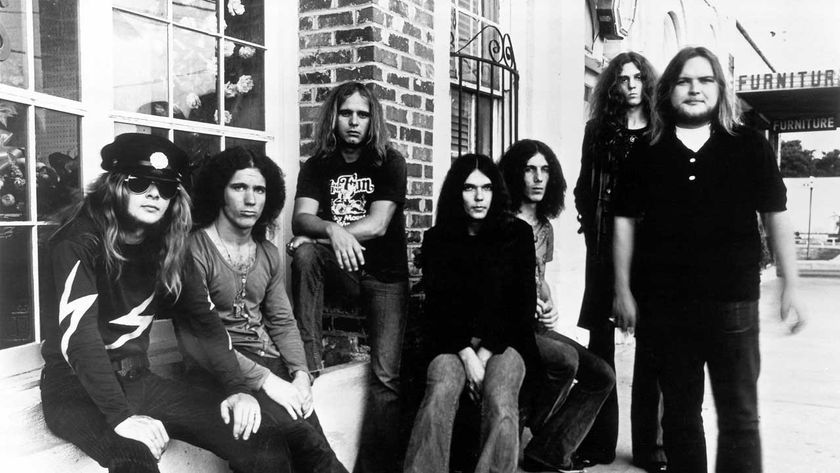
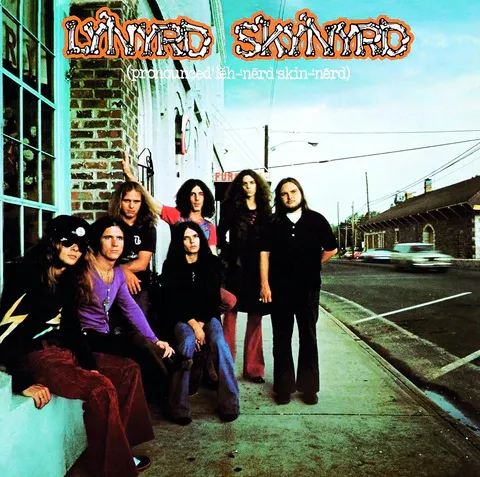
On March 27, the band began recording their debut album (Pronounced ‘Lĕh-‘nérd ‘Skin-‘nérd) and finished six rhythm tracks within one week. “We just knocked it out,” said Burns. “Everybody knew their part, beat for beat, note for note, blindfolded, playin’ it backwards we could almost do it. It was just like breathin’ we’d rehearsed it so much.”
“And then Ronnie calls me one night, two years later, and they’re in the studio working with Al Kooper. Al Kooper wanted to hear one of our cuts off our albums. Well, they stuck the reel on. Rodney Mills is the engineer over in Atlanta, and he immediately recognized what was wrong. So he said, ‘Hold it,’ popped it, hit stop, flipped it over, hit play, and said the speakers almost came out of the wall. And Ronnie was completely destroyed. He wanted to kill Alan. Good thing he wasn’t there, and I had to eat my words a little bit. And so he calls me right while they’re in the control room and Ronnie’s crying and asked me to forgive him. And I said, ‘Man, done deal.’ I said, ‘I do.’ I said, ‘I’m sorry all this happened,'” said Jimmy Johnson.
Similar to other record labels, MCA suggested the band shorten “Free Bird” to the industry-standard three-minute length so it could play on the radio. “We said, ‘Well we don’t care. It goes over good live,'” said Rossington. “You can play the other ones for radio.”
On April 30, they returned to Studio One to finish “Things Goin’ On” and “Simple Man,” completing the album by May 1. Their 1973 debut album, (Pronounced ‘Lĕh-‘nérd ‘Skin-‘nérd), was released on August 13, 1973, and introduced the definitive Lynyrd Skynyrd, both in spelling and in spirit, to the world.
As the album hit airwaves, Billboard wrote in its August 25 issue, “Lynyrd Skynyrd – Entry to the list of strong, clean-lined Southern rock’n’roll groups. Fine premiere for Al Kooper’s MCA production label. Best cuts: ‘Gimme Three Steps,’ ‘I Ain’t One.'”
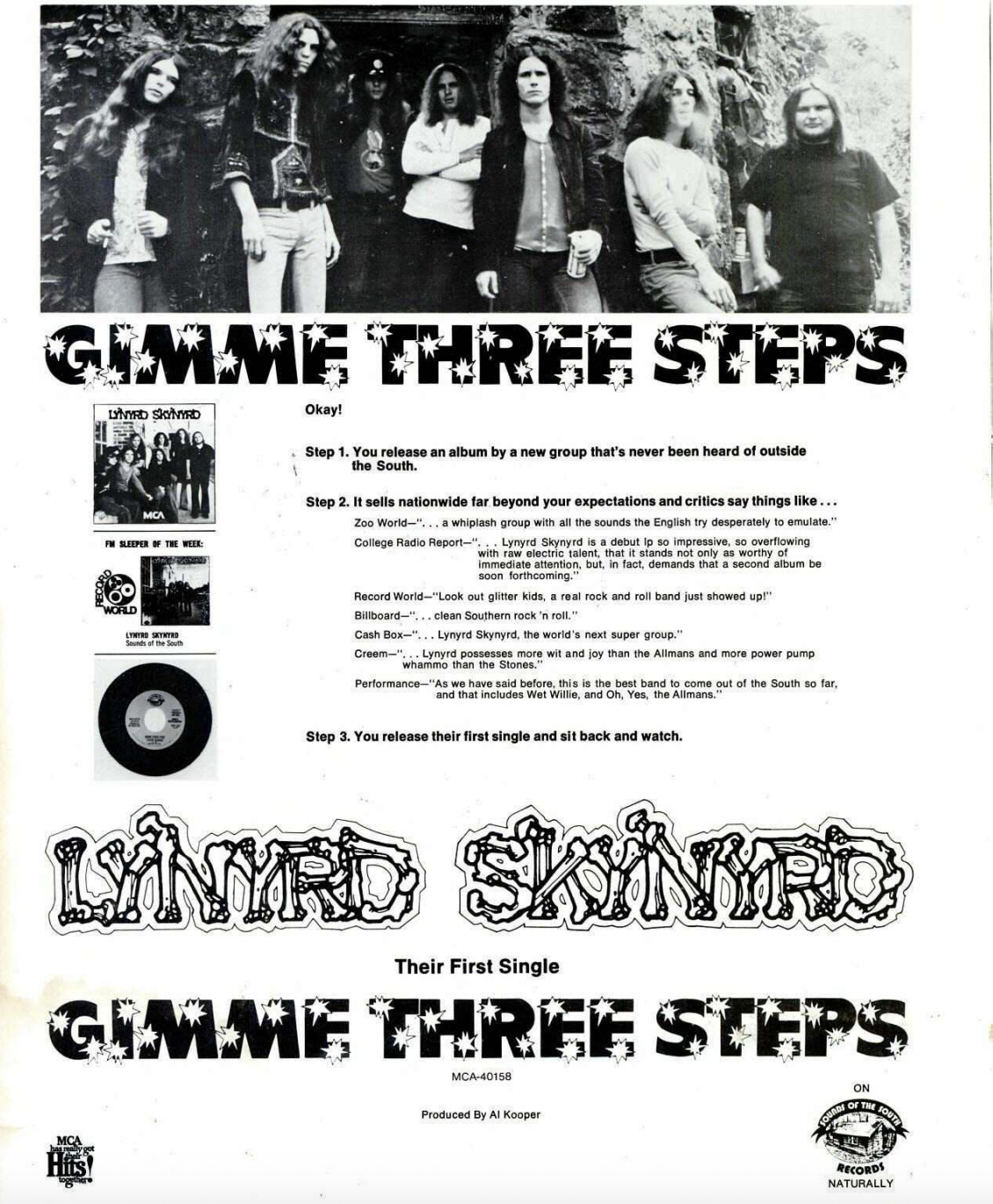
MCA promoted the band and released the first single, “Gimme Three Steps,” which received airplay but failed to chart. Full-page ads highlighting the album with reviews from trade magazines stated, “…Lynyrd Skynyrd, the world’s next super group.” Creem declared that “Lynyrd possesses more wit and joy than the Allmans and more power pump whammo than the Stones.” College Radio Report noted, “…Lynyrd Skynyrd is a debut LP so impressive, so overflowing with raw electric talent, that it stands not only as worthy of immediate attention but, in fact, demands that a second album be soon forthcoming.”
“I came out of a meeting and I bumped into Pete Townshend, who I knew,” said Kooper. “Hey, how you doing, blah blah blah. I said, ‘What are you doing?’ He says, ‘Well, we’re gonna tour the Quadrophenia album.’ I said, ‘Wow, that’s great.’ He says, ‘As a matter of fact, we’re looking for an opening act. Do you know anyone that would be good?’ And I had just gotten a pressing or two of the first album, so I had three of them with me. I said, ‘Take this home and play it. I said this band would be phenomenal to open for you.’ I wrote my phone number on the label because it’s just a white label. So you call me the next day and said, ‘You’re right, this is great. This would be great. Let’s do it.'”
Lynyrd Skynyrd opened for 11 shows of fellow MCA group The Who on their North American “Quadrophenia” tour, which the band “originally planned to tour alone.” “I really dug it,” Van Zant said. “It was a challenge, a competition between us and The Who. And we didn’t have to change our show any. We’re still doing what we did in the clubs.” During a standing ovation from The Who’s audience during “Free Bird,” guitarist Pete Townshend stated, “They’re really quite good, aren’t they?”
Over 100,000 copies of (Pronounced ‘Lĕh-‘nérd ‘Skin-‘nérd) sold in its first month. But it was “Free Bird” that listeners embraced.
“MCA said we couldn’t release the full song because no one would play it on the radio. It was too long. They said to do the slow part and fade out, and we were like, ‘No, you’re not going to change our song because we like the end part.’ We did a full version, but MCA had the power to do it as they wanted,” said Rossington.
The album version of “Free Bird” runs 9:08. A 4:41 single edit was released in November 1974, debuting at No. 87 on the Billboard Hot 100 and climbing to No. 19 on January 25, 1975, its highest chart position. The song that would never get airplay, the song that “goes over good live,” soared.
Lyrically: Free Bird
“Free Bird” took years to take flight. Allen Collins had been composing the chord progression years before Ronnie Van Zant wrote the lyrics in 1970.
“I can’t think exactly when we wrote it, but I know it was at least seven to eight years ago,” said Van Zant on April 1, 1976. “And Allen Collins’ guitar player wrote it… And he designed all the guitar work and all the rhythm section, all the music, and I just wrote the lyrics, which is the simplest thing in the world… We’d play ‘Free Bird’ at least twice a night, which would give the singer, give myself, a little bit of a breather… Everybody just loves that song for some reason. I don’t know the reason, but I guess it’s just because it’s got such a high energy thing at the end, and it’s very simple. It’s a very simple song,” said Van Zant.
“We had worked for years and years in club bands, getting our music just right. Some of that time, we’d already written all these songs—’Free Bird’ was five or six years old by the time we recorded it… Actually, we had that song because Allen Collins wrote the music to it. He wrote the beginning, and I wrote the end, but Allen came up with that opening part like five years before Ronnie could write lyrics for it. Ronnie always said, ‘Hey, there are too many chords. I can’t write words to that many chords.’ But one day, Ronnie went, ‘Hey, play those chords again,’ and he started going, you know, and then he went, ‘I can write.’ So he wrote the lyrics to ‘Free Bird,’ and we just went with it,” said Rossington.
“The lyric content of ‘Free Bird’ is based on the idea of everybody being free. To me, there’s nothing freer than a bird, you know, just flying wherever he wants to go,” said Van Zant. “And, I don’t know, that’s what this country is all about, you know, being free. And, I think everybody wants to be a free person.”
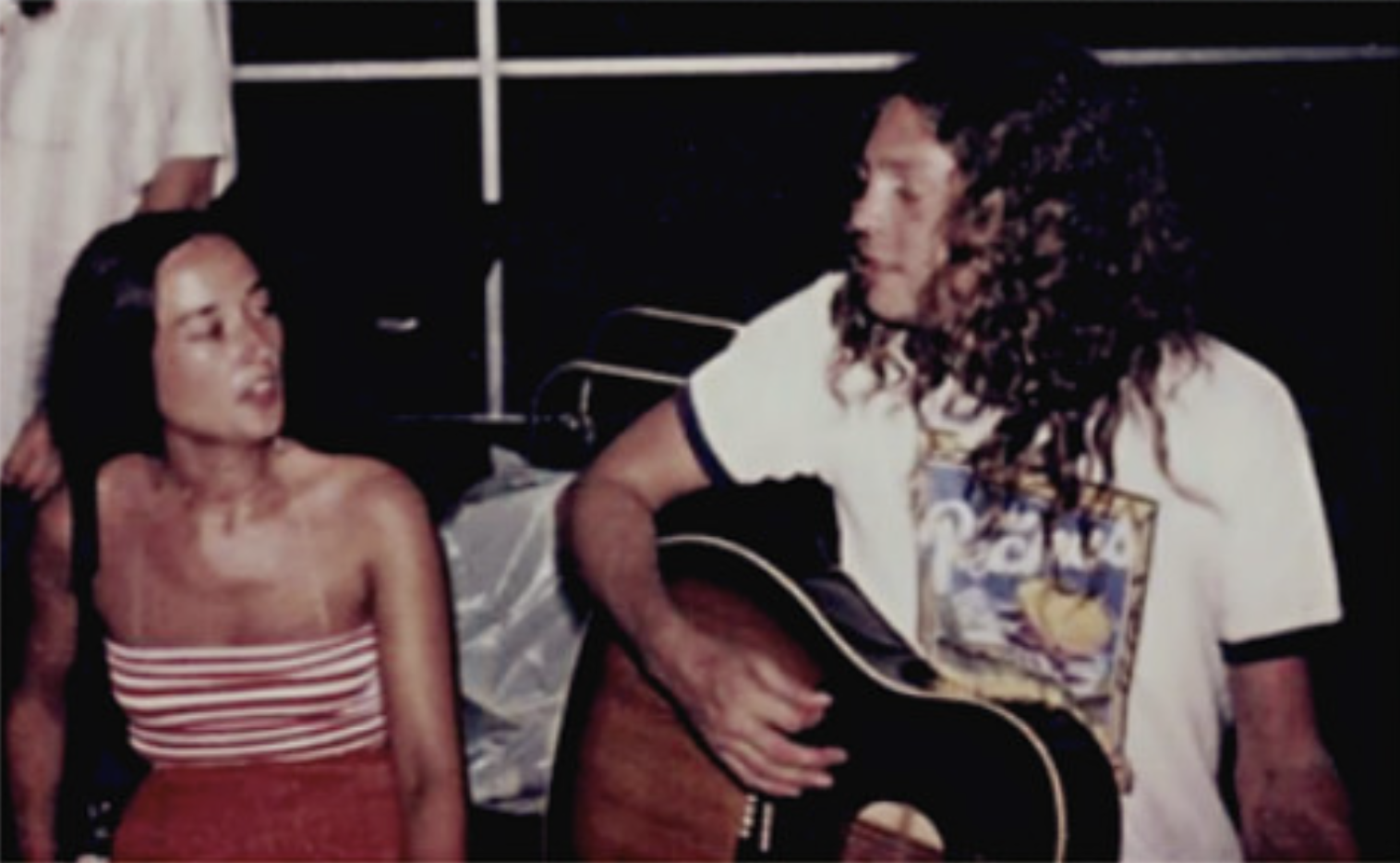
The initial inspiration for the song came from a heated conversation between guitarist Allen Collins and his girlfriend Kathy Johns, who would later become his wife. Feeling neglected by his musical obsession, she confronted him: “If I leave here tomorrow, would you still remember me?” Collins never forgot her words. They became the jumping off point of “Free Bird.”
“The time we were cutting ‘Free Bird,’ we took a little lunch break. We walked in, the engineer had started playing the tape. Billy Powell, who’s the roadie, he was sitting in there playing this concert piano,” said Jimmy Johnson. “That was so unbelievable that we walked in just in awe with our mouths open. And I looked at Ronnie and he looks at me and I say, ‘I gotta go and record with that, I don’t know about you.’ And he said, ‘You got it.’ We put him on the record and then he became a band member within a few months. He was a concert pianist and nobody knew it… But what a great thing he added to their record.”
If I leave here tomorrow
Would you still remember me?
For I must be traveling on, now
‘Cause there’s too many places I’ve got to see
The lyrics “For I must be traveling on, now / ‘Cause there’s too many places I’ve got to see” reveal the tension within the conflict. The song is about a man torn between his desire for freedom and the people who want him to stay. He can’t settle down, even for love.
But if I stay here with you, girl
Things just couldn’t be the same
This pivotal moment acknowledges that staying would change who he is. He chooses freedom.
‘Cause I’m as free as a bird now
And this bird you cannot change
Oh-oh-oh-oh-oh
And the bird you cannot change
And this bird you cannot change
Lord knows I can’t change
These lyrics solidify his choice to embrace his freedom, similar to how a bird lives by “just flying wherever he wants to go.” The bird you cannot change. When Van Zant says “this bird,” he’s referring to his own nature of having the freedom to be free. Even the Lord knows this truth.
Bye-bye, baby, it’s been a sweet love, yeah-yeah
Though this feeling I can’t change
But, please, don’t take it so badly
‘Cause Lord knows I’m to blame
This is not a final goodbye, but acknowledging the time we had together has been “a sweet love.” Meaning, the relationship will be looked upon as pleasant, one with a good feeling. However, the overwhelming feeling of being free to travel on is the deciding one. He takes responsibility, and the Lord knows his actions are to blame.
But, if I stay here with you, girl
Things just couldn’t be the same
‘Cause I’m as free as a bird now
And this bird you cannot change
Oh-oh-oh-oh-oh
And the bird you cannot change
And this bird you cannot change
Lord knows I can’t change
Lord, help me, I can’t change
Lord, I can’t change
Won’t you fly high, free bird, yeah
If the inspiration for the song started from a heated discussion between Collins and Johns, then these repeated lyrics indicate a level of pleading, a deeper understanding to ease the tension. The lyrics turn into a declaration of freedom. Only to ask “help me,” acknowledging that he shares similar feelings, yet he must fly high and free.
“When we added the guitar arrangement on the end of it, that seemed to really pick up. And like the song goes, like ‘free birds,’ you know? Right? And the lyric is like, ‘I want to fly high like a free bird,’ and then the guitar starts soaring. There’s something about, you know, playing in front of 50,000 people and seeing them still get up for that song. Seeing them stand up and just seeing the people get up and put their hands together for a song that you wrote. To me, that’s what it’s all about. That’s what makes me keep going back,” said Van Zant.
“We just were playing, man. We were into it, and it was never a pattern. It was like one night we’d do it for five minutes, the next night we’d do it for six, the next night we’d do it for three, and the next night we’d do it for ten. There have been nights we’ve probably done it 20 minutes, but it’s a unique song, and I’m really thankful for it,” said Rossington.
“Free Bird” became Lynyrd Skynyrd’s signature closing song. The song reached a level where concertgoers, even at shows by other artists, began shouting “Free Bird!” as a ritual, expanding it into a universal anthem.
“Every night, we look out at the audience and you see people singing every lyric with Johnny. At the end, everybody starts jumping up and down, and it’s emotional to watch the audience do that. The song lets you think about your love or people you’ve lost,” said Rossington.
Lynyrd Skynyrd was inducted into the Rock and Roll Hall of Fame in 2006, and the song “Free Bird” has been included as one of Rolling Stone’s 500 Greatest Songs of All Time list.