Diamonds form over billions of years deep within Earth. Volcanic eruptions bring them to the surface where they wait to be discovered. Once found, they’re cut and polished from rough stones into gems that in the right light capture your attention. This parallels the life of Sia who, like a diamond, spent years forming in obscurity, away from the direct spotlight, before finally shining bright.
Sia Kate Isobelle Furler was born on December 18, 1975, in Adelaide, Australia, into a household where creativity and chaos constantly collided. Her mother Loene Furler was an art lecturer. Her father Phil Colson was a blues guitarist who battled drug addiction. His unpredictable mood swings eventually led to their divorce when Sia was about 10.
Raised in this artistic home and encouraged to embrace her imagination, Sia taught herself to sing at home, imitating her early influences such as Aretha Franklin, Stevie Wonder, Chrissie Hynd, Madonna, The Police, and family friend Colin Hay, the singer-songwriter and frontman of the 1980s rock band Men at Work, who had global hits like “Down Under” and “Who Can It Be Now?.”
“I was partially reared by Colin… I remember a dinner party when I was about eleven. You were living in New York, and you said, very casually, ‘Yeah, you should come visit us sometime.’ And I was like, really?,” said Sia to Hay. “Around that time, I’d gotten a settlement—this ridiculous story where a match got struck and landed in my eye. My mum had a friend who was a student lawyer, they sued the match company, and somehow I ended up with $3,000 in an account. So I thought, I can afford this. I told you that, and you said, ‘Okay.'”
“So I went to New York. I was twelve. I stayed for six weeks. You got a television just for me so I could watch David Letterman every night—the man I’d grown up imagining was my dad,” recalled Sia. “You let me dance in your big loft, even though the people downstairs complained constantly. I danced to La Isla Bonita over and over and over.”
“I remember one night you had to go to the Grammys. I didn’t even want to go inside—I just wanted to sit in the limousine. I was twelve. There was candy, and a little television, and I watched the Grammys from the car while it was parked outside. And then I saw Uncle Colly go up and accept an award,” stated Sia. “I remember thinking, this seems like a pretty good life. Yeah. I guess I’ll do this!”
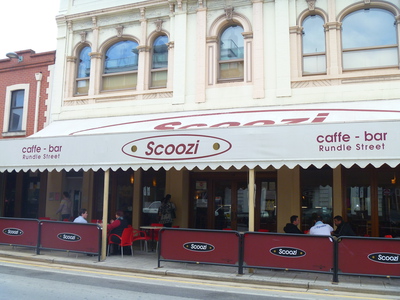
By 1993, a new band called Crisp was forming and some of its members were meeting at a cafe called Scoozi on Rundle Street. Sia was working as a waitress at the time.
“We’re having a band meeting at Scoozi on Randall Street. And she was a waitress and she came up and was like, ‘What are you guys doing? What are you talking about?’ Because we’ve been there all day. And we’re like, ‘Oh, we’re putting a band together. We’re going to conquer the world.’ And she’s like, ‘I’ll be a singer.’ And we all kind of laughed and thought she was just joking. She later convinced us to let her come to an audition,” said guitarist Jesse Flavell. “But it was quite an accident. We didn’t go out looking for her or looking for a vocalist or auditioning a range of vocalists. She literally just kind of, intrusive style, just kind of, you know, made it happen in a cafe just by, you know, her personality really, before we even heard her sing.”
“I just saw them talking about sitting there, and I was working next door and went up and said, ‘Are you going to be the band?’ ‘You need a singer. Come and audition next week.’ And I went all right,” said Sia.
Sia joined Flavell on guitar, Jeremy Glover on bass, Sam “Muskrat” Langley doing rhymes, Ben Timmis on keyboards, and Steve Rooney on drums and formed Crisp, an acid jazz band. The group felt like they were more of “a jazz funk explosion,” recalled Flavell.
Within two months, Crisp toured throughout Adelaide and started to make a name for themselves, even being named the “best Australian ‘acid jazz’ band.” An early review by Paul ‘PK’ Kitching stated, “Whatever the future holds, CRISP – who have been together for two months – are already attracting eager attention. Initially formed as an in-house band for BOLTZ, this funky/jazz/rap act are now cutting it live all over Adelaide and doing it with exhaustive style.”
“Crisp was tight and you knew they were onto something – especially with this powerhouse female vocalist in Sia Furler who totally owned the stage. She entertained everyone in her path, delivering every song perfectly with an incredibly powerful and beautiful soul-filled voice,” said Kitching.
With Crisp, the diamond within Sia began to form.
The band performed throughout Australia and Sia was asked to do backup vocals for various bands such as Skunkhour, where she was “on the main stage in front of six and a half thousand people which was just insane,” said Sia.
“She was mesmerising. She had the ability to pull you in and you were transfixed. She had the backing of some great grooves, too. And then the gigs started to flow – from Tapas to the front bar of the Oxford to upstairs at the Stag to that tiny stage at the Cargo Club. And Sia was starting to get noticed by those in the industry.”
By 1996, Crisp had independently released their debut album called “Word and the Deal,” then a follow-up EP called “Delirium” in 1997, but ultimately the band split.
Sia continued following her voice and recorded as a solo artist, independently releasing her debut album “OnlySee” in 1997, which was produced by Crisp’s Flavell and sold roughly 1,200 copies.
Sia decided to leave Australia and join her boyfriend Dan Pontifex in London. On a stopover from Thailand on the way to join him, she received a phone call saying that he suddenly passed away as “he got hit by a taxi on his birthday.”
“I was pretty fucked up after Dan died. I couldn’t really feel anything,” said Sia. “We were all devastated, so we got shit-faced on drugs and Special Brew.”
Sia returned to Australia but received a call from one of Pontifex’s housemates inviting her to stay in London. She accepted and lived in a three-bedroom flat with 13 other Australians, noting one of the reasons for the move was because “I think I went a bit mental and thought he was still here.”
Sia took whatever work she could, including singing backup for the acid jazz-funk band Jamiroquai, who at the time were riding high on the success of their hit “Virtual Insanity.”
“Oh my god! It has just come to my attention that Sia Furler will be featured on the next Jamiroquai album, performing the backing vocals! Yes, I speak of Sia, the talented local girl from Crisp and currently based in the UK. Sia’s been away now for a while on a bit of a holiday but also a mission to further her musical career which has meant pouring over many a contract. More recently she’s been hangin’ with Jay Kay and the lads, and it appears that Sia’s talent will finally be recognised on the world stage,” wrote Kitching.
“I was hanging out with a bunch of kids, doing drugs and suffering. Then one day, a friend of my cousin’s asked me to sing at a open jam session,” recalled Sia.
It was at this jam session, which was an open mic night, that she sang the 1970s funk tune “All This Love That I’m Giving” by Gwen McCrae and impressed “a local music mogul” who immediately offered to be her manager, and stated “you’re with me, you’re with me.”
“He managed me until I found out that he was actually a cocaine dealer,” said Sia. “It was weird, there was a lot of celebrities around and I just thought he was well connected. Then I got a record deal.”
Signed to Sony Dance Pool, Sia’s major label debut “Healing is Difficult” was first released in Australia in 2000, then in the UK in July 2001. The album dealt with the loss of Pontifex and became a minor hit in Britain, scoring a top-10 single, ‘Taken for Granted,’ a song “that’s about being jacked off with a mate.”
During a 2000 BBC interview with Sean Hughes to promote the single, Sia revealed that she gets “no royalties” from the album. When she learned she would receive 50 pounds for doing the interview, she was genuinely excited, saying, “I really get 50 quid? Because I’ve got no money to get home.”
Then Hughes asked about her future: “Will you be ready if it does become major success and go through the roof? ‘Cause that’s really life-changing. Are you prepared for that?”
“Well, I just, I don’t see anything really changing,” Sia replied.
“If you become famous in a situation where everyone knows your name, it could change your life. Are you prepared for that though?,” Hughes asked about fame in another manner.
“I don’t know. I just think as long as you stay friendly then it will be fine,” said Sia.
The diamond had been discovered, but yet to be cut and polished.
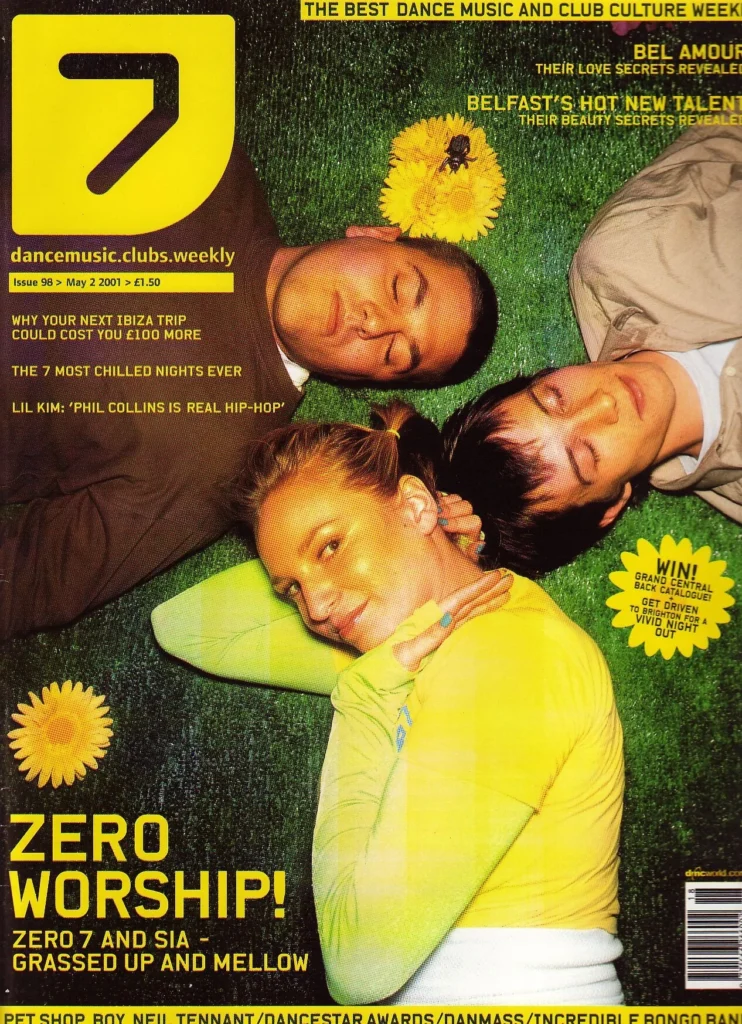
Despite her manager’s questionable business practices, the connection proved valuable. Before Sia dropped him, he had introduced her to Henry Binns and Sam Hardaker of Zero 7. The British downtempo electronica duo invited her to collaborate on two tracks, “Distractions” and “Destiny” with Sophie Barker.
“Particularly ‘Destiny’ and ‘Distractions’ featuring this year’s other heavily touted find, the Aussi temptress with a voice that’s pure seduction, Sia,” stated Dan Gennoe of the DJ magazine 7 Dance Music And Culture Weekly. “‘She’s amazing’ enthuses Binns unprompted. Hardaker: ‘Yeah. I was playing football with her then manager and he gave me a tape saying that they needed someone to do some production on her album. There were some good tunes on there, so we got her down, disregarded her thing and got her on our record. She’s so energetic, contagiously so. And she’ll do one take and it’s fucking worth something. It might not always be perfect, but it is a performance, a whole amazing thing.'”
“We waited a long time for a singer to knit the whole project together,” said Binns. “And my God, Sia was that singer. Sam played football with her manager at the time, one day he came up and said ‘I’ve got this girl…’ Sam kind of rolled his eyes at that point, but she came down to the studio and we knew instantly she had something very special. In fact, that afternoon we wrote two great songs which went on to be ‘Destiny’ and ‘Distractions’. She worked so fast – was so completely in the moment. If you didn’t catch her vocal on the first take you worried it might never happen.”
“Sia was different though. I think we had the majority of the material done and we knew we were missing something, especially on Destiny, and she came in at the last minute and did it. We had so many singers who had a go on that track, and Sia came in and did it with very little difficulty indeed. Sia’s a bit like that, actually, she’s unique in the sense that you either got it in one take or you’ll never get it! She’ll never labour on a melody or a lyric.”
Zero 7’s debut album Simple Things peaked at #28 on the UK Albums Chart and #4 on the US Billboard Dance/Electronic Albums chart. “Destiny,” written in one afternoon, reached #30 in the UK, and Zero 7, Sia, and Sophie Barker performed the song on Top of the Pops on August 17, 2001. Sia’s lead vocal song “Distractions” peaked at #45 on the UK Singles Chart. Zero 7 also received a Mercury Music Prize nomination in 2001.
“I went a bit mental after that”, Sia recalled. “No seriously, I needed therapy and everything.” The rise from hero to zero was something she did not handle well. After firing her manager, she decided to leave Dance Pool/Sony after the poor promotion of her Healing Is Difficult album and joined British record label Go! Beat, a subsidiary of Universal Music Group.
“I don’t want to be a superstar, doing all that wibbly-wobbly stuff. It’s too emotionally stressful; photo shoots always make me want to have plastic surgery. I just wanted to write an album that was me: a small, weird, needy freak. It’s a slow burner, but it’s honest,” stated Sia in November 2003.
Her third album, Colour the Small One, was released January 2004 included collaborations with Beck on the song “The Bully.” Sia noted, “this album is much more me than the last album. Although the last album was me then. This is me now.”
“The reason I ended up making an R&B album before was because where I was from in Adelaide, the coolest and most fun people to hang around were hip-hoppers. And this time I was just on tour in Zero 7, listening to all sorts of different music. And I decided I liked that and I wanted to make stuff that was like that. I just wanted to make music that was played by real people,” said Sia.
One song, “Breathe Me,” was released and reached No. 71 on the UK Singles Chart in May 2004. “‘Breathe Me’ is about feeling worried, generally anxious, being overwhelmed by your own inner dialogue, and having some sort of conniption fit, and then potentially doing yourself some harm, and then asking for help,” stated Sia.
On August 21, 2005, unknowingly to her, “Breathe Me” was featured in the series finale of HBO’s Six Feet Under, playing for six minutes and 29 seconds as the show’s closing scene unfolded. The inclusion put Sia into the American spotlight. She moved to New York and started on a North American tour. On April 17, 2006, her performance at the Bowery Ballroom in New York City was recorded for her first live album, Lady Croissant, which was released in 2007.
The diamond was being cut.
Sia went back into the studio and released Some People Have Real Problems, her fourth album, on January 8, 2008. The album charted modestly at #26 on the Billboard 200.
A nod to her skill as a songwriter happened when pop-superstar Christina Aguilera reached to Sia late-Summer 2008 to write songs for her upcoming album, Bionic.
“I’m going to write with Christina Aguilera in mid-September for her next album,” said Sia. “It might not work, she might not like any of the stuff I write, and it may not make the cut, but I’m pretty excited about it — I think she’s rad!”
“I’m definitely a fan of Sia’s,” said Aguilera, “I was thrilled she also wanted to work together and, in turn, was a fan of mine.” By April, Sia co-wrote/produced 4 songs on Bionic and Tweeted, “would just like to say the new christina aguilera album sounds sooper dooper.get ready!!!”
Despite this success, Sia continued to struggle with the trauma of Pontifex’s death and the mental health issues reflected in songs like “Breathe Me,” but channeled this energy into recording her fifth album, We Are Born, through 2009 and into early 2010.
In January, the “We Meaning You Tour” was announced across North America and Europe. The tour kicked off at the Commodore Ballroom in Vancouver, British Columbia, on April 10, with stops in Seattle, San Diego, Minneapolis, Detroit, Toronto, Philadelphia, and New York. She also performed at Coachella in Indio, California, on April 17. The tour then was scheduled to Europe, with shows in Copenhagen, London, Paris, Brussels, Amsterdam, and several German cities.
At the same time as the tour announcement, Sia released “You’ve Changed,” the first single from We Are Born, which peaked in Australia at #31.
“A lot of these songs I made like 5 years ago, but at the time nobody would release any of this music by me because I was renowned as a downtempo artist, so nobody really knew how to market me as anything other than that. So it’s a, it’s a departure from my old style in that my advisers and the record companies that put out my music now think that it’s safe to put out a pop record,” said Sia. “So it’s a departure in, in the sense that it’s not as miserable as the last three. I’m more miserable now, much more miserable.”
“I don’t really make money by selling records. I’ve never made money selling records. I’ve never really made money touring either, or with merchandise, surprisingly. Nobody wanted the shoelaces. But I do make money by having just my songs in the background of television shows or in commercials or movie trailers, and that’s been really good. And before that, Zero 7 kind of subsidizes my crappy career. I might just become a songwriter. I don’t know, it depends. It’s an easier job,” stated Sia.
Sia took the stage at the Commodore Ballroom to a screaming crowd, dancing and smiling in a knitted poncho “about 20 pounds of rainbow-coloured wool.” Everything was covered in wool: amplifiers, speakers, mic stands, monitors, guitar straps, even floorboards. Colourful and inviting. On her back were 7-foot paper-mâché wings crafted from self-help book covers, including titles such as The Seven Habits of Highly Effective People, Addiction, Transformation, Help, Karma, and Loving.
She opened with “The Fight” and once the song was done, the wings came off, stating, “It’s fucking heavier than it looks — it pushes on your diaphragm.”
Leading into her second song, “Clouds”, Sia turned her attention to the audience, stating, “I forget the words to my own songs, thank you for joining us! Thank you for coming and like paying more than $10. I appreciate it. I’m sweating for you.”
Sia then sang, “Little Black Sandals,” “The Girl You Lost to Cocaine,” and went into “Be Good to Me” and things were not good for her. Sia announced mid-song, “I think I’m going to faint,” and was taken backstage. Quickly returning wearing a lighter, flowing, ankle-length robe. “Sorry, I feel better now,” but forgot the lyrics. At the end of the song, declaring to the audience, “I think I’m having an asthma attack” and ran off the stage.
A few moments later, Sam Dixon took the stage and announced that “she’s going to be okay, but she’s had a stroke and she’s unable to perform any further tonight.” The crowd expressed sadness but in a caring way, shouting “we love her,” “thank you,” and “feel better,” and clapping and cheering.
Two days later, recovered from the heatstroke, Sia continued with her tour and was in Seattle. With her set scheduled for April 17 at Coachella, her third appearance at the festival, Sia honestly declared, “I am old. I am not into festivals anymore. I’m 34 and I’ve been going to festivals since I was 20 and I am over it. I’m so over it. So it’s strictly business now. So I’m going to do a bunch of promo and then I’ll have a couple of hours. I’ll hang out on the bus and maybe like watch some iTunes TV and then do my show and come back here and walk the dogs.”
“I got kind of pigeonholed I guess after Zero 7 and Color the Small One, so I delivered an album that was pretty much the same album as We Are Born 5 years ago, Universal, right after Color the Small One, they dropped me,” said Sia. “They were like, ‘You can’t do this, you’re a downtempo artist.’ And I was like, ‘What? When did that happen?’ Great. And they were like, ‘You’ll confuse your fans.’ And I was like, ‘What fans? I’ve sold 6,000 records. How can this be happening?'”
Before the release of We are Born, Sia stated that “People aren’t honest about the horrors of fame. The downsides are so overwhelming that, for me, there is no payoff. Now my dream is to write songs for others, to have a baby, to have a routine… I want a normal job. I want to be who I was before all this.”
We Are Born was released by Monkey Puzzle, Sia’s own label, and Jive Records, a Sony label, on June 18, 2010. The album reached #37 on the Billboard 200, her highest-charting record to date.
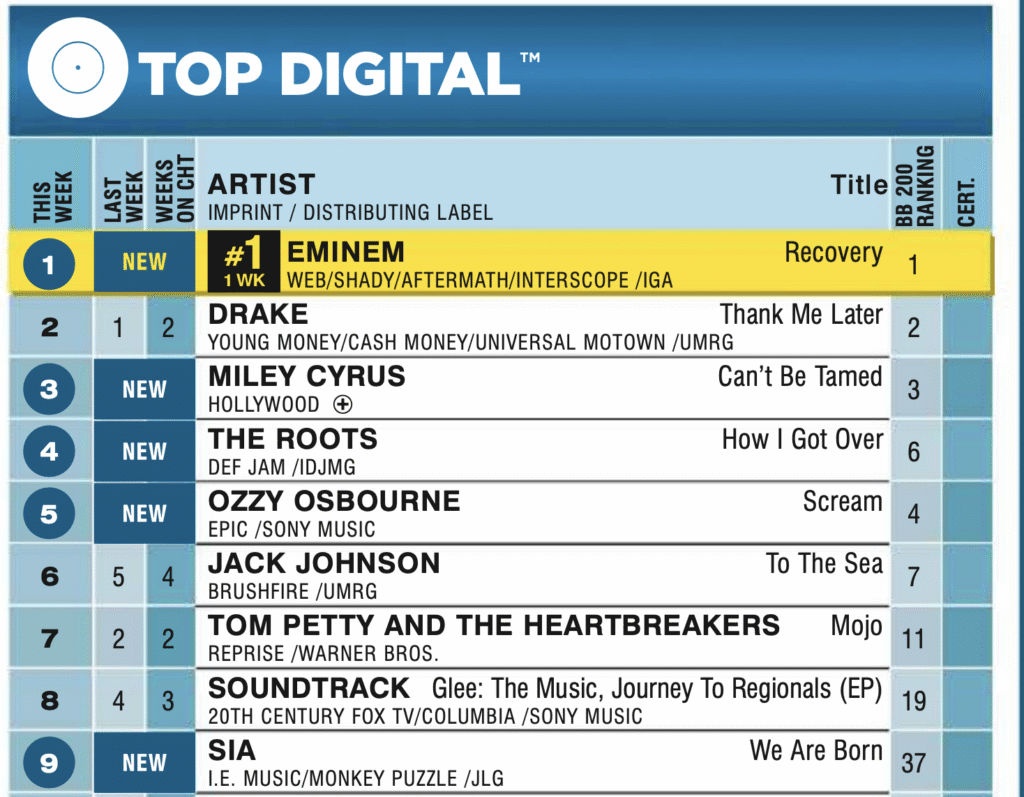
In its review of the album, Billboard noted, “Known for her past collaborations with English electronica band Zero 7 and more recently with Christina Aguilera, Australian artist Sia Furler shines bright on her own on her newest release.”
But the promotional demands and touring schedule took their toll. Sia started drinking vodka and taking Xanax and OxyContin, becoming increasingly isolated. In September 2010, she decided to check into a hotel with the intention of not coming out.
“Please do not come in. I am dead inside. Please call an ambulance,” stated Sia of a letter she penned to the hotel staff. Before leaving her apartment to check-in to the hotel, she received a phone call from a friend who said, “Squiddly-diddly-doo!,” which was how Sia answered the call when she was happy. “There must have been a part of me that really wanted to live, because in that moment, I thought, ‘There’s a world out there and I’m not a part of it. But I might like to be.'”
The next day she called her dog-walker and went to her first 12-step meeting.
“One of my best friends Natalie, she helped me through a really hard time, and then my managers actually really helped me through some really hard times, Maureen and old therapist really, really helped me through some hard times,” recalled Sia. “And then more recently when I thought I was going absolutely bonkers and that I would never get to sleep without, like, my thoughts actually killing me, another person I’m very grateful for, actually, Norah, my dog walker. She’s so much more than that.”
“As someone who’s like secretly a very angry person, I need to sing. I need to sing because that gets out my rage,” said Sia. “There was at one point in my career I was looking out into the crowd and I couldn’t see myself reflected in the crowd, and that’s when I realized that I had lost touch with who I really was. Like I had just bought into this whole thing that was, I was so unhappy. I didn’t want to be there. I didn’t understand the value of what I was doing. I just really wanted to isolate and disappear. And yet I was looking back into this sea of warm faces who had found something common in my music… I just realized that I’d become totally disconnected from what I was doing and what the whole purpose of being an entertainer, which is I think to entertain, to bring people together and to give something to people that they can project their feelings onto.”
Reflecting on her relationship with fame, Sia explained, “I’m not selling a dream. I’m not selling fame like it’s some fantastic thing. I’m just trying to sell music and get on with my real life. I’m shy. I get anxious when I’m ambushed or approached by someone I don’t know, and they give me compliments. It makes me feel uncomfortable. I think I have always been like that, but I drank. I’d always drink during the show and afterwards. My boundaries were way sloppier, and I gave more of myself than I probably should have. I don’t regret it, though, because I made some nice friends. I’m glad I did it. But I understand now that, in order to survive psychologically, I can’t really give that much anymore.”
“At first, nobody really cared, which was awesome. Then two people cared, which was nice for my ego. And then sixty people—screaming, drunk—cared, and I thought, ‘Hi, mommy, I want to go home.’ As it grew, I realized, what the heck was I thinking? Why did I want this? I enjoy the actual show. Everything else, I could totally leave behind—the travelling, the jet lag, talking about yourself all the time. Being put on a pedestal is awkward because nobody is above anybody else.”
“Probably, if I’m making music in the future, I’ll just make music and put it out. I’m not going to do everything that goes with it—touring, promotion, all the stuff that’s not fun. Maybe I’ll do three shows a year. I’ve realized that the not-fun stuff isn’t for me. It’s for a lot of people out there, but it’s not for me.”
“She said to me, ‘I don’t know if I want to do music anymore’.” said Sia’s manager Jonathan Daniel. “‘But you’re a great artist, you can’t do that.’ We decided to try to do some small things that could make her happy.”
With sobriety and support, Sia made a decision that she would step back from performing in public and focus on writing songs for other artists. The first, a song called “Titanium” for DJ David Guetta, which took around 40 minutes to write “and then maybe half an hour to record the vocals.”
“A guy called Ben Maddahi, he was like, ‘David Guetta wants to work with you,’ ‘Here’s some beats from David Guetta.’ They played me like 12 tracks of David Guetta’s, but they played me the guitar part of ‘Titanium’ and I said, ‘That one.’ And then I wrote the song, sang it,” said Sia.
“When we worked on ‘Titanium,’ I was being a producer and she was being a songwriter, and we were just writing for someone else,” said Guetta. “And I’m like, ‘Okay, not only this song is too good, there’s no way I’m giving it away, I want to keep it for myself, but also I need you to be on this record because no one is going to sing it like you.’ And she’s like, ‘No, I don’t want to be an artist anymore. I don’t like this life. I want to be home and with my dogs and be happy and write songs for other people.’ And um, I really, I had to beg her, and she ended up doing it at the condition of not doing any promotion, any interviews.”
“I thought it was going to go off to Alicia Keys. And then he approached Mary J. Blige,” said Sia. “And then the record gets pre-released and I read that I’m on the album… I was really mad about it at the time because that wasn’t the kind of music I was into. I felt like I’d spent 15 years trying to create this credible kind of wordy, word-smithy, clever song… Jonathan, my manager, talked me down and sort of said ‘they’ve already pressed all of the copies. It would cost them probably about half a million dollars if you say you really don’t want to be on it. I think this is actually not a terrible thing. I think it could be really good for your songwriting career. We’ll make sure you’re not in the video. How about it?’ And so I was like, ‘Okay,'”
“Titanium” was released in August 2011 and skyrocketed to #7 in the United States and #1 in the UK. Shortly after, on December 19, 2011, Flo Rida released “Wild Ones,” featuring Sia’s vocals and co-written by her, which peaked at #1 in Australia and Canada, and #5 in the United States.
“This is something I really wanted to do, is write pop songs for other people for such a long time, but for some reason I thought I had to be an artist, but I don’t feel that way anymore,” said Sia. “These dance tracks are very cathartic just in the sense that I get to sing out.”
“I’d love to say I’m a genius, but I didn’t plan any of it. It’s such a crazy irony for someone making music for 15 years as an artist to have this type of success now, in such random ways,” said Daniel.
“I just basically write pop songs for pop stars, sit at home on my sofa with my three dogs and like make a million dollars, so it’s an epic life. It’s like the big dream. It was like what I was looking forward to for years,” proudly said Sia.
Sia was known in the industry for her ability to write hit pop songs, really fast. One producer said, “But it takes you, like, 20 minutes to write and sing the song. Then I have to go away and spend two or three weeks producing it.”
“Yeah,” said Sia. “But it took me 15 years to take 20 minutes.”
Sia, the diamond, had become brilliant. And in the summer of 2012, her work would shine once again—completed in 14 minutes.
Written in 15 minutes while waiting for a cab
By the early 2010s, Stargate, the Norwegian production and songwriting duo of Mikkel Storleer Eriksen and Tor Erik Hermansen, were known for creating hits such as “Irreplaceable” by Beyoncé, “So Sick” by Ne-Yo, “Don’t Stop the Music” by Rihanna, and “Firework” by Katy Perry. Around the same time, Benny Blanco was making a name for himself as he co-produced massive hits, such as “Teenage Dream” by Katy Perry, “TiK ToK” by Kesha, “Dynamite” by Taio Cruz, and “Circus” by Britney Spears.
“It was probably 2010 or 11, I remember me and Stargate are sitting there, we’re making some beats, everything’s all good, we got all these beats happening, and we loved this one that we made and I said, ‘Oh my God, we got to send this to like Eminem or Kanye,'” said Blanco. “We sent it and I remember Paul Rosenberg, Eminem’s manager, was like, ‘We love this thing.’ And I was like, ‘Oh that’s so sick.’ Fast forward like eight months, never heard anything from that.”
“So I think he sent it to a few people and it was even on hold I think for, for one of those big, big rappers at the time. But then we had a session with Sia,” said Blanco.
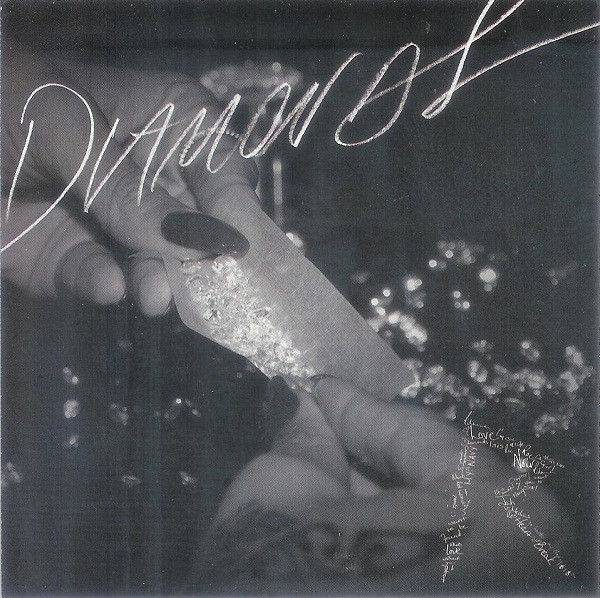
“She had that big ‘Titanium’ record with David Guetta… So when we heard that song we were like, ‘Oh my god, she’s amazing writer and what a voice.’ So we had done another song, I don’t know which one or if that song became anything at all, she was waiting for her, this was before Uber, so she had a driver, like a black car in New York, and she was like, ‘Oh, the driver is not going to be here for another like 15, 20 minutes, what else you got?’ And then Tor played her the ‘Diamonds’ beat, and the first thing that came out of her mouth was ‘Shine bright like a diamond,'” said Eriksen.
“She wrote it literally and recorded it in 15 minutes. Everything the way it is. Super, super fast,” said Eriksen.
“Afterwards we were like, this feels like, there’s something about this record. We played it to Benny, and it’s unorthodox. It’s not your typical songwriting. And Benny, he didn’t like it. I mean he liked it, but he was like, ‘But it doesn’t have a hook. It’s not hook enough.’ Like, ‘What is this thing?’ Like, ‘No, let’s give the beat to Kanye.’ He wasn’t feeling it when we were like, ‘But we’re going to London next week with Rihanna. Let’s bring it in to her.’ ‘No, no, no. It’s not it man. It’s not it,'” said Eriksen.
“But, of course later on he realized that it actually had some magic and it’s an amazing record. We did bring it to London anyway and played it to her in the studio. One listen, she said, ‘Guys, you’ve done it again. Wow. This is probably my first single,'” said Eriksen.
“And then I remember getting the call where they were like, ‘Rihanna loves this… she wants to cut it.’ And then they made one change. ‘Shine bright like a diamond’ was only in the intro, and then they put it over that. This guy “Ty Ty” that works with Jay-Z had a brilliant idea that just really made it so catchy. It kept doing that part. And I was like, ‘Shit, okay.’ And then I remember I was randomly with Sia at like a furniture store or something, and we get a call… This was like Thursday. ‘She cut it last night, it’s coming out on Monday.’ And I was like, ‘Wait, what?'” said Blanco. “I remember listening to it and just being like, ‘Oh my God, this is like the biggest song in the world!'”
“Randomly, around the same time, I get a call from Paul Rosenberg, and he’s like, ‘Hey, Em really loves that beat… I think he might be like doing something to it.’ And I was like, ‘Wait, what?’ ‘We, Rihanna, I haven’t heard from you in like a year, Rihanna’s putting the song out.’ He was like, ‘What? No.’ And then I was like, ‘What?'” said Blanco.
“And then somehow it all worked out. Rihanna puts out the song like three days later, it becomes the biggest song in the world by far. And yeah, it was crazy. Once her voice was on it, she’s so good at making a song, like bringing a song from like a seven to like a 500,” said Blanco.
With “Diamonds” complete, a press release promoting the song as her new single stated: “Fresh off her spectacular opening performance at the 2012 MTV VMAs—where she won the night’s biggest award, Video Of The Year for ‘We Found Love’ — worldwide superstar Rihanna opens the next chapter of her reign as this century’s Queen of the Billboard Hot 100 with her new single, ‘Diamonds.’ ‘Diamonds’ will make its premiere on Wednesday, September 26 with an 8:00 AM EST launch at radio. An hour later, at 9:00 AM EST, ‘Diamonds’ will be available on iTunes.”
Rihanna stated, “the lyrics are very hopeful and positive. It’s about love. The gears are a little different from what people would expect. I’m excited about that. I’m excited to surprise them sonically.”
When release day arrived, Billboard wrote an article titled “Flawless” that stated, “The first thing I said to the label when they played [“Diamonds”] for me was, ‘That is the perfect thing she needed to do,- says Sharon Dastur, PD of WHTZ (Z100) New York, which world premiered ‘Diamonds’ the morning of Sept.26. “The reaction’s been fantastic, because it’s different. The audience, not only on social media but on the phone lines, is really excited about the next thing.”
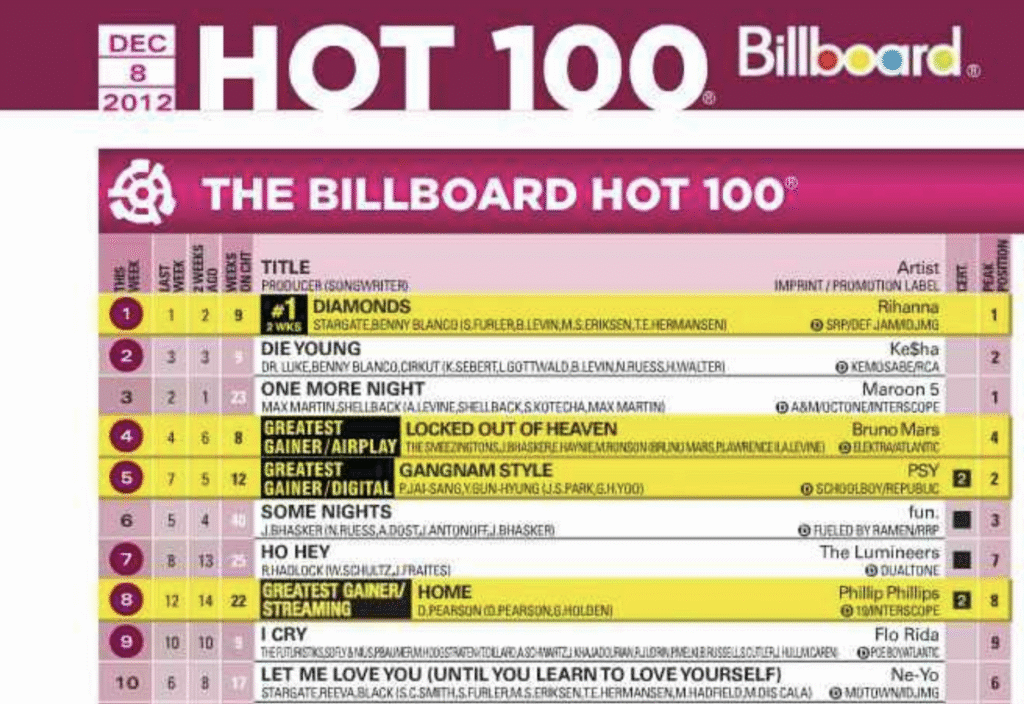
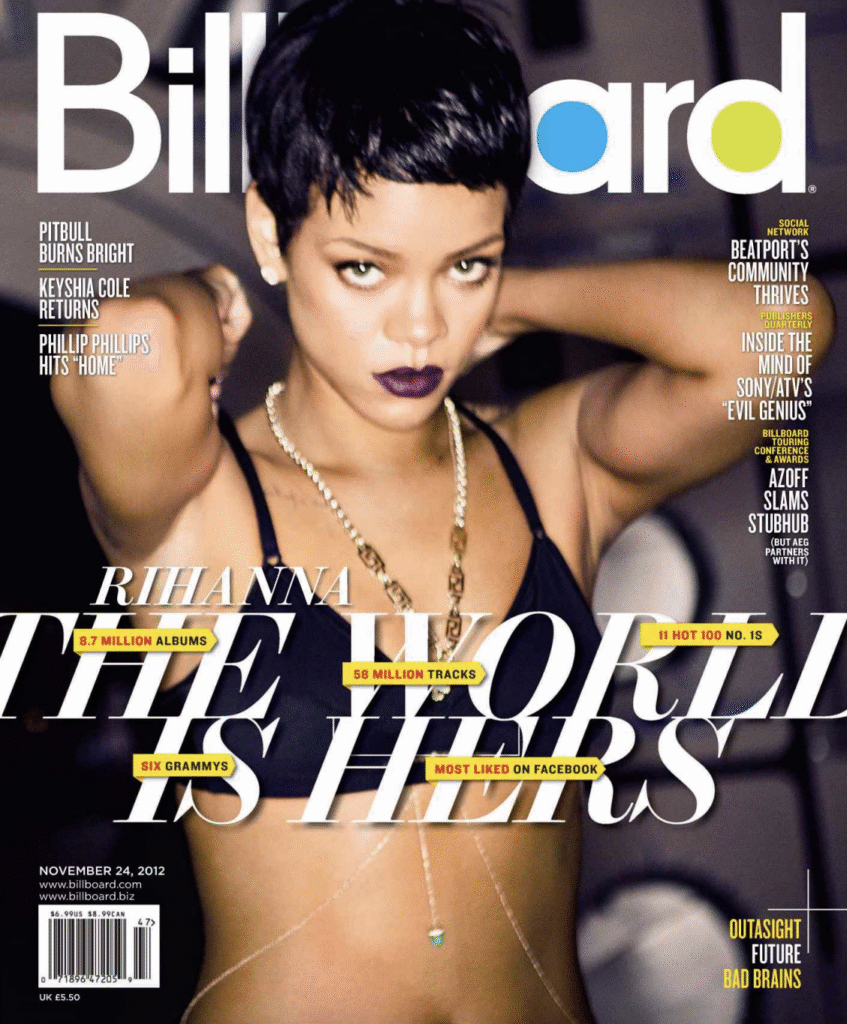
“Diamonds” quickly topped the music charts around the world. It became Rihanna’s 12th number-one song on the US Billboard Hot 100 chart, holding the top spot for three weeks. The song sold more than 10 million copies in the US alone, earning it Diamond certification from the RIAA—the highest award for sales. “Diamonds” also hit number one in more than 20 other countries, such as the UK, Australia, and Canada.
Billboard noted in its December 15, 2012 edition that “Rihanna has racked her total with 12 No. 1s, which also ties her (with Madonna and the Supremes) for the fourth-highest total. Only the Beatles (20), Carey (18) and Michael Jackson (13) have tallied more No. 1s.”
Lyrically: Diamonds
Upon hearing the beat that Stargate and Benny Blanco sent, Sia explained her songwriting process for “Diamonds,” stating, “The very first time I hear the track I sing over it. So, and I hope that I intuitively go where the chords go, but I don’t know because I’ve never heard the song before. So sometimes I hit it, sometimes I don’t. So then I do ‘la, de, doo, dah.’ I have an affinity for the ‘D’ sound, so there are lots of ‘do, doo, da, da, de, de, dees’ going on… sometime I get lucky and and the words fall out.”
Shine bright like a diamond
Shine bright like a diamond
The song mirrors a journey from being alone to having a connection with another and begins by declaring an intention to choose happiness and light even in times of darkness.
You and I, you and I, we’re like diamonds in the sky
You’re a shooting star I see, a vision of ecstasy
When you hold me, I’m alive, we’re like diamonds in the sky
The pronouns shift from “I” to “we” and reveal that people, together, become something brighter than either could be alone. The diamond is no longer a buried stone underground under pressure, but transformed into a universal message of love of being brilliant in the open sky for all to see.
The “shooting star” symbolizes beauty and possibly the fleeting moments. The words “vision of ecstasy” and “alive” elevates the connection to a spiritual level. Sia introduces ecstasy both as emotional state, and in a later verse, as a substance (the reference to “molly”), blurring the line between natural euphoria and chemically induced states. This lyrical choice acknowledges that both love and drugs can make us feel invincible, alive, possibly untouchable like the sky.
I knew that we’d become one right away
Oh, right away
At first sight I felt the energy of sun rays
I saw the life inside your eyes
These lyrics emphasize that the connection between the two was destined to “become one,” with the combined energy, symbolized by “sun rays,” enhancing a joint life together.
Palms rise to the universe as we moonshine and molly
Feel the warmth, we’ll never die, we’re like diamonds in the sky
“Palms rise to the universe” suggests a shared spiritual experience. It evokes surrender and openness. “Moonshine” refers to the glow of the moonlight, or drinking moonshine. “Molly” takes a sharp turn and introduces a sense of euphoria, as it’s a common term for MDMA, which is also known as ecstasy—perhaps a quest to meet the “vision of ecstasy” in the previous verse.
The remainder of the song is repetitive. Most lyrics reinforce its core message: to celebrate love. The phrases “shine bright” and “beautiful like diamonds in the sky” are a constant reminder to uncover brilliance in yourself and others.
The diamond metaphor Sia created in 15 minutes wasn’t just a catchy hook. As Blanco noted, it was her entire journey. Like diamonds formed under billions of years of pressure, Sia had been happy and smiling on the outside, but compressed by grief, rejection, addiction, and the unwanted weight of fame.
“Diamonds” created a different ending to her story. Sia’s new reality transformed the metaphor. The diamonds were no longer lying dormant in earth, but visible as stars in the sky for all to see. She could shine for millions while remaining in the shadows, exactly as she’d wanted. Sia turned her own pressure into something brilliant.
The diamond was complete.