“When I was five, the guy that was preaching at the revivals, he came up to me out of a few thousand people and said, ‘you’re gonna sing’,” recalled Katy Perry.
Raised on Pentecostal values and Christian music, she heard the voice and followed the path.
Over a decade later, “I woke up, and I had the chorus in my head. Then I didn’t do anything with it for like a year and a half because I was a little perplexed,” said Katy Perry. “What an interesting little chorus. It would not go away. It was like a little pebble in my shoe. I said, ‘C’mon, you better record that song, or you will be sorry.'”
That song was “I Kissed a Girl.” Not exactly the way the church planned, nor its intention, it was just human nature.
When the song was released in 2008 it shot up like a firework and propelled Perry onto the global stage, achieving what she set out to accomplish at an early age. “Since I was nine, my dream has always been the same: to be on stage in like a glittery costume and to hear thousands of people sing along with me,” stated Perry.
Born Katheryn Elizabeth Hudson, Perry grew up in Santa Barbara, California with her parents Keith and Mary Hudson, Pentecostal pastors who travelled the country spreading their faith, alongside her sister Angela and brother David.
“I went to church on Sunday morning, on Sunday night, on Wednesdays,” said Perry. “They gave me my compass in a lot of ways. They really gave me a lot of integrity. They taught me how to treat people.”
Inside the house they were not allowed to watch channels such as MTV and VH1. “The only things I was allowed to listen to were the Sister Act 1 and 2 soundtracks,” Perry said. “I wasn’t really allowed to even acknowledge the opposite sex. There wasn’t a lot of talking about it, and that’s okay. I mean, they did what they knew how to do, right?… I didn’t have that education. I was homeschooled, went to the Christian schools, and they didn’t really teach that.”
Within those boundaries she found a voice. Perry took singing lessons at nine and at thirteen asked for a guitar. “That’s how I really started explaining my point of view,” she said. “The church bought me this faded, green acoustic guitar for my birthday, and I was real pumped ’cause I would go over to my hippie/surfer family friend’s house and we would just jam, considering I only knew, like, 5 chords back then.”
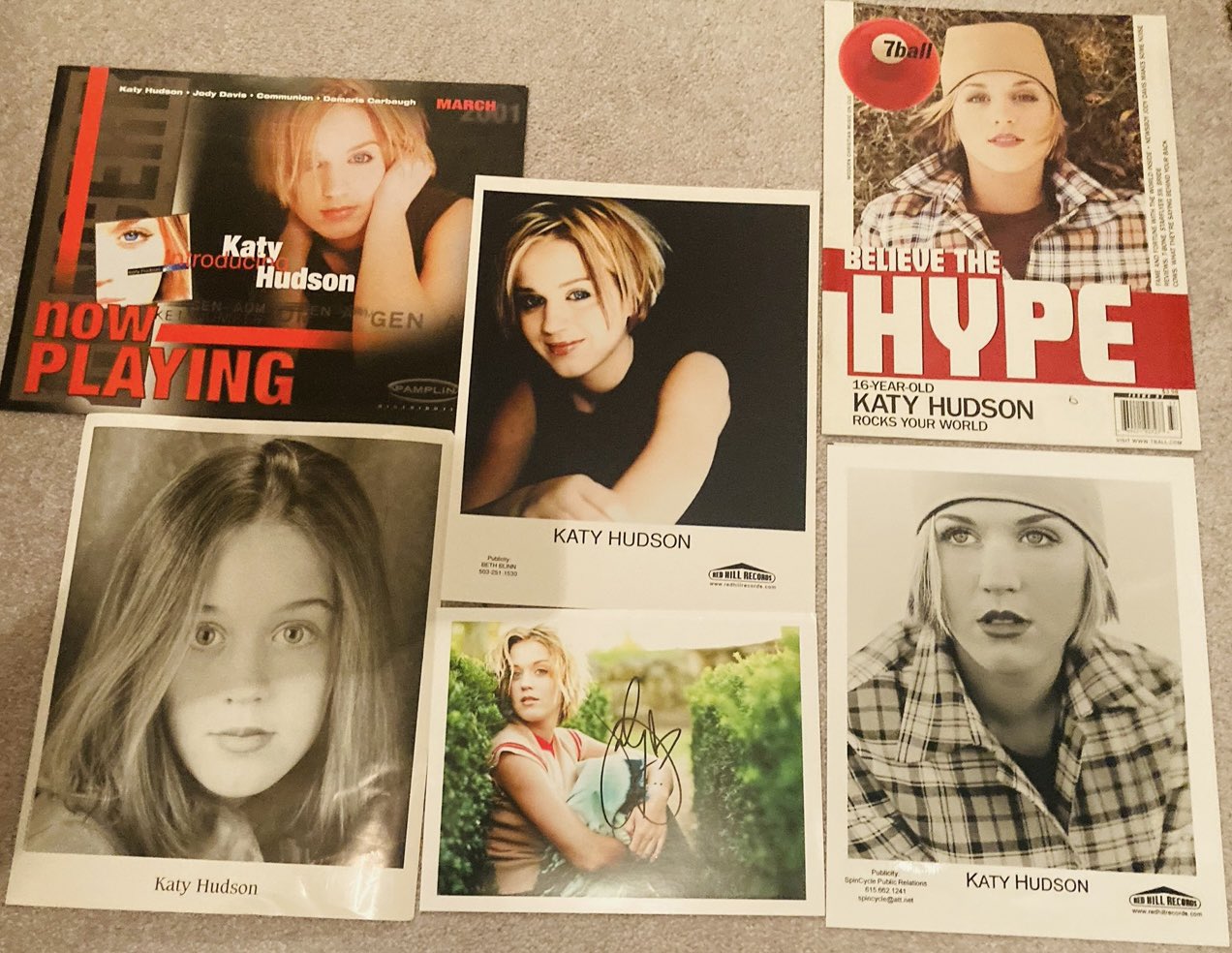
In June 2000, at the age of 15, Perry traveled back and forth to Nashville with her mother to record a Christian alternative gospel album, eventually signing with Pamplin Music under its Red Hill Records label. Using the name Katy Hudson, she released her self-titled debut album on March 6, 2001.
“Katy Hudson’s debut easily could have been just another teen songwriter mimicking mainstream music trends with Christian lyrics. Instead, I hear a remarkable young talent emerging, a gifted songwriter in her own right who will almost certainly go far in this business. That name again is Katy Hudson. Trust me, you’ll be hearing it more and more in the next year,” wrote Russ Breimeier in his review in Christianity Today.
Shortly after, Billboard wrote a review of the album, stating, “Katy Hudson occupies a different niche from that of her counterparts. Instead of polished pop or youth-oriented hip-hop, Hudson delivers a textured modern-rock collection that is equal parts grit and vulnerability. She also either wrote or co-wrote all the songs on this impressive debut.”
While Perry was on tour for her album, she stated, “Everyone thinks I’m, like, a superstar and, I don’t know, like a rock star, but that’s not how I am at all. I’m just some little kid from California who plays the guitar and sings, and I just write what I think needs to be written. I write what I deal with. Actually, I write what I want to say to people that I can’t say through my mouth. I guess it’s just easier that way… I have lots of songs to write about, lots of things to write about,” said Perry.
By December, Pamplin Music was out of money and shut down. The album sold approximately 100 copies. “It reached literally maybe 100 people, and then the label went bankrupt,” said Perry.
“One day I was at a friend’s house and she played ‘You Oughta Know’ by Alanis Morissette. And I was like, wow. She just kind of let all of her thoughts and emotions come out. Didn’t care what anyone else thought. She just did it completely honestly,” said Perry. “She was a powerful female voice when there wasn’t a lot of that around, and as a young artist, that really inspired me to speak my truth as well.”
For someone raised on church hymns and Sister Act soundtracks, hearing Alanis Morissette was a door opening.
“Music wasn’t allowed in the house because it’s the devil’s work,” said Perry. “I feel like I was never allowed to even think for myself, and having any kind of feminist lib on your own independent spirit is just of the devil. And I, all of a sudden, my heart wants to do all kinds of things. I want to travel and experience other things outside of my comfort zone. I guess I’m just probably going through a rebel phase.”
She moved to Los Angeles.
In LA, Perry encountered a world she had never been allowed to see. “I moved to LA when I was 17, and it was just a whole different perspective boom. I met different people. I’m like, ‘oh, you’re not a bad person. I grew up thinking you were this way. I was taught this way. Oh, you’re not.’ So I saw more humanity… And all this education and all this oneness, I feel from really observing people and getting to know them. That was my education… and that’s when really my sexuality started and experimenting and not having as many rules and restrictions. I had those experiences, and then I sang about them. And I was like, oh,” said Perry.
Perry started writing.
“I wrote a lot of songs on the guitar. I started a lot of songs like ‘Ur So Gay,’ ‘Thinking of You,’ and ‘One of the Boys,’ and a song called ‘Mannequin.’ The first song I wrote when I moved to Los Angeles from Santa Barbara, like the first proper song on the guitar, one that I actually still play to this day, was a song called ‘Thinking of You,’” recalled Perry.
Perry adopted her mother’s maiden name as her stage name, becoming Katy Perry, a decision that also avoided confusion with actress Kate Hudson, who was already famous for her role in the music-inspired film Almost Famous.
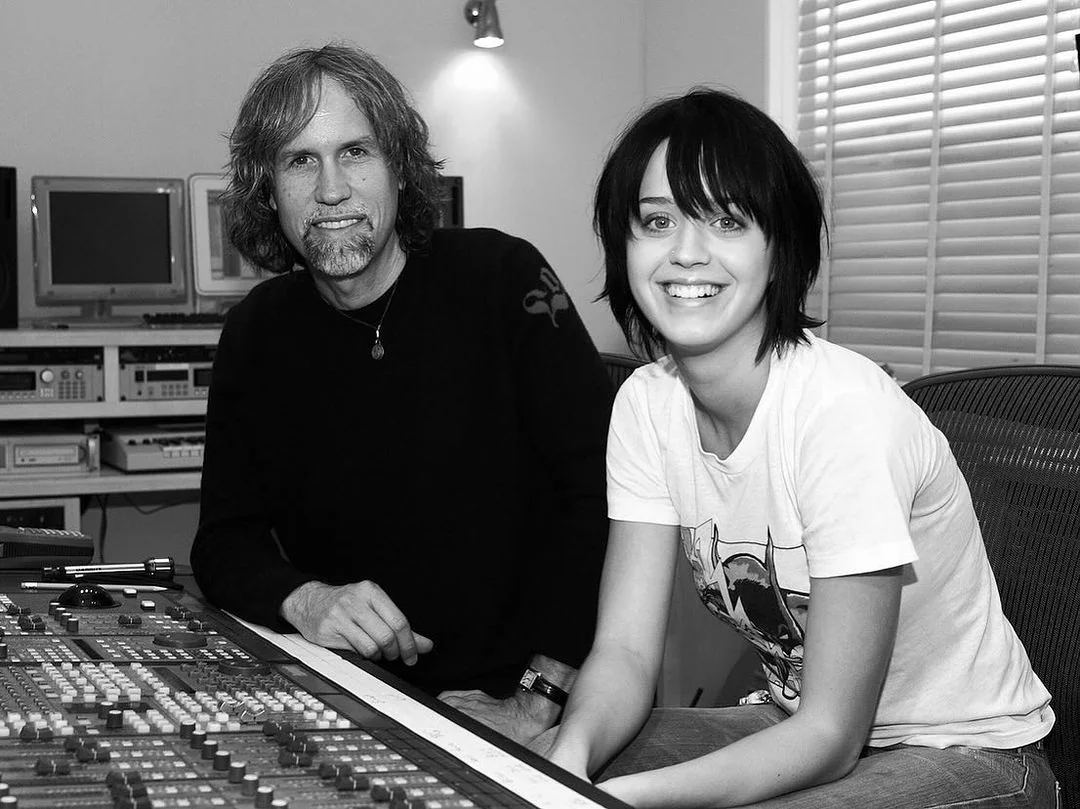
The door opened
“I remember having a conversation with a writer and they were saying, ‘Okay, so if you could work with anybody, who would you want to meet?’ And I had no reference point because I didn’t know anything. I barely even knew some of the Beatles songs, which like everybody knows a Beatles song. So I went home that night to my hotel room and turned on the TV, and up popped an interview with Alanis Morissette and Glenn Ballard. He was talking about Jagged Little Pill and I was like, I know that song. I came back the next day and I said, I’d like to meet that guy. And he said, okay, we’ll try and set up a meeting and I had my father drive me up to LA,” said Perry.
Knock, knock, knock on the doors of Java Studios in Hollywood.
“I think it was probably 2001, someone knocked on my door. And I said, hello, what do you want? Are you a writer? She said, yes. I said, do you want to play me a song? She said, yes. Bingo. Two great answers. Opened the guitar case, and she played a song for me, and it blew me away. Right away, I said, I want to sign you. You’re it. People don’t knock on my door every day. The last time someone did that, honestly, it was Alanis Morissette,” stated songwriter and producer Glen Ballard.
“When she came a knock on my studio door, she was an artist in her own right and she was searching for the ultimate expression, but she had already done hundreds of gigs, written hundreds of songs. She was committed. A committed artist, and that was the first thing for me is that I knew that she had put the time in,” said Ballard.
Perry signed with Ballard’s label, Java Records, which was under Island Def Jam, and started recording her solo album. Thirteen songs were recorded, including “I Think I’m Ready,” “Box,” “Mannequin,” “Simple,” “A Cup of Coffee,” and “It’s Okay to Believe.” The album was scheduled for release in March 2005, but Java Records was dropped by Island Def Jam, shelving Perry’s work.
“We were with Island Def Jam for a little over a year. She had everything it took, but I couldn’t get the label to pay attention to that,” said Ballard.
“I was a little entitled, a little bratty. I was living in Beverly Hills, and a big famous producer had taken me under his wing. I was getting a monthly allowance—I had a Louis Vuitton key chain for my Jetta! I thought I was the bee’s knees. But it didn’t last: I got dropped from my record label. And the Jetta was impounded. And I couldn’t pay my bills. I suddenly heard no more often than yes,” said Perry.
Ballard connected with his friend Tim Devine, Senior VP of A&R at Columbia Records.
“I get a call one day from Glenn, and he came and met with me, and he played me this girl named Katherine Perry,” said Devine. “I immediately knew I wanted to do something with her. And so I said, let’s get her in here and figure it out. I said, you’ve got a really good album here, but it still needed that first big hit single. So what I did is I made a deal to buy that album and work on it some more. And we started putting Katy with a bunch of different writers, and she would write songs herself, and we started going through the process of basically finishing up the old record, topping it off.”
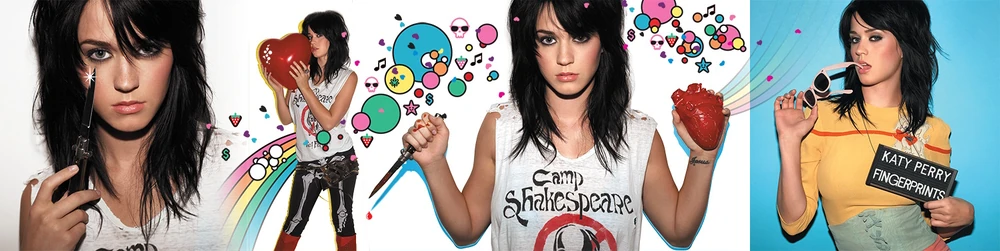
Perry started to work on an album, this time titled Fingerprints, with a planned release in 2007.
“At the time, there were a lot of female singers coming out, and I remember showing Katy one day a diagram I had put together of about 30 of these young pop female artists that every label was promoting,” recalled Devine. “And I told her, we can’t put your record out until we get absolute bulletproof smash hits, because we’re going to be competing with these other girls that have good songs and a lot of singles, but no absolute one-listen smash hits.”
“There was some concern about how to give her a shot in the market and how to give her a point of entry. So they came up with this idea to hook her up with these producers called The Matrix,” stated Columbia executive Angelica Cob-Baehler. “At the time, they had just had huge success with Britney Spears and Avril Lavigne. So it was a perfect opportunity for her to get some traction.”
While recording her own album, Perry collaborated with The Matrix, and Blender named her “The Next Big Thing!” in its October 2004 issue, stating she was a “sunnier Avril.” Perry said, “I’m completely outrageous and I’ll do anything for attention!” and “My album will be more rock, which is probably why my parents think I’m going to hell!” Despite the publicity and attention, The Matrix shelved the album weeks before its release.
To compete with other female artists, the label started telling Perry who she should be. The label heard a product. Perry heard a person.
“I didn’t want her to kind of make it. I wanted her to really make it,” said Devine. “And my whole vision was to change her from what Glenn had originally put together, which was sort of an Alanis style female artist, into much more of a straight up pop artist. I just thought she had much bigger potential, and we had to kind of develop that and tap into that and really push it to a much bigger global level.”
“You know, she was kind of just still in that phase of soaking everything in. But after a while, it just started to get annoying,” said Cob-Baehler. “This is people talking about, she should be the next Kelly Clarkson, she should be more like Ashley Simpson, you know. And the whole time, she just kept saying, ‘I just wanna be the first Katy Perry. I don’t wanna be the next anybody. I just wanna be the first Katy.'”
“The record wasn’t gonna come out, and she was signed to the record company, and nothing was happening. I remember one of the heads of the record company saying, you know, we really can’t drop her because she’ll probably go sign somewhere else and become a big star, and we just can’t have that. I just thought they should just let her go. It was like holding somebody hostage,” said Cob-Baehler.
To pay her bills, in June 2006, Perry started working at Taxi Music as a song screener, responsible for listening and selecting songs from independent artists to be forwarded to various labels. “Katy had good ears, industry qualifications as a signed artist and songwriter, was smart, bubbly, had a great work ethic, and got paid $30/hr. to listen to our members’ music and find the stuff that was good enough to make it over the bar and be forwarded,” recalled Michael Laskow, CEO and Founder of Taxi. “And while she may have indeed heard some music that wasn’t great, Katy forwarded music from Taxi’s members on exactly 117 occasions!”
By late 2006, Columbia dropped Perry.
“Just before her record was completed, Katy was dropped from Columbia Records. As often happens at record labels, there can be regime changes. And when there’s a new team that comes in, they don’t always have the relationships and the affinity with the existing artist roster. It’s particularly true of new artists. I would say that, you know, at a place like Columbia, a new regime might come in. They’re not going to drop Beyonce. The artists that they’re going to clear out are probably going to be newer, younger artists that aren’t very well known,” stated Devine. “And in the case of Katy, I left and the new people that came in didn’t really have relationships with her. For some reason, they decided to let her go. And she got snapped up about a week later by Capitol because we had a publicist, a woman named Angelica Cob, who had been Katy’s publicist when we were all at Columbia. She moved over and started working at Capitol. She brought Katy’s record to Capitol and they knew a good thing when they heard it and they signed her up right away.”
“I cared about her too much as a person to think that somebody could actually just crush this girl’s life and just crush her dreams for their own ego. And I just remember thinking, I can’t work here anymore. They’re not gonna do anything with her,” said Cob-Baehler. “Let’s see if we can get her over to Capitol. So I stole all the files. I stole all the Katy files. I just grabbed them and I put them under my arm and I just snuck out.”
Cob-Baehler brought Perry’s music files to Jason Flom, CEO of Capitol Music Group.
“I hired Angelica Cobb to run our publicity department. She said to me, you’ve got to meet this girl Katy Perry, and I think she’s a real star. You should get together with her,” said Jason Flom. “When a person who’s destined for stardom walks in a room, they walk and talk and wear their clothes differently than normal people do. And I was immediately taken by her presence.”
“I met Katy at the Polo Lounge and immediately my spidey senses started tingling. I hadn’t heard a note of her music yet, but I just had a feeling. Soon afterwards, she sent me her record and I absolutely loved it,” said Flom. “I gathered my top executives together to play them Katy’s music, but to my great surprise, they didn’t share my enthusiasm: they actually thought it was awful. They begged me not to sign her and as a result, I hit the brakes. I think everyone, whether or not they like to admit it, is influenced by other people’s opinions. A couple of months went by. I found myself listening to her music in my garage on Christmas day and I thought: how could I have screwed this up, she really is incredible.”
“The song I was listening to was called, ‘Waking up in Vegas,’ which she had originally made for Columbia Records. There was just something magical about it,” stated Flom. “Luckily no one else had made her another offer, so we agreed to a deal right then and there.”
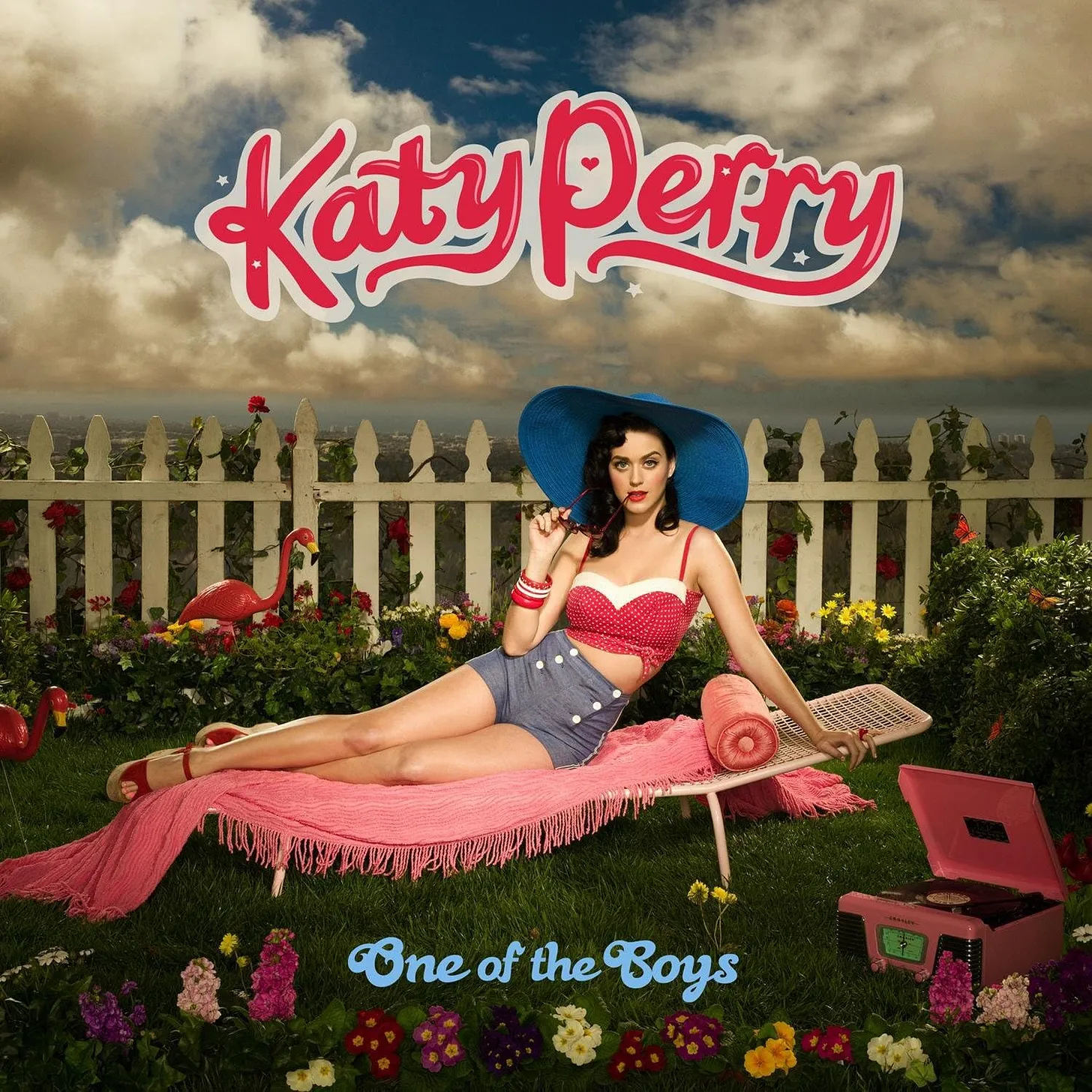
Perry was signed to Capitol in April 2007 and started to record her One of the Boys album, backed by the label in supporting her to become “the first Katy Perry.”
“Several weeks later, I called Katy and invited her to our Grammy Party. On the night of the Grammys, she showed up with record producer, Doctor Luke. Whom at that time was one of the top hit makers in the business. I was not aware that they were friends and immediately suggested that they should collaborate. Together with other writers including Cathy Dennis and Max Martin, they wrote, ‘I Kissed a Girl,’ ‘Hot and Cold’,” said Flom. “It was a case of being at the right place, at the right time.”
“I’m not afraid to be pop and I can’t wait to be super-mainstream,” said Perry. “But I can take all the production away, strip all of it down and I’ll play all of [my music] on an acoustic guitar and sing it by myself. I’m not a puppet, I don’t need strings. There needs to be pop girls who other girls can aspire to, like Cyndi Lauper, Joan Jett, Pat Benatar. We need those women again.”
To officially introduce Perry as Katy Perry to the market, Capitol released a digital EP of Ur So Gay on November 20, 2007, as a free download from her website, with a video for the song uploaded to her MySpace page. The song gained attention, mainly from a shoutout by Madonna praising it on The Johnjay & Rich Show, stating, “I have a favorite song right now. It’s called ‘Ur So Gay and you don’t even like boys.’ You have to hear it. It’s by an artist called Katy Perry.”
On April 28, 2008, “I Kissed a Girl” was released. Its controversial theme about bisexuality and catchy melody caught mass attention immediately.
“I Kissed A Girl was born as an idea in my head. The chorus actually popped into my head when I woke up. It was one of those moments where you hear artists talking about songs they get in dreams or in the middle of the night. I was like ‘wow, what an interesting subject matter to kind of pop into the head’ and I didn’t do anything with it for about a year-and-a-half. Then all of a sudden at the very, very end of making my album, I literally had two days left in the recording studio with my producer, Dr Luke. We just said, ‘we’re gonna finish it – it’s so catchy because it won’t get out of our heads’,” recalled Perry. “We brought it to the record label and they didn’t even wanna put it on the record and we were like ‘you’re crazy, you need to put this on the record, you need to put it out as the first single’.”
Billboard’s review of the song stated, “Perry comes off as Joan Jett meets Tracey Ullman, with vocal timbre akin to Pink: tough, with a wink and a snarl. There’s always a place at the table for artists whose pure intent is to entertain, but such major – label dedication shows there must be real meat on these bones.”
“If anybody’s listened to pop music for the past, ever, do you remember when Elvis Presley came out and he was the devil, and ultimately he became the king, and Madonna came out and she was a scandal, and ultimately she became the queen. And I think pop music has kind of showed different sides of life,” said Perry. “I knew that I was showing the kind of tongue-in-cheek side of myself, and I knew that some people are going to get the joke and others would just love to be offended, but that’s how some people live their lives.”
“When putting this record together and choosing the first song, I said, ‘Okay, this is the catchiest song on the record. I think maybe we should put the catchiest song on the record out into the world first.’ And it’s definitely not your typical song about, like, a relationship or something you’ve heard before. So I think that that definitely gains attention, but also, you know, I think it’s a catchy song, and if you take the lyrics out of it and you listen to the music, it’s like people are always going, you know, doing the melody in their head and they’re like, ‘I can’t get it out of my head, I can’t get it out of my head,'” stated Perry.
The album, after years of work, officially released on June 17, 2008. Of its twelve tracks, at least five had origins in the shelved Fingerprints sessions Perry had recorded at Columbia, among them “Thinking of You,” “Waking Up in Vegas,” and “Mannequin.”
“Not since ‘Jagged Little Pill’ has a debut album been so packed with potential hits. The 23- year-old singer/songwriter updates Morissette’s grunge era angst with an energetic, more timeless teen-poppiness, still leveraging it with lines like, ‘You PMS like a bitch /I would know.’ The 12 tracks are split between smart chick radio pop (‘Hot N’ Cold’), sassy novelty tracks for that ‘She said what?’ effect (‘I Kissed a Girl,’ ‘UR So Gay’) and big, swaying ballads that show Perry’s exciting mastery of melody ( ‘Thinking of You,’ ‘Lost’),” wrote Billboard. “Engineered for short attention spans at just 44 minutes, One of the Boys is still more than enough to make this one long, hot summer for Perry.”
“It was a rocket. It was a real rocket. And it was like, can you hold on? And I wasn’t present for some of it. I have to be present for some of it. I was like, oh. Every day was a different city,” Perry stated.
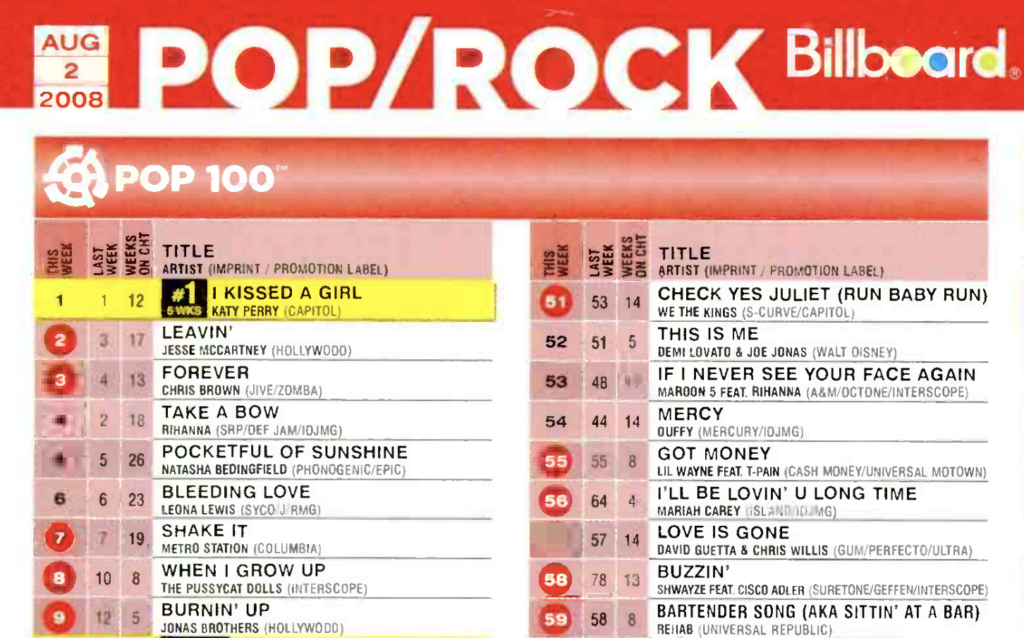
“I Kissed a Girl” debuted on the Billboard Hot 100 on May 24, 2008 and spent 23 weeks on the chart. The song held the Billboard Hot 100 No. 1 position for seven consecutive weeks from July 5 to August 16, 2008, made history as the 1,000th No. 1 song of the rock era, and topped charts in over 20 countries.
“It really hasn’t been overnight. I’ve been signed, I’ve been let go. I’ve had it all, I’ve lost it all. I should have quit a long time ago. I mean, the music industry for a new artist is really, really difficult. I don’t take anything for granted anymore, especially hitting the bottom. I just want to make pop cool. I feel like the music industry is somewhat missing that rock girl. I know I’m not like hipster cool, but I’m not like pop star lame either. So I’m somewhere in between,” said Perry.
“I Kissed a Girl” earned Perry Grammy nominations for Best Female Pop Vocal Performance and Best New Artist, won ASCAP‘s Most Performed Song, and took home Best Pop Video at the MTV Video Music Awards Japan.
Katy Perry had achieved exactly what she wanted. To be the first Katy Perry.
Lyrically: I Kissed A Girl
Apart from the chorus in her head and the pebble in her shoe, Perry stated another seed of inspiration that led to the creation of “I Kissed a Girl” was “when I opened up a magazine and I saw a picture of Scarlett Johansson. I was with my boyfriend at the time, and I said to him, ‘I’m not going to lie: if Scarlett Johansson walked into the room and wanted to make out with me, I would make out with her. I hope you’re okay with that,'” said Perry.
Another point of inspiration was the girl she did kiss. “She probably had, like, some kind of vanilla bean Bath & Body Works concoction,” said Perry. “There was actually not one particular girl that inspired the song, but a girl that I did kiss. I met her through a friend. We were just having cocktails at a bar with our other friends. I was probably, like, 20. And I’ve kissed my friend before. I think that girls are beautiful creatures.”
“It was a bit radical to sing about bisexuality, but it was a topic that was on the tip of everybody’s tongue. And even though it was ‘I kissed a girl, and I liked it, and that’s what I like to do sometimes,’ I sang it with a wink. It may be a fun little pop song, but sometimes fun little pop songs most clearly express the zeitgeist,” said Perry.
The lyrics of “I Kissed a Girl” are about spontaneity, experimentation, and courage, with Perry embracing a brief, unplanned moment.
This was never the way I planned
Not my intention
I got so brave, drink in hand
Lost my discretion
It’s not what I’m used to
Just wanna try you on
I’m curious for you
Caught my attention
This lifestyle was unfamiliar territory and she openly explored it. The rule-following part of her was switched off and her curiosity was switched on.
“What I did know is that I was curious, and even then, I knew sexuality wasn’t as black and white as this dress,” Perry said. “And honestly, I haven’t gotten all of it right, but in 2008, when that song came out, I knew that I had started a conversation that a lot of the world seemed curious enough to sing along to.”
I kissed a girl and I liked it
The taste of her cherry chapstick
I kissed a girl just to try it
I hope my boyfriend don’t mind it
It felt so wrong, it felt so right
Don’t mean I’m in love tonight
I kissed a girl and I liked it
I liked it
Perry is correct, the chorus does not go away. It is instantly memorable and bridges the tension between thought and action. The lyrics are direct. The cherry chapstick is a desirable detail. It’s visceral and pulls you into the scene.
With the lyrics “Don’t mean I’m in love tonight,” Perry creates breathing room. The kiss happened. It does not need to mean everything.
No, I don’t even know your name
It doesn’t matter
You’re my experimental game
Just human nature
It’s not what good girls do
Not how they should behave
My head gets so confused
Hard to obey
Throughout the song, Perry contrasts how one is expected to behave, especially within committed relationships or one’s faith, with the desire to break free from one’s own box. Only to discover, after stepping outside those boundaries, that the experience was enjoyed. Resulting in a head that “gets so confused.”
Us girls, we are so magical
Soft skin, red lips, so kissable
Hard to resist, so touchable
Too good to deny it
Ain’t no big deal, it’s innocent
What began as a confession becomes an invitation.
“There are so many thoughts that run through everyone’s head when you’re growing up, finding out who you are. But it is about the undeniable power, magic and mystery of a woman. There’s no doubt that if Angelina Jolie, Gisele Bündchen or Natalie Portman walked into the room, I don’t care who you are, female or male, you would not pass up the opportunity to kiss them,” stated Perry.
The tongue in cheek lyrics of the song end with the confirmation of what we now know. Katy Perry kissed a girl and she liked it.
“I’m just a singer-songwriter, honestly. I speak my truths, and I paint my fantasies into these little bite-size pop songs,” said Perry. “For instance, I kissed a girl and I liked it. Truth be told, I did more than that.”